Putin, After Confusing Trump for Biden or Obama, Could Soon Learn the Scale of His Error

Trump, it’s becoming clear, is getting fed up with the Russian dictator’s lies.
AP
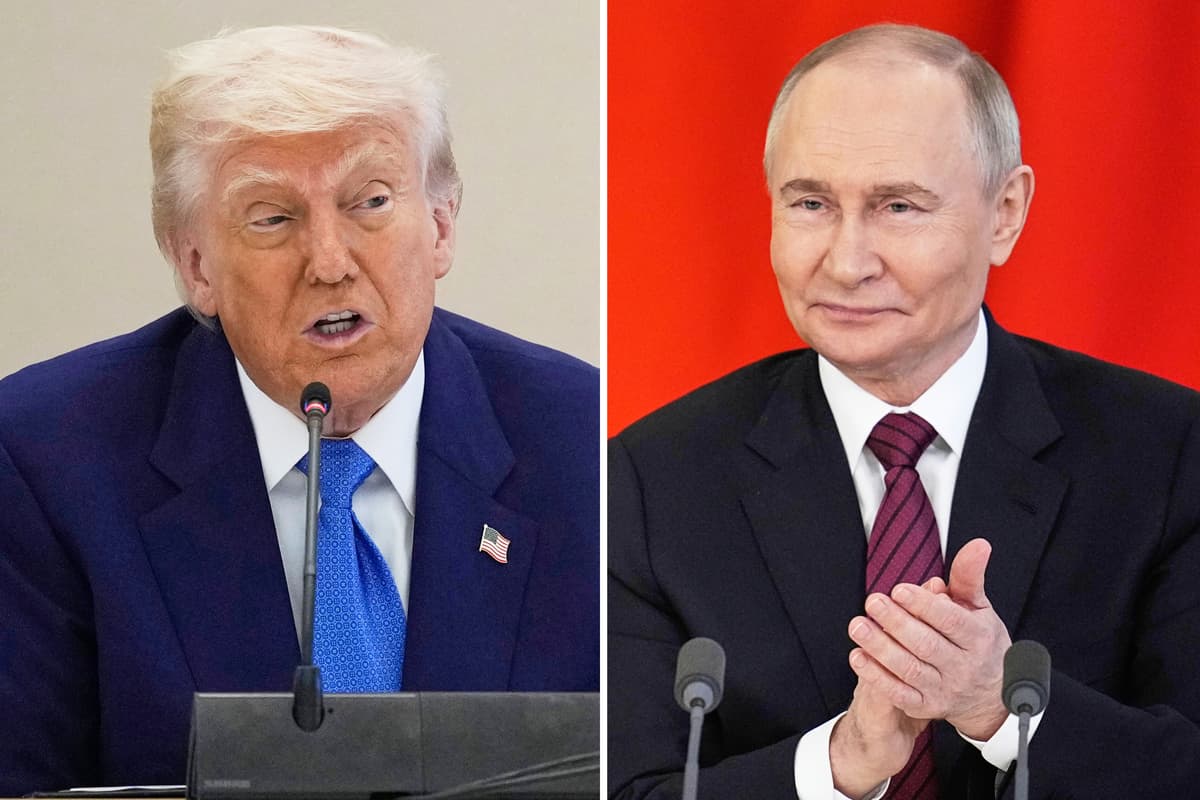
Presidents Trump and Putin. AP

President Putin’s strategy of lying while bombing is finally wearing out. In recent days it has become increasingly clear that President Trump is getting fed up with the Russian dictator’s lies. Given all we know about Mr. Trump, his response will likely be powerful and clear-eyed.

There are two guidelines Mr. Trump will consider as he brings more pressure to bear on Mr. Putin.

First, there are no circumstances in which Mr. Trump will put American forces into Ukraine. He is deeply opposed to expensive American foreign interventions. They have been costly in American lives and in tragically wounded young Americans. 

So, Mr. Trump will adopt strategies that bring great pressure on Russia. He will use American economic power, technology, and equipment to force Mr. Putin to accept a cease-fire — without putting Americans in harm’s way.

Second, Mr. Trump is vividly aware of the horrors of nuclear war. He has spoken about the horrible consequences of a nuclear attack. Mr. Trump also knows that Mr. Putin has about 6,000 nuclear weapons in the Russian armory. 

Any strategy of economic and technological coercion will be careful not to put Mr. Putin into a corner. We cannot let using tactical or larger nuclear weapons become a better choice for Russia than a humiliating defeat and collapse of the regime.

Mr. Putin could escalate if he felt his dictatorship was going to collapse. This means America’s goal must be to stop the Russians and end the fighting — without threatening to utterly destroy the Russian regime. 

So, Mr. Trump will insist on an end to the killing and a negotiation between Russia and Ukraine — with the entire force of the unified West behind the Ukrainians. He will not insist on a Russian defeat and total withdrawal from Ukraine.

The current situation was caused by two very different views of what was going on: Mr. Putin’s and Mr. Trump’s.

Mr. Trump came into office with a positive memory of his working relationship with Mr. Putin. In his first term, Mr. Trump was tough on some marginal issues — blocking the second natural gas pipeline between Russia and Western Europe and providing limited supplies of effective weapons to the Ukrainian army, something President Obama had refused to do. 

Yet Mr. Trump was able to work with Russia on major issues in a way that contained Russian ambitions and avoided military conflict.

This initial experience led to Mr. Trump’s publicly stated belief that he could talk with Mr. Putin and end the violence in Ukraine. After the first six months of his second term, that positivity is destroyed. As a consummate realist, Mr. Trump is shifting to a much tougher policy. He has concluded nothing else will work.

Mr. Trump’s initial optimism was also based on a clear-sighted, practical understanding of what military analysts would call “the correlation of forces” — ironically a term developed by the Soviet Union and clearly not applied by Mr. Putin to the American-Russian relationship.

America is an enormous economic power. Its defense budget is vastly bigger than the Russian military. America also has an alliance relationship with most of the industrial world. It can rapidly build a coalition to stop Russian aggression. 

If fully leveraged, the American international financial network could give Russia the economic equivalent of a heart attack.

Mr. Trump has been patient in part because he holds, and can play, every card except nuclear weapons. With the right strategy, Mr. Putin could face a coercive environment that gives him no choice but to accept a truce.

However, Mr. Putin seems to have made the profound mistake of thinking Mr. Trump was going to be as gullible and soft as Mr. Obama or President Biden. 

Mr. Obama’s timidity and confusion convinced Mr. Putin he could occupy Crimea at virtually no cost. Mr. Obama’s inability to do anything serious further proved Mr. Putin was right. 

Similarly, the Biden administration’s withdrawal from Afghanistan was a stunning sign that the American military and its political leaders had become incompetent. This convinced Mr. Putin he could occupy Ukraine and get away with it. 

The chairman of the Joint Chiefs, General Mark Milley, testified in a Senate hearing that Russia could take Kyiv in three days. He was confirming what the Russian generals were telling Mr. Putin. 

The Ukraine invasion was supposed to be a cakewalk. Shortly after General Milley’s public testimony, the Russians launched an attack to seize Kyiv.

Ukrainian courage — and the advanced weapons Mr. Trump sent during his first term — stopped the initial Russian advance, and the long war began.

In the next few weeks, we are likely to see a master class in the application of overwhelming economic, financial, technological, and military capabilities. It will hopefully convince Mr. Putin to agree to a cease-fire and a negotiated end to the war. 

We will see how long it takes for Mr. Putin to realize that Mr. Trump is not Mr. Obama or Mr. Biden. Then the outcome will be swift and decisive. The killing will stop. A truce will be implemented, and the negotiations will begin.


The New York Sun

© 2025 The New York Sun Company, LLC. All rights reserved.

Use of this site constitutes acceptance of our Terms of Use and Privacy Policy. The material on this site is protected by copyright law and may not be reproduced, distributed, transmitted, cached or otherwise used.

The New York Sun

Sign in or  create a free account

or
By continuing you agree to our Privacy Policy and Terms of Use