Republicans Balk at Trump’s Demand To Let Him Make Appointments Without Senate Approval
Several Republican lawmakers say that the president’s demand for utilizing the recess appointment power is unrealistic.
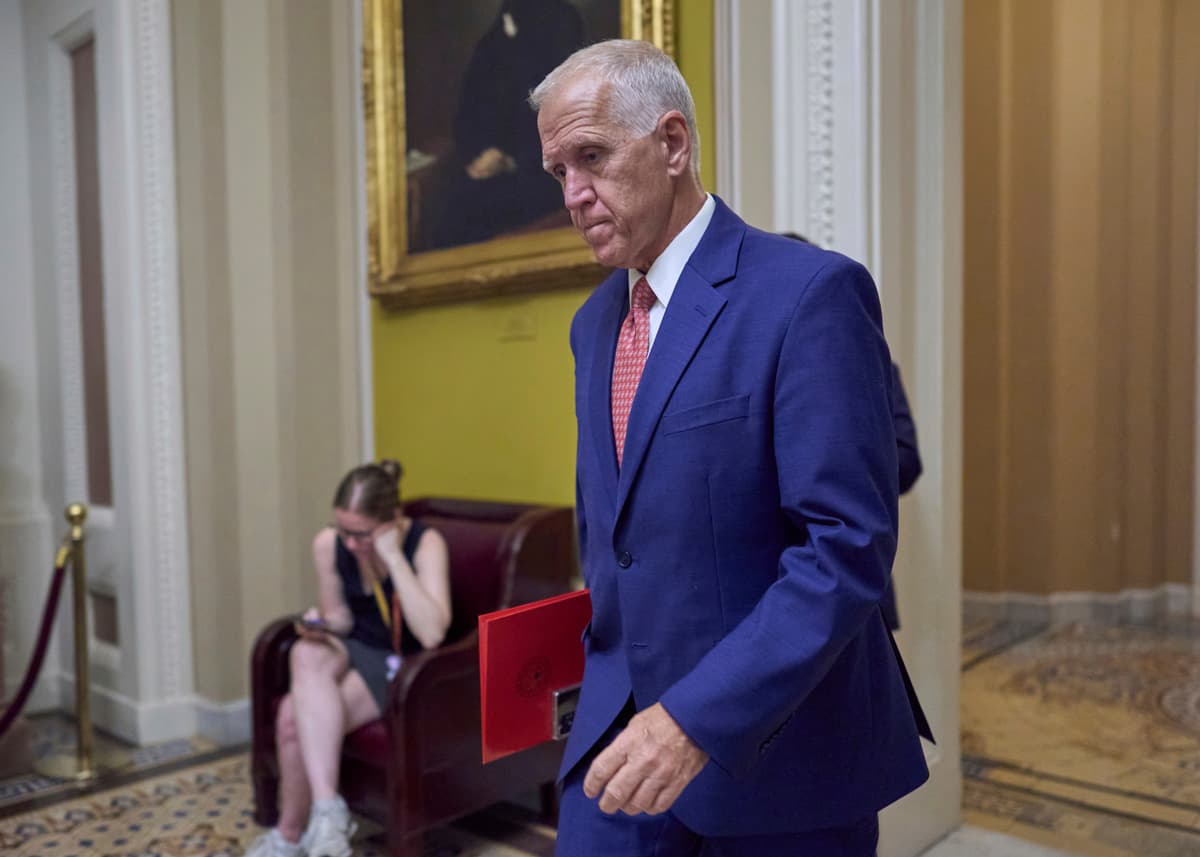

Senate Republicans are not fans of allowing President Trump to utilize his recess appointment power to fill the hundreds of vacancies in the executive branch that are being left open as they head out for a month-long vacation. One Republican tells the Sun that the issue is so unrealistic that it hasn’t even come up in discussions.
Mr. Trump and some of his conservative allies in Congress have been griping for days about the slow pace of the confirmation process. Democrats have refused to let dozens of non-controversial nominees through the chamber on an expedited process, leaving more than 130 presidential nominees currently awaiting confirmation.
The president has said that the Senate should either cancel its August recess in order to confirm more of his nominees, or Congress should be fully adjourned so that he can make his appointments without Senate approval.
Republican senators, however, don’t see the recess appointment process as a realistic option.
“That’s bypassing one of the unique responsibilities of the U.S. Senate,” Senator Tillis tells the Sun. The North Carolina senator, who has announced that he is not seeking re-election in 2026, has so far blocked one important nominee the president put forward — Ed Martin for United States attorney at the nation’s capital — and has announced his objection to a separate nominee to lead the Office of Special Counsel.
“Quite honestly, as I’ve said before, I’m not really impressed with some of the advice the president’s getting from people,” Mr. Tillis says. “The last thing I want is a recess appointment for somebody like Ed Martin into a role for the remainder of his tenure.”
If the president were to get an opening to make recess appointments, those appointees would serve until the end of the 119th Congress, which would be on January 3, 2027.
In order for Mr. Trump to be able to make such appointments, the House and the Senate would need to jointly agree to adjourn for a period of at least 10 days. The House, however, left town last week until after Labor Day.
The way Congress has been able to block presidential recess appointments in the past is by holding what are known as pro forma sessions every few days. Those meetings are brief, lasting only a few minutes, so that the 10-day window can be reset.
“No,” Mr. Tillis said when asked by the Sun if the idea was being floated seriously within the Republican conference. “I mean, the reason we’re doing pro forma sessions is that a majority of people disagree with recess appointments.”
Senator Kennedy of Louisiana similarly tells the Sun that he does not expect anything other than the typical pro forma meetings to avoid recess appointments.
“My guess is that [Senator Thune] will keep the Senate in session through pro forma [sessions]. I’ve been here 10 years and when we take long breaks, that’s been done every single time,” Mr. Kennedy says. “My guess is, he’ll do it again.”
Several conservative members of the chamber say that the Senate either has to cancel its August vacation altogether, or go through the process to let the president get his recess appointments.
“The Senate must either (A) vote on Trump’s nominees before recessing or (B) recess without holding ‘pro forma’ sessions that prevent Trump from making recess appointments,” Senator Lee of Utah wrote in a post on X on Sunday.
Senator Mullin of Oklahoma — a close ally and friend of the president — tells the Sun that he is more than happy with the idea of canceling the August break in order to get more nominees confirmed in the face of Democratic opposition.
“I’m for getting the job done,” Mr. Mullin says. “The Democrats have done this to themselves. We’ll do whatever we can to get the nominees [confirmed]. If that’s what it takes, we’ll do it,” he said of skipping the August break.
Mr. Mullin says Mr. Thune has told his colleagues that he is trying to negotiate some kind of bipartisan agreement with Democrats so that some of the lower level, non-controversial nominees can pass through the Senate and everyone can leave the nation’s capital, though no deal has been struck yet.
“Either the Democrats are going to play ball or not. Leader Thune has said this from the beginning — Either we’ll do it the east way or the hard way,” Mr. Mullin says. “It depends on how they want to handle it.”