Republicans Block Repeal of Right To Sue DOJ for ‘Arctic Frost’ Investigation, Keeping the Door Open for Million-Dollar Payouts

Senator Lindsey Graham objected to a repeal measure on the floor Thursday, even as he himself says he is preparing to file lawsuits.
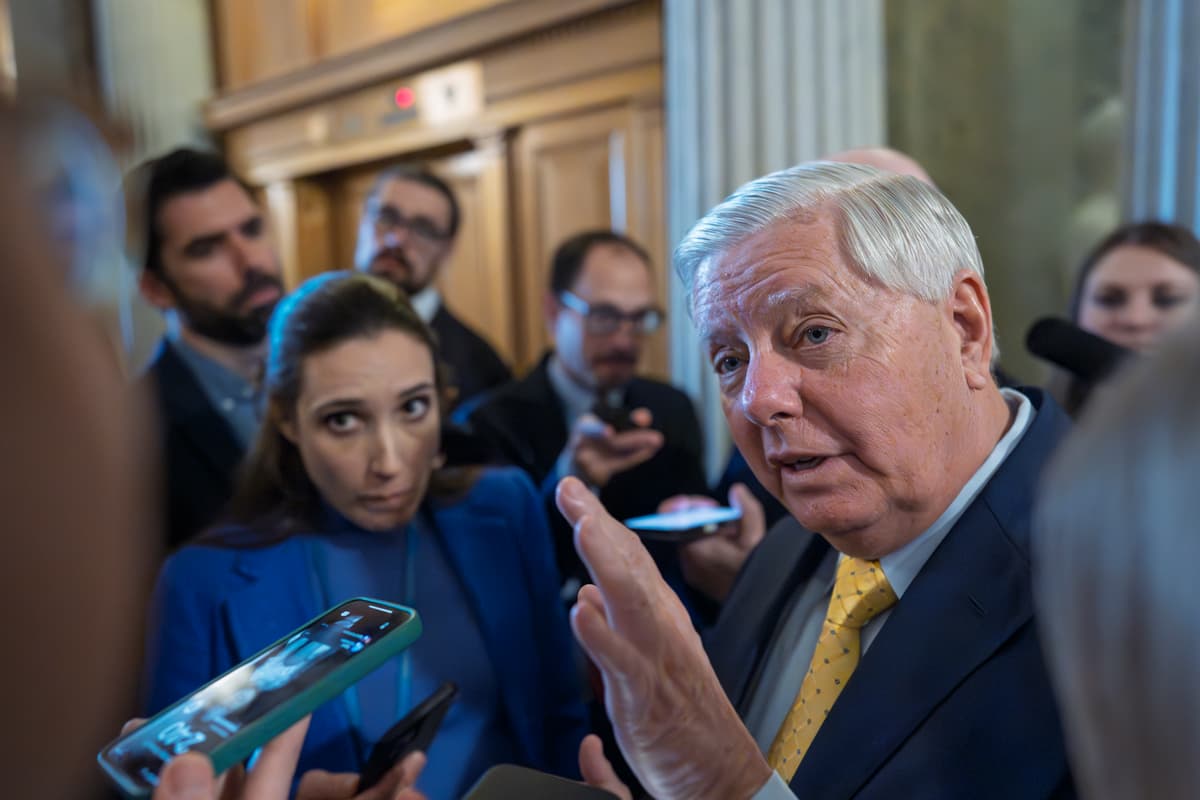

AP/J. Scott Applewhite
Senator Lindsey Graham is surrounded by reporters. AP/J. Scott Applewhite

Republicans in the Senate have blocked a bill to repeal a right to a private cause of action established last week which would allow members of the Senate to sue the Justice Department for potentially millions of dollars. The House of Representatives passed a repeal of that measure on Wednesday night. 

The right of private action was slipped into the government funding bill last week, much to the chagrin of House members and several members of the Senate. It would allow senators — and only senators — to sue the Justice Department for $500,000 for every instance that their personal or official records were obtained since 2022. 

It is aimed at allowing senators to sue the DOJ for the “Arctic Frost” investigation, which was the FBI’s probe of attempts to overturn the 2020 election, which later became the basis for Special Counsel Jack Smith’s investigation. 

Senator Martin Heinrich, a New Mexico Democrat, went to the floor on Thursday afternoon to try to unanimously pass a repeal of what he calls “a blatant, tax-funded cash grab.”

“There are no existing records of Congress creating a taxpayer-funded cash pipeline for senators to sue the government for doing its job,” Mr. Heinrich said on the floor. “That is probably because it is so patently wrong.”

When the New Mexican asked to pass the House’s repeal of the private cause of action by unanimous consent, Senator Lindsey Graham stood up to object. He says that he and his colleagues were treated unfairly because their records and devices were seized solely because they were discussing “whether or not to certify the election” on January 6, 2021. 

“This was people in the Senate believing what happened to the Senate need never happen again,” Mr. Graham said, arguing that everyone was aware of this provision when it was passed by Congress last week. If the provision is allowed to stand, Mr. Graham and seven of his colleagues will maintain the right to sue the government for what could end up being millions of dollars in damages. 

“I am really outraged that my private cell phone and my official phone were subpoenaed without cause — that a judge would suggest that I would destroy evidence or tamper with witnesses if I were told what was going on,” Mr. Graham said, growing angry. 

Mr. Graham argues that this provision does not guarantee him hundreds of thousands, or even millions, of dollars in compensation. All he wants is his “day in court,” Mr. Graham says. 

“The burden will be on me, that I was wronged,” he said. “All of us who were wronged need to have a remedy to that wrong, and we’re creating a chance to go to court for what happened to us, and in a fashion to make sure it never happens again.”

“This wasn’t an attempt to enrich anybody — it was an attempt to deter what was wrong,” Mr. Graham added. He said on the floor that he plans to sue the DOJ, Mr. Smith, and Verizon — one of the Senate’s carriers for government phones — for “a hell of a lot more than $500,000.”

At the end of his remarks Mr. Graham said that he was open to discussing some kind of “change” to the private cause of action provision, but he insisted that the deterrence and the monetary penalties must remain. 

“It’s me today — it could be you tomorrow,” Mr. Graham declared. 

The majority leader, Senator John Thune, spoke after Mr. Graham to insist that the private cause of action will not be wholly repealed. He urged Democrats that the measure is there to protect them, as well. 

“It’s an important defense of separation of powers,” Mr. Thune told colleagues on the floor. “This measure is about accountability, and not profit.”


The New York Sun

© 2025 The New York Sun Company, LLC. All rights reserved.

Use of this site constitutes acceptance of our Terms of Use and Privacy Policy. The material on this site is protected by copyright law and may not be reproduced, distributed, transmitted, cached or otherwise used.

The New York Sun

Sign in or  create a free account

or
By continuing you agree to our Privacy Policy and Terms of Use