
RFK Jr.’s Vaccine Advisers Vote To Stop Recommending the Hepatitis B Vaccine for Most Newborns
The vaccine advisory committee suggests most parents should wait until their babies are 2 months old to have them vaccinated.
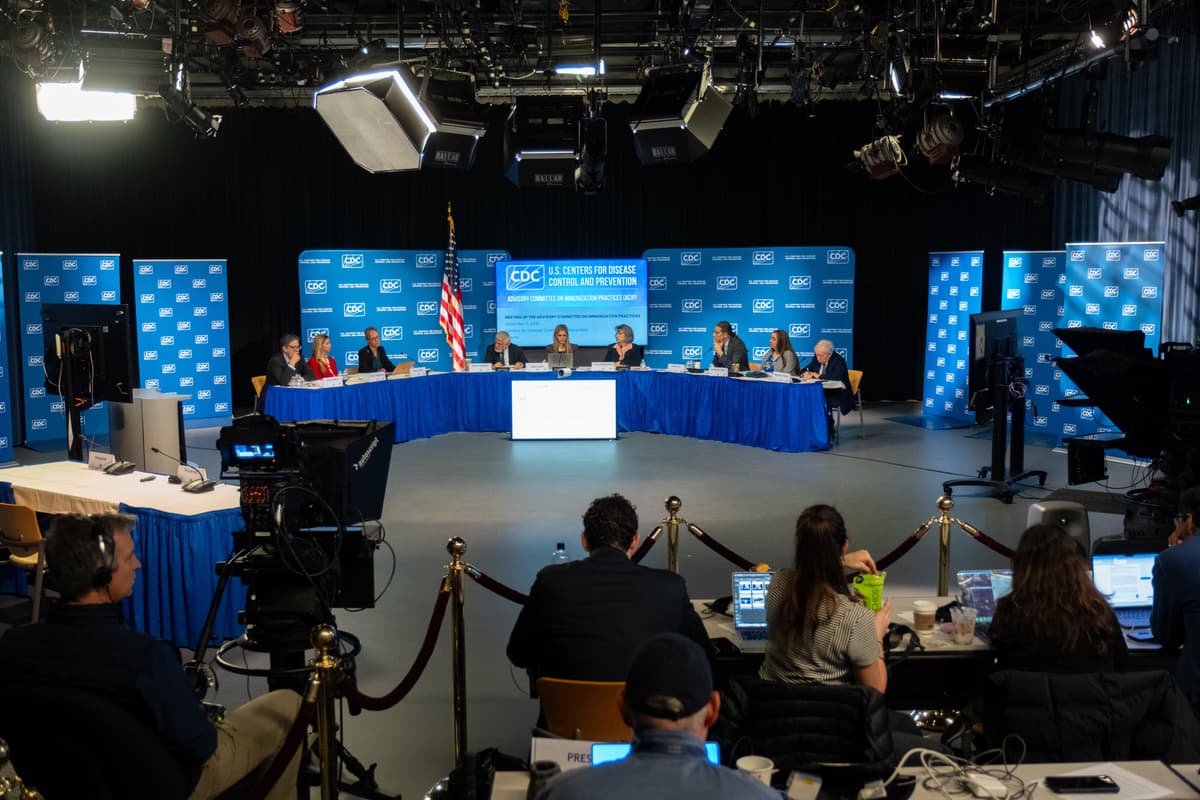
A divided vaccine committee assembled by Health Secretary Robert F. Kennedy Jr. voted Friday to no longer recommend giving the hepatitis B vaccine to most newborns on the day they are born.
The Advisory Committee on Immunization Practices, or ACIP, voted 8-3 to suggest that the initial dose of the vaccine be administered no earlier than 2 months of age for most children.
The committee now recommends the birth dose only for babies whose mothers test positive for hepatitis. For everyone else, the committee says parents and their doctors should discuss whether the birth dose is appropriate.
The Centers for Disease Control and Prevention has recommended that babies get vaccinated against hepatitis B within 24 hours of birth since 1991. Supporters of the vaccine schedule say in the past 30 years cases among children have dropped to about 2,200 a year from about 18,000 a year.
The potentially fatal disease can be transferred from an infected mother to the baby. As many as 90 percent of infants who contract hepatitis B go on to have chronic infections and 25 percent of children who acquired hepatitis B will die, according to the American Academy of Pediatrics.
The academy says America is on a path to eliminating perinatal hepatitis B cases. “Removing the birth dose would jeopardize this progress,” the group states.
Committee members supporting the change say the risk of hepatitis infection for most babies is very low and raised concern about administering it without need. The vice chairman, Dr. Robert Malone, said the “elephant in the room” is the collective risk of all of the different vaccines being administered to young children.
“While we may not see individual risk within a given product, when we have a biologically active material that is in common across multiple products, all being administered at the same time and we don’t have cumulative toxicology for that common material,” Dr. Malone said.
But one ACIP board member who voted “no,”, the head of the pediatric infectious disease service at Tufts Medical Center, Dr. Cody Meissner, said the committee’s decision will cause harm.
“We will see more children and more adolescents and adults infected with hepatitis B,” Dr. Meissner warned shortly before the vote.
The Hepatitis B Foundation said it was deeply disappointed. “Overall, the meeting lacked transparency, with many of the presentations showing one-sided data, and several points made by Committee members clearly showed that they have a very specific agenda,” the nonprofit organization said in a statement.
The acting director of the CDC, Jim O’Neill, will decide on whether to accept the committee’s recommendations. States set their own vaccine policies but many states follow the CDC recommendations without altering them.
Mr. Kennedy fired the entire 17-member panel shortly after being confirmed as secretary. He replaced several of the members with anti-vaccine supporters.
Senator Bill Cassidy, who is a doctor, posted on X on Thursday, “The ACIP is totally discredited. They are not protecting children.”
Dr. Cassidy cast one of the deciding votes to confirm Mr. Kennedy as health secretary despite his history of vaccine skepticism.