Richard Linklater, in ‘Nouvelle Vague,’ Pays Homage to Jean-Luc Godard’s Cinematic Revolution

The new movie’s signal achievement could be to send viewers back to ‘Breathless’ and the French New Wave.

Courtesy of Netflix
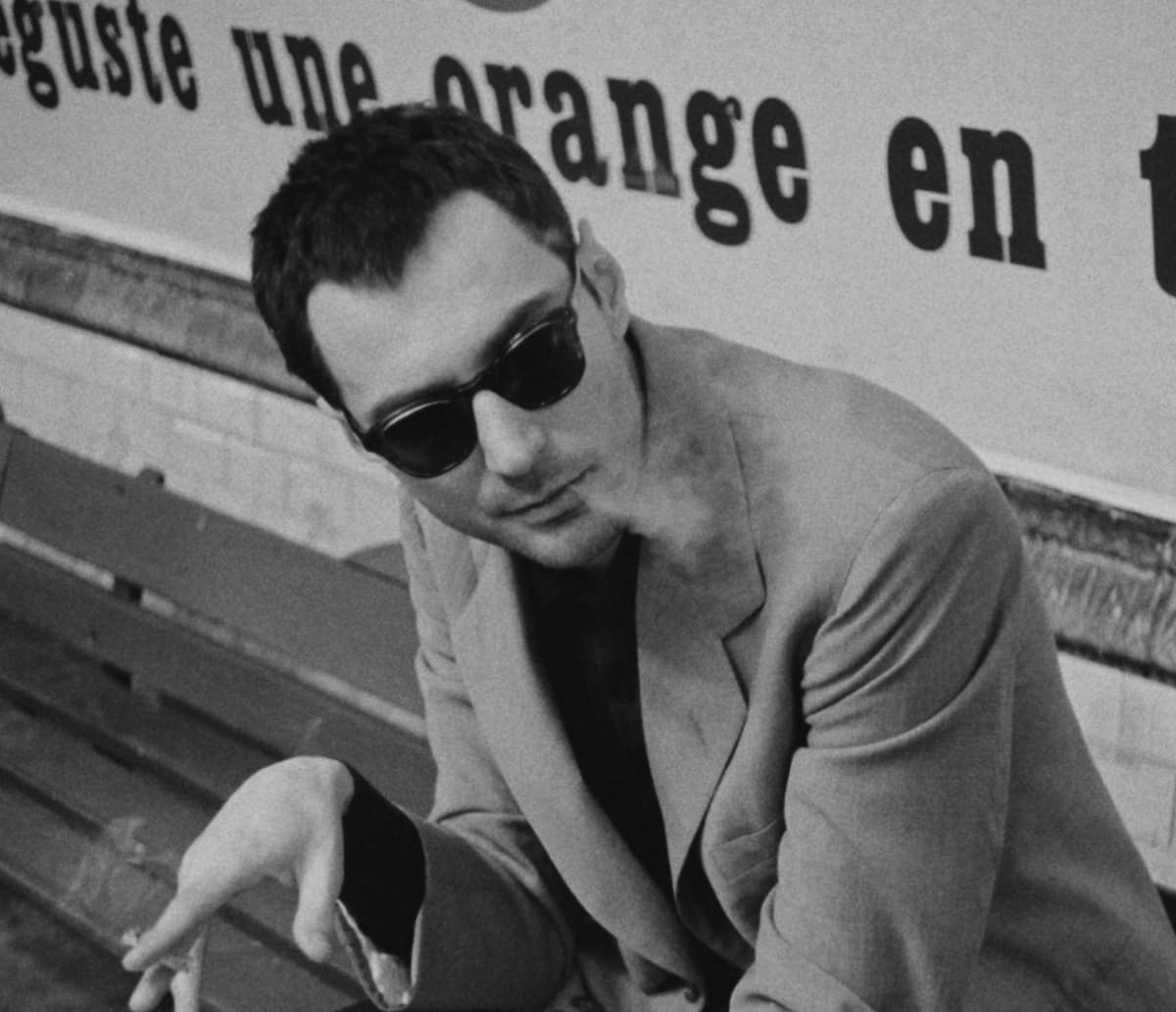
Guillaume Marbeck as Jean Luc Godard in 'Nouvelle Vague.' Courtesy of Netflix

When deciding whether to watch Richard Linklater’s “Nouvelle Vague,” a film that is both in theaters and streaming on Netflix, ask yourself whether the time wouldn’t be better spent sitting down with the milestone that serves as its inspiration, Jean-Luc Godard’s “Breathless” (1960). Over a melancholy snippet of jazz music, Mr. Linklater’s picture ends with an intertitle that tells us how “‘Breathless’ is considered one of the most influential films ever made.”

Influential, absolutely, and it proved the making of Godard and its leading man, Jean-Paul Belmondo. The critic Roger Ebert likened “Breathless” to D.W. Griffith’s “The Birth of a Nation” (1915) and Orson Welles’ “Citizen Kane” (1941) as an achievement in which the medium was configured in ways that were previously unimagined. Upon the movie’s release, Stanley Kauffman, writing in the pages of the New Republic, stated that “with the appearance of Breathless, we have a film that is new, aesthetically and morally.”

Novelty is an attribute to which the passage of time is famously unkind. The imperatives of culture and taste are forever on the move, and they are all but infinitely absorptive — just ask Godard, who made “Breathless” as a slap in the face of traditional cinema only to see it become a standard to which other filmmakers aspired. Godard and his comrades in the French New Wave may have “barged into the cinema like cavemen into the Versailles of Louis XV,” but they eventually settled, some more comfortably than others, into the roles of éminences grises.

A point in favor of “Nouvelle Vague” is that Mr. Linklater manages to capture something of the movement’s insouciant spirit. Note that the title isn’t “Breathless”-specific: “Nouvelle Vague” is centered on the making of Godard’s breakout picture, yes, but it is more an homage to like-minds, to those heady cineastes for whom the watching, judging and, ultimately, making of movies was a reason for being. The convivial and sometimes contentious community surrounding the film journal Cahiers du Cinéma is the object of Mr. Linklater’s ardor and, one imagines, his envy.

Being the dutiful completist, our director flashes on screen the name of each-and-every auteur, as well as various functionaries, operating within this milieu. When this happens the actors playing, say, Jean Cocteau or Agnès Varda face the camera to aid in Mr. Linklater’s taking of inventory. “Nouvelle Vague” is peopled with actors who possess faces and physiognomies that bear uncanny resemblances to their real-life counterparts. Zoey Deutch and Aubry Dullin are dead-ringers as Jean Seberg and Belmondo, but even bit players were chosen with an eagle eye. Whatever his keep might have been, casting director Stéphane Batut earned it.

Nouvelle Vague” is a conscious throwback to Godard’s film, if not, strictly speaking, his modus operandi. The screen is proportioned in a 4:3 ratio, and filmed in black-and-white. At rare moments, we spy old school glitches in the film stock, tongue-in-cheek artifices that signify Godard’s fly-by-the-seat-of-the-pants methodologies. As Godard, Guillaume Marbeck is alternately inscrutable, glib, and pretentious. Screenwriters Holly Gent and Vincent Palmo have him spouting philosophical pronunciamentos, flaunting his considerable knowledge of cinema, and otherwise behaving like a rebel with a cause — that cause being, mais bien sûr, his own genius.

How much a viewer is likely to take interest in Mr. Linklater’s cinematic love letter will depend, in significant part, on one’s interest in the French New Wave and Godard himself. As someone who considers the former estimable and the latter insufferable, I found “Nouvelle Vague” a keenly crafted valentine of limited purpose, an evocation of a time-and-place that contents itself not so much with preaching to the converted, but coddling them. What an indulgence, this film.

Mr. Linklater should extend his thanks to the suits at Netflix for letting him do his thing. The rest of us should hope his next project comes with strings attached.


The New York Sun

© 2025 The New York Sun Company, LLC. All rights reserved.

Use of this site constitutes acceptance of our Terms of Use and Privacy Policy. The material on this site is protected by copyright law and may not be reproduced, distributed, transmitted, cached or otherwise used.

The New York Sun

Sign in or  create a free account

or
By continuing you agree to our Privacy Policy and Terms of Use