Russia Raises Specter of Nuclear Response If Trump Follows Through With Threat To Give Ukraine Tomahawk Missiles

Trump is scheduled to speak with Ukraine’s president, Volodymyr Zelensky, about the missiles on Friday.

U.S. Navy via Getty Images
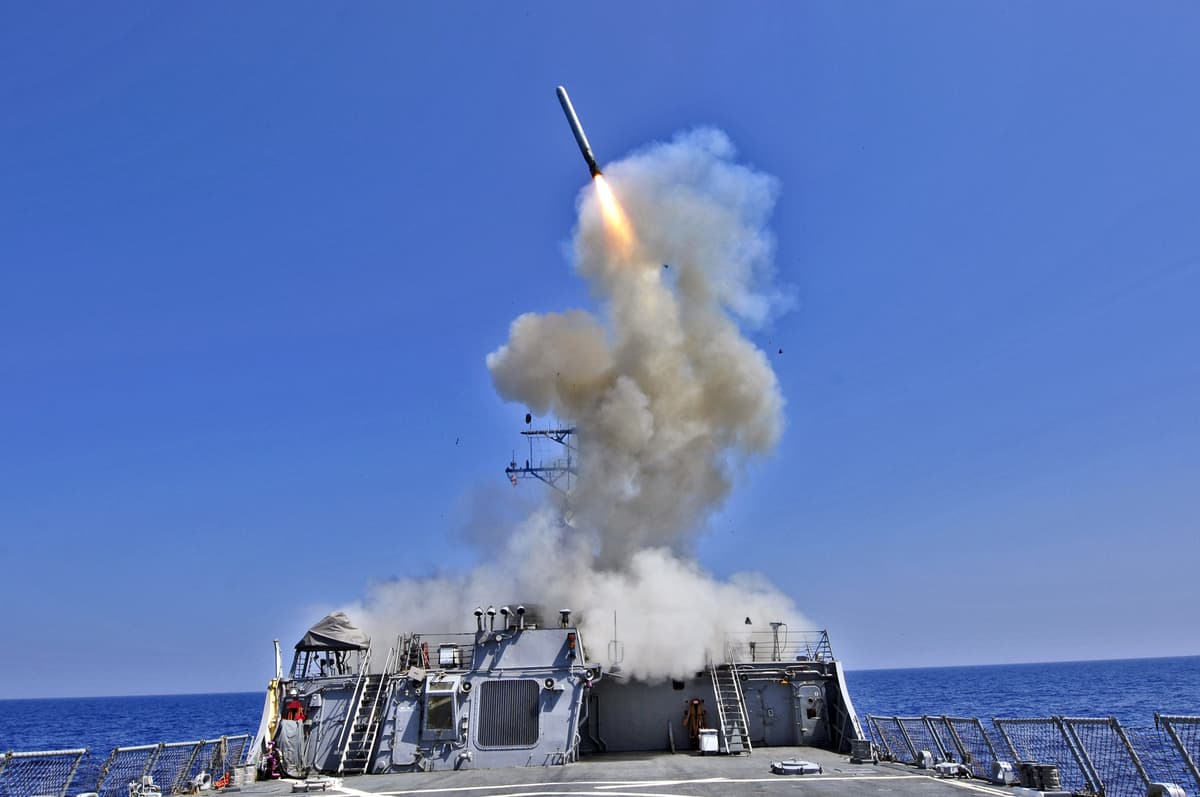
The U.S. Navy guided-missile destroyer USS Barry launches a Tomahawk cruise missile in support of Operation Odyssey Dawn March 29, 2011 from the Mediterranean Sea. U.S. Navy via Getty Images

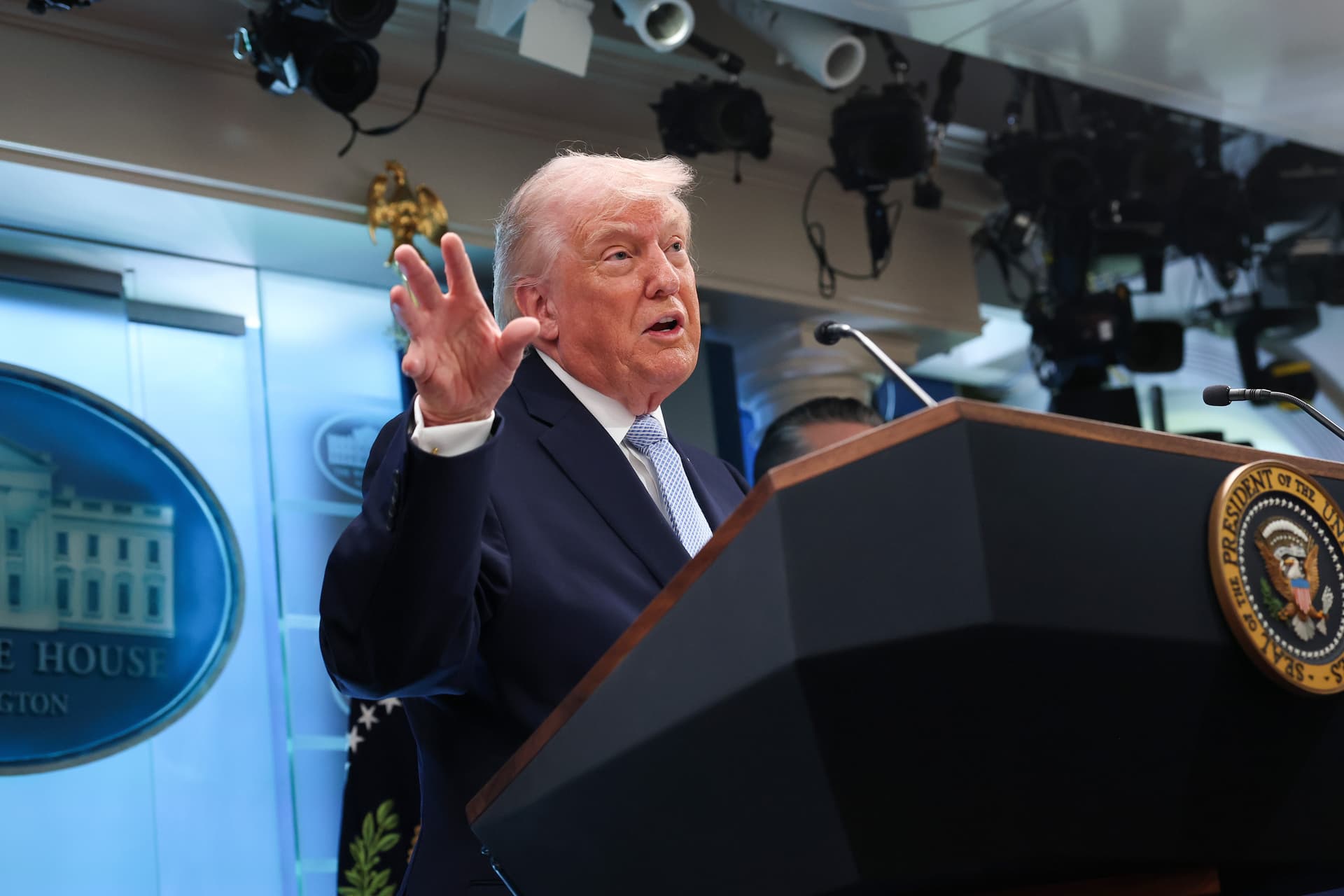
President Trump on Monday indicated that he may provide Ukraine with long-range Tomahawk missiles if Russia refuses to end its war against Ukraine, prompting warnings from Moscow that such a move could trigger nuclear retaliation.

Speaking to reporters aboard Air Force One during his Middle East trip to Israel and Egypt for Gaza peace talks, Mr. Trump confirmed he was weighing the missile transfer as leverage against President Vladimir Putin of Russia.

“We’ll see … I may,” Mr. Trump said when asked about sending Tomahawks to Ukraine. “I might say, ‘Look: if this war is not going to get settled, I’m going to send them Tomahawks.’ The Tomahawk is an incredible weapon, very offensive weapon. And honestly, Russia does not need that.”

“Do they want to have Tomahawks going in their direction? I don’t think so. I think I might speak to Russia about that. I told that to President Zelensky. Because Tomahawks are a new step of aggression,” he added.

The prospect of Tomahawk deliveries drew immediate condemnation from senior Russian officials. “The topic of Tomahawks is of extreme concern,” the Kremlin spokesman, Dmitry Peskov, said on Russian state television. “Now is really a very dramatic moment in terms of the fact that tensions are escalating from all sides.”

“Just imagine: a long-range missile is launched and is flying and we know that it could be nuclear. What should the Russian Federation think? Just how should Russia react? Military experts overseas should understand this,” Mr. Peskov said.

Tomahawk cruise missiles would represent a substantial escalation in Ukraine’s potential strike capabilities. Manufactured by Raytheon, these subsonic missiles can accurately hit targets from 1,500 miles away, even in heavily defended airspace.

Mr. Peskov told Reuters on Monday that no phone call between Messrs. Trump and Putin had been scheduled. Mr. Putin has previously warned that supplying Ukraine with Tomahawks — which are capable of reaching Moscow — would destroy American-Russian relations entirely.

Mr. Zelensky welcomed the potential missile transfer, saying in his Sunday night address that such weapons would strengthen Ukraine’s defensive capabilities and potentially pressure Russia toward negotiations.

“We see and hear that Russia fears the possibility of the United States providing us with Tomahawks. It is a signal that this kind of pressure can be effective in achieving peace. President Trump and I agreed that our teams and our military will be working on all the matters we discussed,” Mr. Zelensky said.

He also vowed that Ukraine would use any provided Tomahawks strictly for military targets, not against Russian civilians.

The Financial Times on Sunday reported that the United States has been helping Ukraine for months conduct long-range strikes on key Russian targets, including oil refineries. The British paper said American intelligence has been helping Ukraine with all aspects of attacks, enabling Ukraine’s long-range, one-way attack drones to steer clear of Russian air defenses.

The Tomahawk discussion represents the latest escalation in Western military support for Ukraine, following previous deliveries of advanced artillery, air defense systems, and main battle tanks since Russia’s February 2022 invasion.

With an average cost of $1.3 million each, the latest Block IV Tactical Tomahawk version features advanced capabilities including mid-flight target switching and extended loitering time. The missiles can be launched from ships, submarines, or ground platforms and armed with either conventional or nuclear warheads.

First developed in the 1970s, Tomahawks have been flight-tested more than 550 times and used operationally more than 2,350 times by U.S. and allied forces. Most recently, American and British navies used them against Houthi rebel sites in Yemen in 2024.


The New York Sun

© 2025 The New York Sun Company, LLC. All rights reserved.

Use of this site constitutes acceptance of our Terms of Use and Privacy Policy. The material on this site is protected by copyright law and may not be reproduced, distributed, transmitted, cached or otherwise used.

The New York Sun

Sign in or  create a free account

or
By continuing you agree to our Privacy Policy and Terms of Use