
Set in Singapore, Yeo Siew Hua’s ‘Stranger Eyes’ Is an Engrossing, Circuitous Thriller
‘Stranger Eyes’ takes as its due the premise of Michael Haneke’s ‘Caché’ (2005), in which catastrophe falls upon an affluent family after receiving a series of videotapes that detail their comings-and-goings.
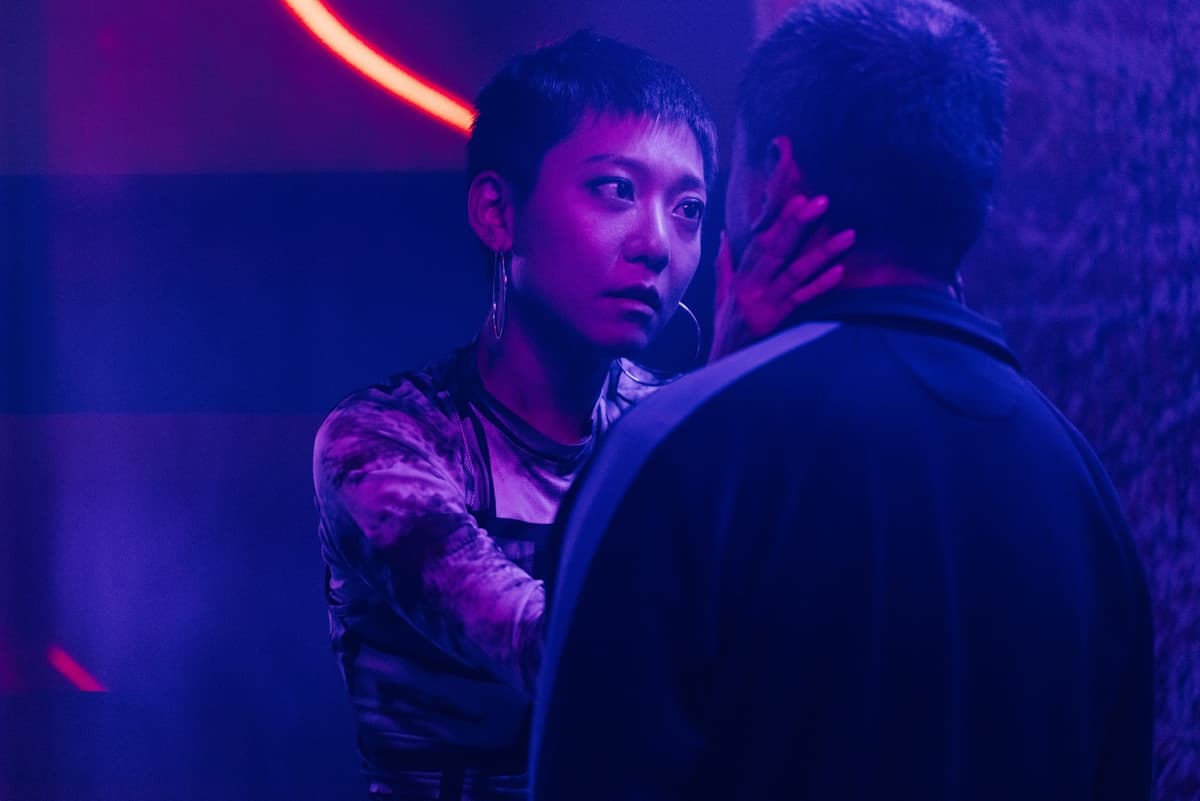
“You just have to watch someone close enough and keep your eyes on him. At some point, even if he’s not a criminal he will turn into one.” So says Officer Zheng (Pete Teo) in Yeo Siew Hua’s “Stranger Eyes.” Truer words were never said — at least at that point in Mr. Yeo’s narrative. As events transpire, the wisdom of our grizzled detective falls short of the mark.
On the heels of Noémie Merlant’s “The Balconettes” comes another picture that takes as its basis events spied from the window of a city apartment. France was the site of Ms. Merlant’s example; the island state of Singapore is Mr. Yeo’s. If the former film was a riff on Alfred Hitchcock’s “Rear Window” (1954), “Stranger Eyes” takes as its due the premise of Michael Haneke’s “Caché” (2005), in which catastrophe falls upon an affluent family after receiving a series of videotapes that detail their comings-and-goings.
In Mr. Yeo’s movie, the family in question is younger, less privileged, and has already undergone a devastating loss: the kidnapping of a daughter, Bo. “Stranger Eyes” begins with a home movie featuring Junyang (Wu Chien-Ho) and his wife, Peiying (Anicca Panna), having a picnic with Bo at a local park. The voice we hear goading the young parents is that of Junyang’s mother, Shuping (Vera Chen), who is, as becomes quickly evident, a piece of work: Her self-involvement is considerable.
The camera pulls back and we see Peiyang playing, and replaying, this video snippet. She’s working on the advice of Officer Zheng, desperately looking for clues that might lead to the whys and wherefores of Bo’s disappearance. The young couple’s happiness, already compromised, isn’t made any easier by Shuping, with whom they live. Nǎinai spends her days at the local playground, handing out missing-child leaflets featuring her granddaughter’s photo.

Not long thereafter an unmarked DVD is slipped under the family’s door. A DVD in 2025? Peiyang finds an old player in Shuping’s closet and proceeds to watch a film featuring, of all things, Junyang at a local supermarket with Bo riding along in the shopping cart. Another DVD arrives, this one detailing Junyang’s recent misadventures at a shopping mall. The videos keep arriving, all of which disconcert; some are too revealing by half.
We know, in short order, the identity of the stealth filmmaker: Lao Wu (Lee Kang-Sheng), a manager of a nearby grocery store who lives alone with his mother (Maryanne Ng-Yew). Mother Wu is no less steely, determined, and overbearing than Shuping, though age is catching up with her: The eyes are failing and the will is faltering. Lao Wu, ever unassuming and perpetually hangdog, puts up with mom’s constant abuse and, to waylay her behavior, makes sure that the liquor cabinet is full. All the while, he continues to stalk Junyang and, especially, Peiying.
Lao Wu is apprehended for stalking and fired from his job, but the story doesn’t end there: Bo is still missing. Lao Wu insists that he’s clueless about the child’s whereabouts. Mr. Teo’s script takes some circuitous and often lurid turns as “Stranger Eyes” runs its course and, around the three-quarter mark, the story takes a seemingly arbitrary end-run to concentrate on an attendant at a local amusement park, Ling Po (Xenia Tan). All the while, we are led into increasingly garish milieus given an appropriately off-putting lustre by the director of photography, Hideo Urata.
Mr. Teo is a judicious filmmaker, setting out plot points with a gratifying sense of fortitude and a knack for evoking states-of-mind that are no less consequential for being unspoken. Significant portions of the film are given to silence and gesture as means of reaffirming the abiding loneliness of its characters and the desperation of their circumstances. Compressed within the core of “Stranger Eyes” is a sense of forgiveness that is confirmed by an ending that is gratifying in resolution. Here is an engrossing, if by no means readily accessed, thriller.