
Showdown Over Redistricting Looms at the Lone Star Corral
Even before GOP decides on redistricting plan Democrats vow to contest the new map.
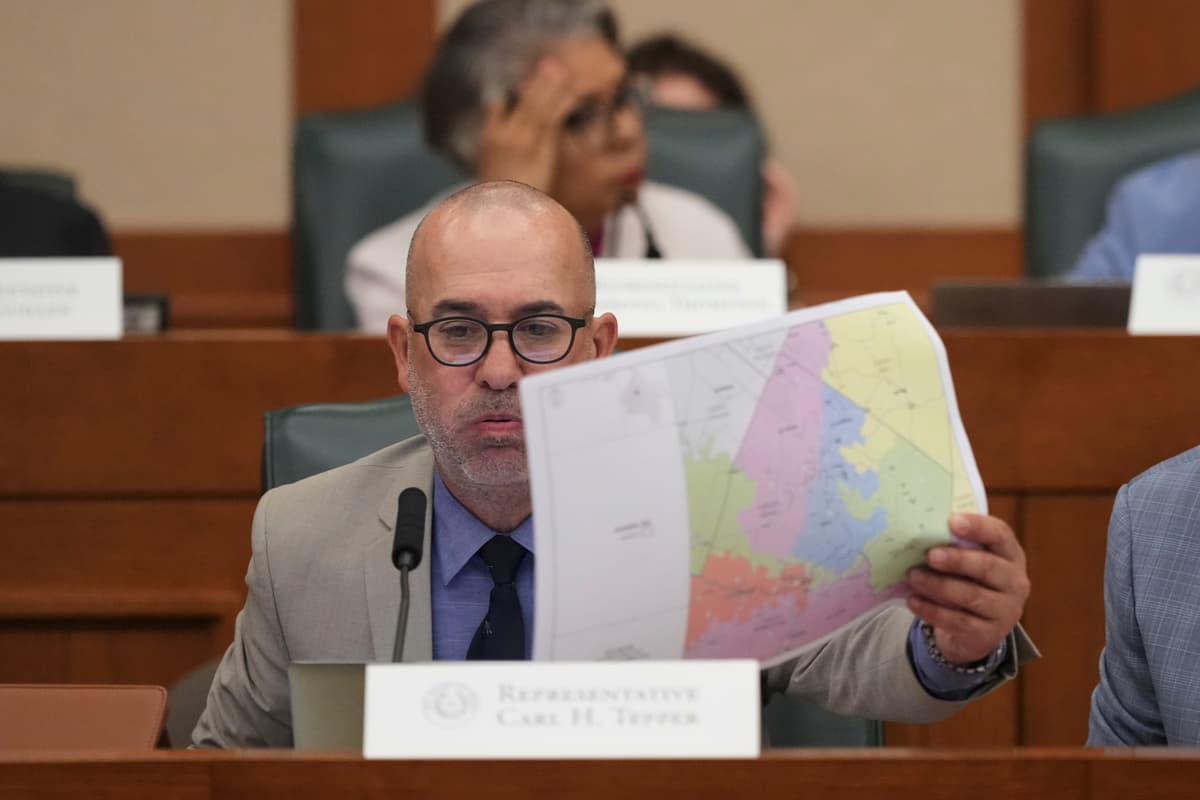
Texas Republicans havenât even yet decided on a redistricting plan for the stateâs congressional districts, and the Democrats are already vowing to contest the new map â whatever it turns out to be â in the courts. President Obama is even planning a fundraiser in August at the Peopleâs Republic of Marthaâs Vineyard to solicit spondulix to pay for the prospective litigation. Supreme Court precedents, though, bode ill for these legal challenges.
The Lone Star State GOP isnât shy about the point of its proposed new map, calling it âan essential step to preserving GOP control in Congress.â President Trump, with an eye on the midterms, has advised that a âvery simple redrawingâ of the Texas map could add five seats to the narrow House GOP majority. Democrats are irate over the remap, with Governors Newsom and Hochul eyeing partisan gerrymanders in their own states to parry Texasâs move.
Lone Star Democrats could also boycott the legislative session weighing the redistricting, which could deny the GOP a quorum. Conflict over partisan district maps, though, is nearly as old as the Republic. One rhubarb arose in 1812 over Governor Gerryâs convoluted Massachusetts map. One of the Bay Stateâs curiously drawn districts caught the eye of an editorial cartoonist who noted its resemblance to a salamander, and the âGerrymanderâ was born.
Today, critics contend that âmaking many congressional districts safely Democratic or Republicanâ makes elections less competitive and âserves the interests of hyper-partisan candidates, thus contributing to political polarization and gridlock,â as Bloombergâs Greg Giroux puts it. Be that as it may, it would seem to be up to the voters, as opposed to judges, to decide whether latter-day gerrymanders pass muster.
That, at least, is the upshot of the Supreme Court decision in Rucho v. Common Cause. In that case, the Nine looked at two statesâ purportedly partisan district maps. Lower courts found that North Carolinaâs map was discriminatory to Democrats, and that Marylandâs map mistreated Republicans. Chief Justice Roberts, writing for a majority of five, disagreed, saying gerrymandering poses âpolitical questions beyond the reach of the federal courts.â
The high courtâs judicial modesty in this matter came despite concerns that, as the chief justice put it, âexcessive partisanship in districting leads to results that reasonably seem unjust.â Even so, he added, that âdoes not mean that the solution lies with the federal judiciary.â After all, Chief Justice Roberts explained, how would unelected judges decide what constitutes an unfair map? Do maps, say, need an even distribution of party members in each district?
If not, how far can the maps diverge from the âmedianâ? Chief Justice Roberts finds âfederal judges have no license to reallocate political power between the two major political parties.â Those â like the Democrats in Texas, champing at the bit to file litigation â who want judges to overrule legislators when it comes to drawing districts envision âan unprecedented expansion of judicial power,â Chief Justice Roberts concludes.
The Rucho precedent suggests that federal litigation over the Texas maps could lead to a dead end. Nor would federal civil rights legislation appear to offer the Democrats much succor, despite Congressman Greg Casarâs claim that, in the remapping, Mr. Trump was trying âto rip the Voting Rights Act to shreds.â After all, the GOPâs proposed map adds a majority-Hispanic district, bringing Texasâs total to eight, and creates two new majority-Black districts.
Letting judges decide the fairness of partisan gerrymanders, Chief Justice Roberts warns, would be meddling in âone of the most intensely partisan aspects of American political lifeâ â an âinterventionâ that âwould be unlimited in scope and duration.â Democrats today can mark his suggestion that Congress is able to set standards in this arena: âThe avenue for reform established by the Framers, and used by Congress in the past, remains open.â