Stinging Rebuke for President Trump and Pam Bondi as Alina Habba’s Appointment as New Jersey Top Prosecutor Ruled ‘Unlawful’
The decision could throw the Garden State’s federal prosecutions into chaos, though the effects are paused — for now.
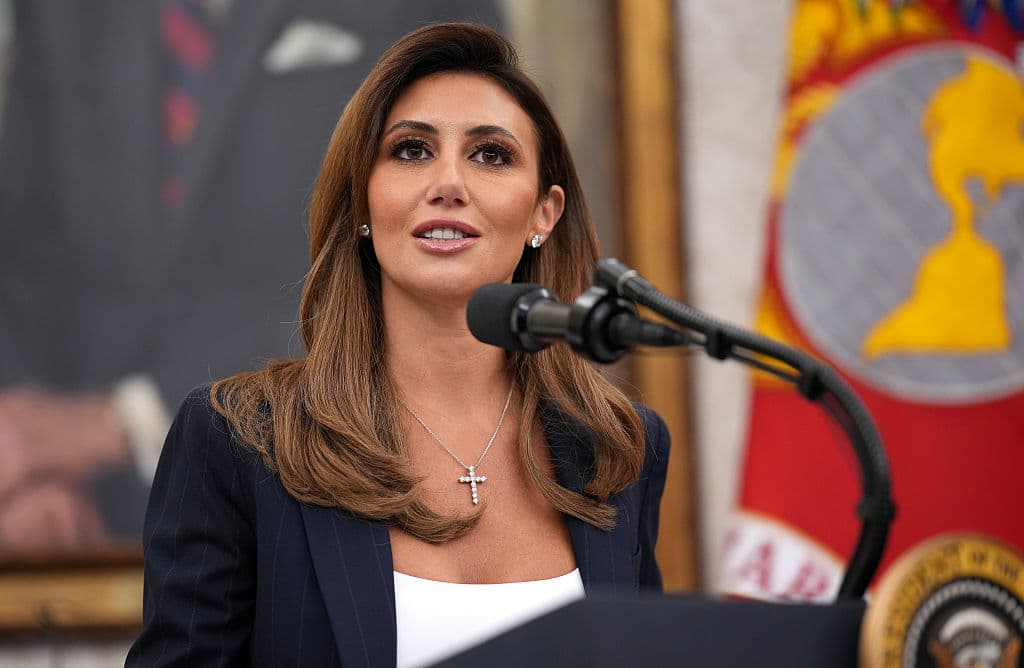

The ruling by a federal district court judge that Alina Habba “is not lawfully holding the office of United States Attorney” — and has not held such office since July 1 — throws into chaos the entire apparatus of New Jersey’s federal prosecutions.
The decision came from Judge Matthew Brann, a Republican who was appointed to the federal bench by President Obama. His 77-page opinion determines, “Faced with the question of whether Ms. Habba is lawfully performing the functions and duties of the office of the United States Attorney for the District of New Jersey, I conclude that she is not.”
Judge Brann adds that because Ms. Habba “is not currently qualified to exercise the functions and duties of the office in an acting capacity, she must be disqualified from participating in any ongoing cases.” The judge, though, placed a temporary pause on any consequences of his decision. That will allow the government the opportunity to appeal.
That appeal is likely to happen quickly, and Judge Brann in his decision writes of the desirability of returning the prosecutorial office to “at least some level of normality.” The judge stopped short of dismissing the charges that Ms. Habba has already brought. That was the request made by the two sets of defendants who brought suits — now successful — challenging Ms. Habba’s appointment. The judge muses that “practice is a fickle thing. A government operating by handshake and mutual understanding may go along swimmingly, but only for so long as everyone is willing to play by the rules.”
Ms. Habba, who was a personal attorney for President Trump before she joined the Department of Justice, was at first nominated by the 47th president for a permanent position. Mr. Trump was forced to withdraw her nomination after her pathway to confirmation was blocked by the Garden State’s two senators, Andy Kim and Cory Booker, both Democrats.
The opposition to bringing Ms. Habba’s candidacy to a vote was likely intensified by the criminal cases she brought against the mayor of Newark, Ras Baraka, and Congresswoman LaMonica McIver. Both of those prosecutions stemmed from a protest at an ICE facility in New Jersey. The charges against Mr. Baraka were eventually dropped, but those against Ms. McIver — for trespassing and assault — still stand.
Before the withdrawal of her nomination, Ms. Habba held the job of New Jersey’s top prosecutor on an interim basis, which expired after 120 days. Federal statute then mandates that district court judges can vote to extend or deny tenure. The judges — 15 of the 17 whom were appointed by Democratic presidents — denied Ms. Habba’s bid to stay in the post.
Attorney General Pam Bondi then, as Judge Brann describes it, “perpetuated Alina Habba’s appointment to act as the United States Attorney for the District of New Jersey through a novel series of legal and personnel moves.” Judge Brann acknowledges that the case raises “several issues of first impression,” meaning that they have not been considered by courts before.
The case law on Mr. Trump’s unusual appointment strategy could build quickly, though. The president has chosen to eschew the well-trod path of confirmation by the Senate in several districts across the country, meaning that the question of provisional appointments could soon be taken up by the Supreme Court.