

Driving While Stoned: States Struggle To Determine When a Driver Is Too High To Be Behind the Wheel
In one six-year study in Ohio, more than 40 percent of fatal accident victims tested positive for active levels of THC.
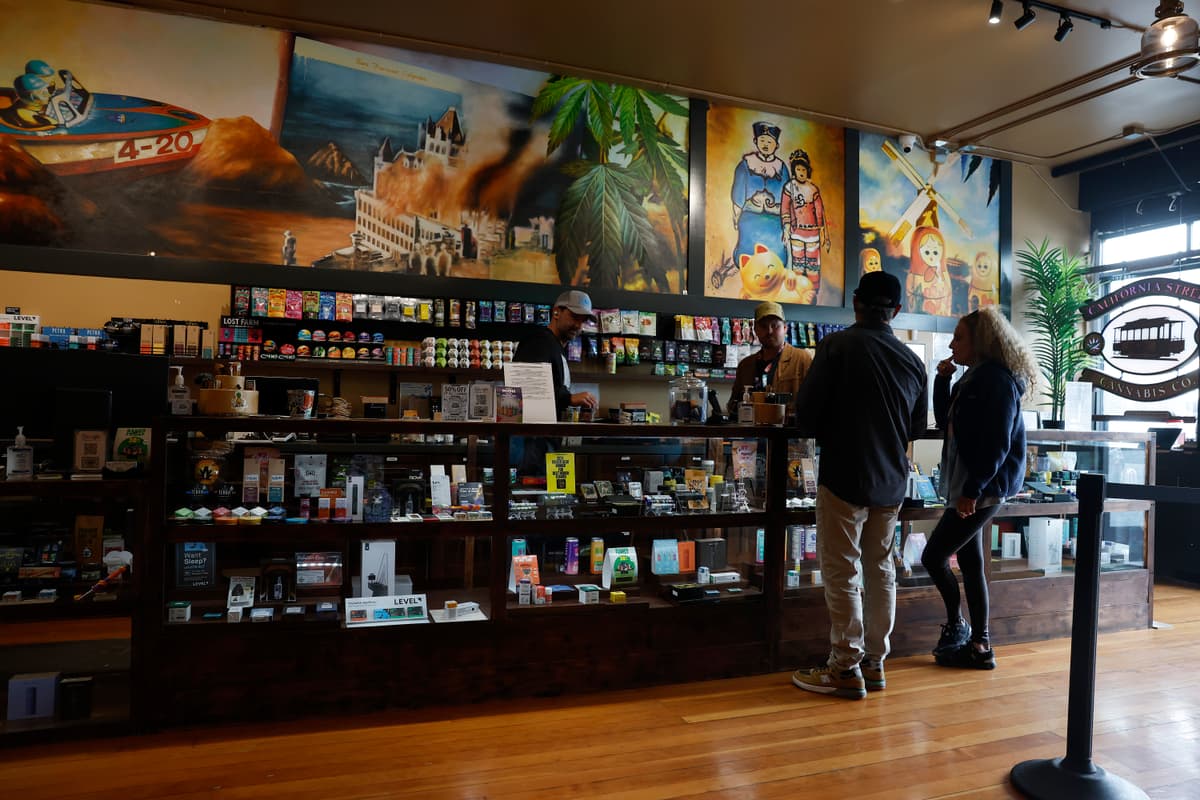
On November 5, 2022, 18-year-old Ciara Hare, along with two friends aged 22 and 18, were killed when a speeding driver under the influence of marijuana struck their vehicle on the Southern State Parkway near Exit 32 in Long Island, New York. The 29-year-old driver had been traveling approximately 93 mph and weaving through traffic while high on cannabis before colliding with the victims’ car.
This tragic case reflects a broader and deeply troubling pattern nationwide.
A Burgeoning Problem
A recent six-year investigation found that among 246 drivers who died in motor-vehicle crashes in Montgomery County, Ohio, 41.9 percent tested positive for active levels of Delta-9-tetrahydrocannabinol, better known as THC, the compound responsible for the intoxicating effects, or the “high” associated with cannabis.
The average blood level was 30.7 ng/mL — several times higher than the 2–5 ng/mL thresholds used by many jurisdictions to indicate impairment.
A broader analysis by the National Highway Traffic Safety Administration (NHTSA) found that 54.4 percent of drivers injured or killed in serious crashes nationwide tested positive for drugs or alcohol, with THC the most common drug detected.
“We have a growing crisis,” founder of DUID Victim Voices, Ed Wood, who started the group after losing his 33-year-old son Brian to drug-impaired drivers, tells The New York Sun. “And it’s very poorly understood by the masses and the people they elect to lead them.”
At the same time as the study’s release, Ohio’s legislature unanimously passed a significant reform to its Senate Bill 55, making it harder to convict drivers based solely on traces of marijuana metabolites that prove past use, not current impairment.
That change means drivers in the state can no longer be prosecuted simply for having marijuana metabolites in their system, since those chemical byproducts can remain in the body for days or even weeks after use and do not indicate a person was impaired at the time of the crash.
Instead, prosecutors must now show evidence of actual impairment, such as erratic driving behavior, officer observations, or active levels of THC — the psychoactive compound in cannabis — detected in blood tests.
This legislative change comes against a backdrop of frustrating and increasing concern by many, as compelling data from numerous studies shows that fatal crash rates have indeed risen in states that have legalized recreational cannabis use.
Some other reports show little correlation between marijuana legalization and a rise in car fatalities, including an Ohio study which claims that THC-positivity changed little after the state legalized recreational cannabis in 2023. But the broader trend validates the fears of safety advocates who predicted that legalization would lead to greater cannabis-related impairment and more tragedies on the road.
The biggest hurdle is determining impairment in the first place.
Challenges in Determining Impairment
While it is illegal in all 50 states to drive while impaired by cannabis, standards for determining impairment differ widely. Most states rely on “effects-based” laws, which require officers to prove impairment through observation, field sobriety tests, and the assessment of a certified drug recognition expert.
A handful of states — including Nevada, Montana, Illinois, Ohio, and Washington — use “per se” limits that criminalize driving with THC concentrations above a certain threshold, typically 2–5 ng/mL of blood. Others, such as Utah and Georgia, enforce “zero tolerance” laws prohibiting any detectable THC.
“Linking active THC concentrations to driving impairment, and crash causation, remains a daunting task,” a professor of psychiatry at the University of California, San Diego, Thomas Marcotte, tells the Sun.
“The human body processes THC very differently than it does alcohol — unlike with alcohol, there is not a straightforward relationship between blood concentrations and behavioral impairment,” said Mr. Marcotte, the co-director of the Center for Medicinal Cannabis Research at UC San Diego.
He also observed that “THC concentrations in the blood drop very quickly, while alcohol stays in the blood for much longer periods and correlates with impairment.”
“In addition, not all individuals who use THC become significantly impaired. Examining data from the real world has significant limitations,” Mr. Marcotte continued. “For example, in frequent users, THC is detectable for many hours or days after acute impairment has waned. It is thus possible that in some cases in which THC is present, it is not indicative that the driver was impaired.”
Advocates contend that per se limits are not based on science and that it is impossible to hold drivers accountable when the law itself is uncertain. In other words, you can’t prosecute what you can’t define.
“Occasionally legislators might pass regulations or laws based upon how they would like it to be, rather than the reality that cannabis does not affect individuals in the same manner as alcohol,” said Mr. Marcotte. “And at times law enforcement may be enticed to pilot new devices that claim capabilities that have not been adequately validated in controlled studies.”
There is currently no roadside test equivalent to a breathalyzer for alcohol. Because there is no simple THC breathalyzer, police ultimately rely on behavioral evidence, and, if authorized, a blood draw to confirm the presence and concentration of THC.
While blood alcohol levels offer a generally reliable indicator of impairment, the exact correlation is not seen with cannabis. Blood THC levels may bear little resemblance to a person’s actual driving performance or degree of incapacitation.
“Breath testing devices show little immediate promise because of the extraordinarily low quantities of THC found in breath and the difficulty of ensuring that breath testing devices test only the breath and not saliva,” Mr. Wood explained.
“Unfortunately, the federal government is spending effort and our tax dollars pursuing breath testing technology. My understanding of the technology is that it is unlikely for this to become practical during my lifetime.”
From his viewpoint, money would be better spent on techniques and devices to measure impairment rather than drug presence.
“One of the more promising avenues to pursue is the measurement of drugs’ effects on eye movement,” Mr. Wood continued. “Once that can be identified, one must then correlate the eye movement measurements with crash risks.”
Mr. Marcotte noted, however, that the current focus is on “oral fluid testing,” also known as a mouth swab or saliva test, which checks for recent drug, alcohol, or other substance use by analyzing a person’s saliva. But even that comes with caveats.
“It is more informative than blood in some cases, but still not a guarantee of being within the likely time of impairment,” he explained. “And, unfortunately, the presence of THC in oral fluid does not correlate with impairment. It merely shows the use of cannabis.”
Impairment and Driving Behavior
Studies have consistently demonstrated that acute cannabis use significantly impairs crucial driving skills such as reaction time, decision-making, and divided attention by negatively affecting psychomotor and cognitive functions.
Multiple analyses show that driving while acutely impaired by THC makes the risk of a fatal crash several times higher than for a sober driver.
The challenge for highway safety, however, is that states often lack a scientifically proven, measurable legal standard for cannabis impairment, as the presence of THC in blood is poorly correlated with the actual degree of impairment.
Experts stress that the widespread belief that cannabis is safe because it is legal constitutes a dangerous misunderstanding and highlights the urgent need for robust public education campaigns, similar to those for alcohol, to prevent further tragedies.
So, what happens now?
Technology and the Path Forward
Mr. Marcotte highlighted the importance of “public messaging, supported by research in determining the effectiveness of such campaigns, that communicates the risks of driving high and fosters actual behavior change.”
Activists point out that, for decades, public initiatives have centered on the dangers of drinking and driving, and those initiatives now need to include marijuana use. The American Chemical Society similarly stressed that “messaging around the dangers of smoking cannabis and driving needs to be stronger.”
Thus, as states legalize cannabis, the rising tide of impaired driving fatalities demands immediate attention, recognizing that these national statistics are not abstract numbers, but irreversible losses for families across the country.
“Many of the deaths are no doubt attributed to not just impairment by THC only, but THC combined with other drugs like alcohol,” Mr. Wood said. “And very few states track fatalities as a function of drugs found in the bodies of crash victims.”