


Super Bowl Bets To Skyrocket as States Move To Legalize Sports Gambling
Massachusetts is the latest of these states to legalize gambling on sports, with retail sports wagering set to commence on Tuesday.
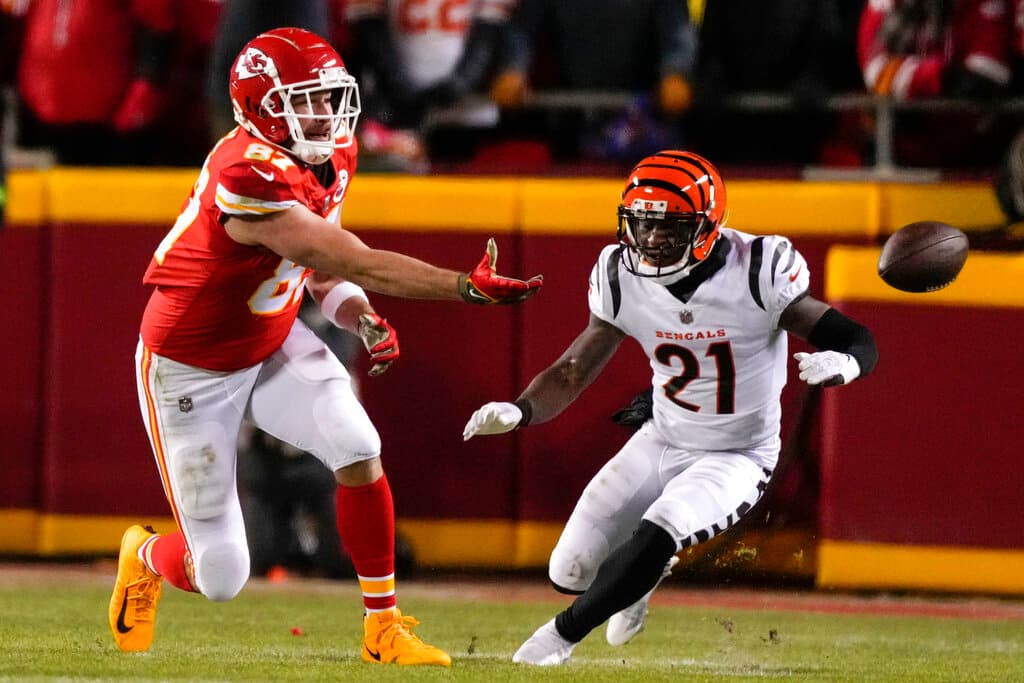
This year’s Super Bowl between the Kansas City Chiefs and the Philadelphia Eagles is likely to be the biggest legal sports betting event of the year, and is raising concerns about the increased prevalence of gambling on the game.
Last year, Super Bowl LVI saw about 31.4 million fans wager around $7.61 billion, according to the American Gaming Association, a record for legal sports betting.
Although the organization’s estimates for this year’s Super Bowl don’t come out until February 7, the game will likely see even more money wagered, as three additional states have legalized sports betting in the past year.
Sports books are also spending tens of millions of dollars on Super Bowl ads — Caesars alone spent $73.1 million on Super Bowl ads last year — pushing promotional bets in an effort to capture market share in the growing industry.
All told, 36 states and the District of Columbia now allow sports betting, including 26 states that have legalized sports betting on mobile devices.
According to the American Gaming Association, this will be the end of a NFL season that was a landmark for the industry, with 36.6 million, or 18 percent, of American adults saying they planned to bet this season.
“The sustained interest in NFL wagering reflects the growth and continued maturation of legal sports betting across the country,” the AGA president, Bill Miller, said. “Consumers clearly want legal sports betting options and understand the regulated industry’s foundational commitments to responsibility.”
An AGA report found that the legalization of sports betting has resulted in a marked decrease in the share of bettors placing bets with illegal bookies — down to 13 percent of the total from 18 percent in 2020.
Massachusetts is the latest of these states to legalize gambling on sports, with retail sports wagering set to commence January 31, just in time for the Super Bowl.
This means that Massachusetts residents will be able to bet on games in three casinos around the state. Mobile sports betting is set to start later this year, with 11 mobile operators being granted licenses from the state.
Like other states, Massachusetts is expected to see a bump in revenue from taxes on what Legal Sports Report expects will be between $300 million and $550 million in revenue for sports books in the first full year.
The state will tax retail sportsbooks at 15 percent of their revenue and online sportsbooks at 20 percent, a relatively low rate compared to states like New York, which taxes 51 percent of the sports books’ revenue.
Winnings in Massachusetts will also be taxed at a flat rate of 24 percent, though the state will tax net winnings, meaning only those bettors who come out ahead over the course of a year will be taxed.
An estimated $60 million in revenue will go to funding for parks, schools, police, and fire departments at the local level, and workforce development and public health at the state level.
As in other states, the Massachusetts Department of Public Health, soon to be partly funded by sports betting, will be responsible for helping to prevent and help provide services for problem gambling.
While many have raised concerns about the effects of legalized sports betting on problem gambling, a researcher at the University of Massachusetts Amherst’s School of Public Health and Health Science, Rachel Volberg, said mthe effects on Massachusetts may be modest.
“Sports betting participation in Massachusetts prior to legalization is already on par with participation rates in most other states that legalized sports betting early on,” she told the Sun.
According to Dr. Volberg, this is even though most researchers acknowledged that increased access to sports betting leads to an increase in gambling harms.
The bureau director of prevention for the New York Council on Problem Gambling, Brandy Richards, told the Sun that the allocation of resources to prevention is insufficient given the rise they’ve seen in problem gambling, particularly among younger bettors.
“We’re hoping to see some regulation around the advertising, especially toward young people,” she said. “It’s promoting the view — especially to our young folks — that it’s a fun sort of advertising.”
Ms. Richards says her group advocates for more balanced messaging around gambling in advertisements on television as well as an around-the-clock hotline for problem gambling help.
“People don’t have to physically leave to go gamble and they in essence have 24/7 access because they bet online,” Ms. Richards said. “The onus is very much on the individual to keep track of time and money spent.”
Dr. Volberg says that though there is little research on preventing problem sports betting specifically, certain groups may be more at risk than others when it comes to developing a gambling problem.
“Particularly vulnerable groups may experience increases in problem gambling rates including adolescents, young adults, college athletes, recent immigrants, and individuals who have experienced gambling problems in the past,” she said.