
Supreme Court To Hear Challenge to ‘Hostile’ Democratic Attorney General’s ‘Invasive’ Subpoena of Faith-Based Pregnancy Center
Attorneys for the pregnancy center say the case could lift the fear of groups ‘being threatened by a hostile’ state government that opposes their mission.
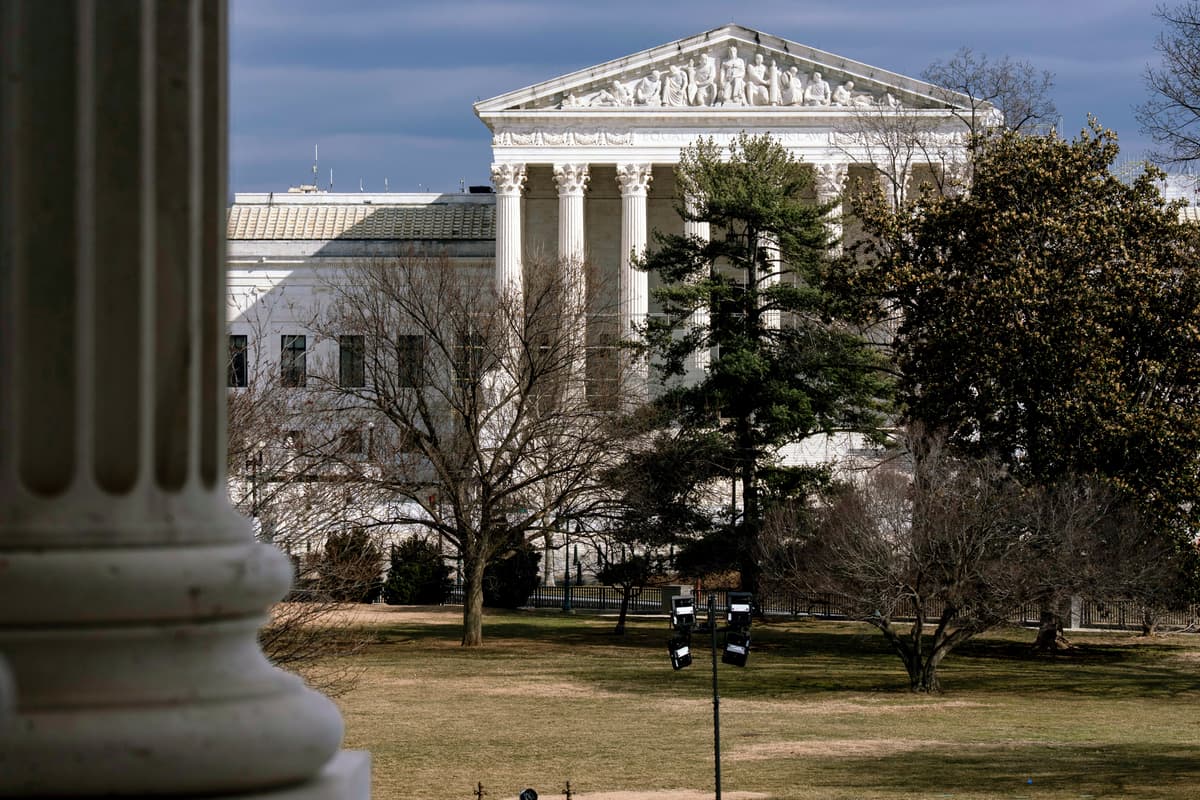
The Supreme Court is set to hear arguments next month in a case that civil liberties advocates say could protect nonprofits from “hostile” state prosecutors using investigations and subpoenas to target organizations they disfavor.
The case, First Choice Women’s Resource Centers, Inc. v. Matthew Platkin, centers on a 2023 subpoena issued by New Jersey’s attorney general, Matthew Platkin, that sought information on a faith-based pregnancy center’s donors, advertising material, and medical personnel. The pregnancy center challenged the subpoena.
The legal dispute, which might otherwise be overlooked as a dull fight over procedure, has brought together an unlikely coalition of press freedom advocates, Catholic bishops, the Trump Administration, conservative law firms — such as Alliance Defending Freedom — and the left-wing ACLU to argue on behalf of the pregnancy center.
In 2023, Mr. Platkin launched an investigation into First Choice Women’s Resource Center, described as a pro-life, faith-based organization that offers resources and counseling to encourage women not to get abortions. Mr. Platkin said his investigation sought to determine whether the center is “misleading donors and potential clients” about whether it performs abortions. First Choice describes itself on its website as “an abortion clinic alternative that does not perform or refer for termination services.”
First Choice challenged the subpoena in federal court. A judge turned away the case, however, ruling that it was not far enough along for federal courts to weigh in. The United States Court of Appeals for the Third Circuit upheld that decision. First Choice appealed to the Supreme Court, hoping that it would rule that federal courts can take up the case.
Mr. Platkin has sought to enforce the subpoena, but a state judge declined to require First Choice to hand over the information and has told both sides to negotiate instead. The attorney general insists that because a New Jersey court has not enforced the subpoena, which would force First Choice to hand over the documents or face penalties, the pregnancy center has not suffered harm, and it is too early for federal courts to take up the case.
First Choice alleges that Mr. Platkin’s subpoena violates its First Amendment rights and is an example of an unfounded, retaliatory investigation by a Democratic prosecutor against an anti-abortion group.
The Supreme Court has noted in other cases the “deterrent effect” of forcing nonprofits to hand over donor information. In the 2021 decision in Americans for Prosperity Foundation v. Bonta, the high court struck down a California law that required charities to disclose the names and addresses of individuals who donated more than $5,000. The justices said such disclosure requirements violate donors’ right of association.
First Choice argues Mr. Platkin’s subpoena was not actually intended to enforce state law but to make donors wary of associating with the center. Attorneys for the organization point out that Mr. Platkin has taken a harsh stance against anti-abortion groups like First Choice, going so far as to put out a consumer alert, warning women to “be cautious of any attempts by the center to delay or dissuade” them from obtaining an abortion.
A senior attorney for the ADF, which is representing First Choice, Lincoln Wilson, tells the Sun that the subpoena is causing a chill by making donors less willing to associate with the organization due to concerns that their identities could be disclosed. Mr. Wilson said that the Supreme Court recognized in Americans for Prosperity that disclosing donor information to the government constitutes a harm because it could lead donors to worry about facing retaliation from a “hostile state authority.”
Mr. Wilson says that forcing the organization to disclose its donor list to the government might make individuals less likely to donate money because of concerns that they might face government action, such as an audit, due to their association with an organization the attorney general dislikes.
He told the Sun that Mr. Platkin’s subpoena already is having a chilling effect on other pregnancy centers, as a medical director of another crisis pregnancy center resigned after he heard about the subpoena for First Choice.
The First Choice case has brought together a coalition of conservative groups and also left-wing groups such as the ACLU, which has often argued in favor of expanding access to abortion, in its support.
The ACLU and the Foundation for Individual Rights and Expression filed an amicus brief in support of First Choice. The civil liberties groups argue that a “subpoena seeking sensitive donor information can chill a disfavored speaker’s protected associations long before it’s ever enforced.”
“Even unexecuted threats of government retaliation against disfavored speakers, such as an extortionate demand, or, as alleged here, an invasive subpoena, can create a First Amendment injury — chilling protected speech,” the brief says. “If left unchecked, such tactics will subject constitutional rights to the shifting winds of political power, thereby eroding free expression across the political spectrum.”
Mr. Wilson said that if the Supreme Court rules in First Choice’s favor, the case is expected to be remanded to a district court to evaluate the organization’s First Amendment claims. However, that step, he said, would mean that nonprofits have “protections” to ensure they “don’t have to fear being threatened by a hostile state [attorney general] who opposes [their] mission.”
Mr. Platkin’s office did not respond to the Sun’s request for comment by the time of publication.
Oral arguments are scheduled to take place on December 2.