

Supreme Court Hints That It Would Not Allow Trump To Fire Fed Chairman

A majority of the justices, in giving the president a green light to fire executive agency officials, subtly say that Jerome Powell is off-limits.
AP/Erin Hooley
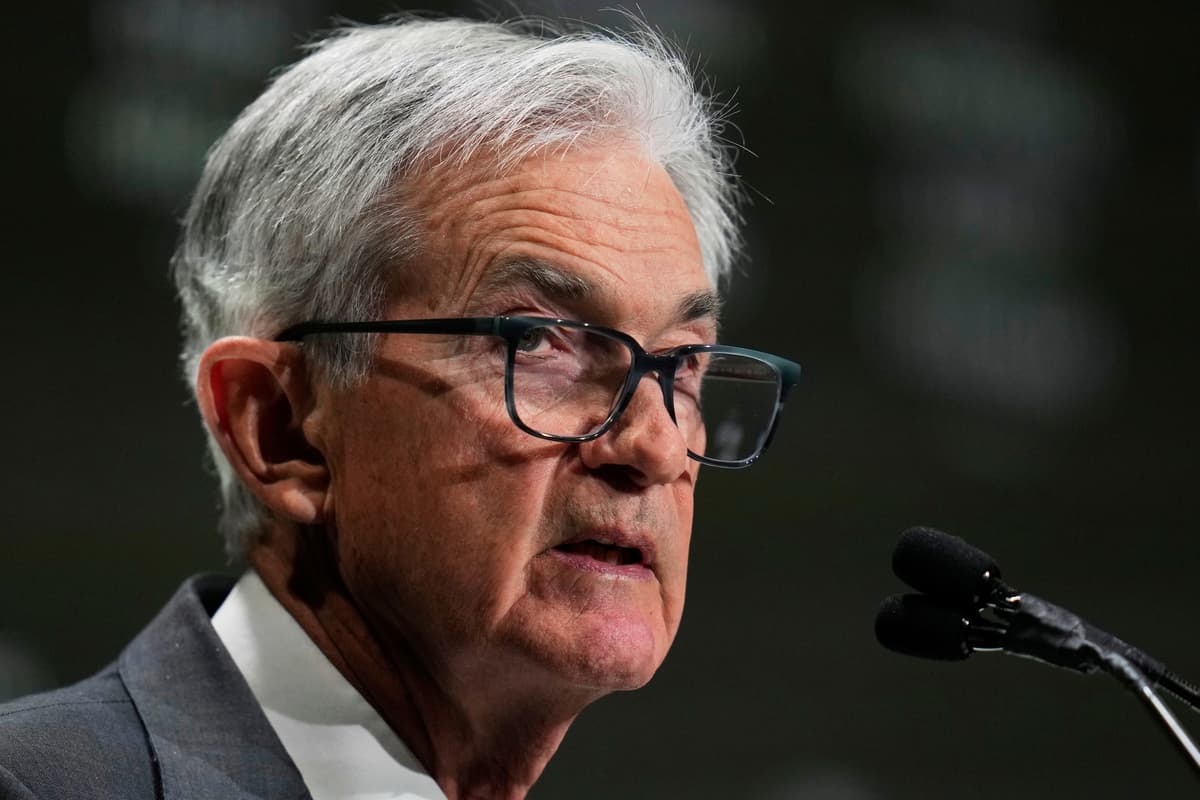
The Fed chairman, Jerome Powell, at the Economic Club of Chicago, April 16, 2025. AP/Erin Hooley

The Supreme Court, in affirming, for now, President Trump’s power to fire executive branch agency officials, seems to be telling the commander-in-chief to leave the Federal Reserve alone. Mr. Trump has been openly complaining about the central bank chairman, Jerome Powell, for years, and has hinted in the past that he may relieve him of his post. 

In an unsigned order Thursday in the case of Trump v. Wilcox, the court allowed the president to remove certain executive branch officials as he sees fit while the legal disputes over the terminations are playing out in lower courts.

The court’s decision, the order says, “reflects our judgment that the Government faces greater risk of harm from an order allowing a removed officer to continue exercising the executive power than a wrongfully removed officer faces from being unable to perform her statutory duty.”

The case was brought by two members of the boards of federal agencies: Gwynne Wilcox of the National Labor Relations Board and Cathy Harris of the Merit Systems Protection Board. Both were removed from their jobs by Mr. Trump earlier this year, and the court now suggests Mr. Trump is likely to prevail in the legal disputes that have arisen over his right to dismiss them. 

“Because the Constitution vests the executive power in the President … he may remove without cause executive officers who exercise that power on his behalf, subject to narrow exceptions recognized by our precedents,” the court’s order says. “The stay reflects our judgment that the Government is likely to show that both the NLRB and MSPB exercise considerable executive power.”

During the course of their arguments, both Ms. Wilcox and Ms. Harris had argued that they were protected by federal law shielding some federal agency officials from termination without cause. Similar arguments have arisen over whether the president has the power to dismiss without cause the members of the Federal Reserve’s board of governors.

Thursday’s order, which appears to reflect the views of the court’s six conservative justices, says the majority disagrees with that argument, because the Fed is a unique institution afforded special protection, unlike other executive boards. 

“The Federal Reserve is a uniquely structured, quasi-private entity that follows in the distinct historical tradition of the First and Second Banks of the United States,” the order states. 

The assertion seems to be a warning sign to the White House that the president should tread lightly if he begins to consider removing Mr. Powell from his job. With inflation expected to rise as a result of the president’s tariffs, the likelihood is shrinking that the Federal Reserve will cut its benchmark interest rate this year, as Mr. Trump has been demanding. 

“If I want him out, he’ll be out of there real fast, believe me,” Mr. Trump told reporters in the Oval Office in April after being asked about the Fed refusing to cut rates. “I’m not happy with him.”

The court’s three liberal justices, who all dissented to the court’s order on Thursday, note that the majority seems to bring up the independence of the Federal Reserve “out of the blue” — something that they also see as a shot at the White House. 

“The majority closes today’s order by stating, out of the blue, that it has no bearing on ‘the constitutionality of for-cause removal protections’ for members of the Federal Reserve Board,” Justice Elena Kagan writes in her dissenting statement. “I am glad to hear it, and do not doubt the majority’s intention to avoid imperiling the Fed.”

Mr. Powell was asked about the possibility of being fired last year, after Mr. Trump had won the election and there was speculation that the president-elect would go searching for a new Fed chairman before Mr. Powell’s term expires in 2026. 

When asked by a reporter what he thought about potentially being fired, Mr. Powell responded that such an act is “not permitted under the law.”


The New York Sun

© 2025 The New York Sun Company, LLC. All rights reserved.

Use of this site constitutes acceptance of our Terms of Use and Privacy Policy. The material on this site is protected by copyright law and may not be reproduced, distributed, transmitted, cached or otherwise used.

The New York Sun

Sign in or  create a free account

or
By continuing you agree to our Privacy Policy and Terms of Use