Supreme Court Set To Hear Arguments in Case Challenging Colorado’s Ban on ‘Conversion Therapy’
The state says the lawsuit threatens to ‘destabilize longstanding and sensible healthcare regulation,’ while the plaintiffs say the law violates the First Amendment.
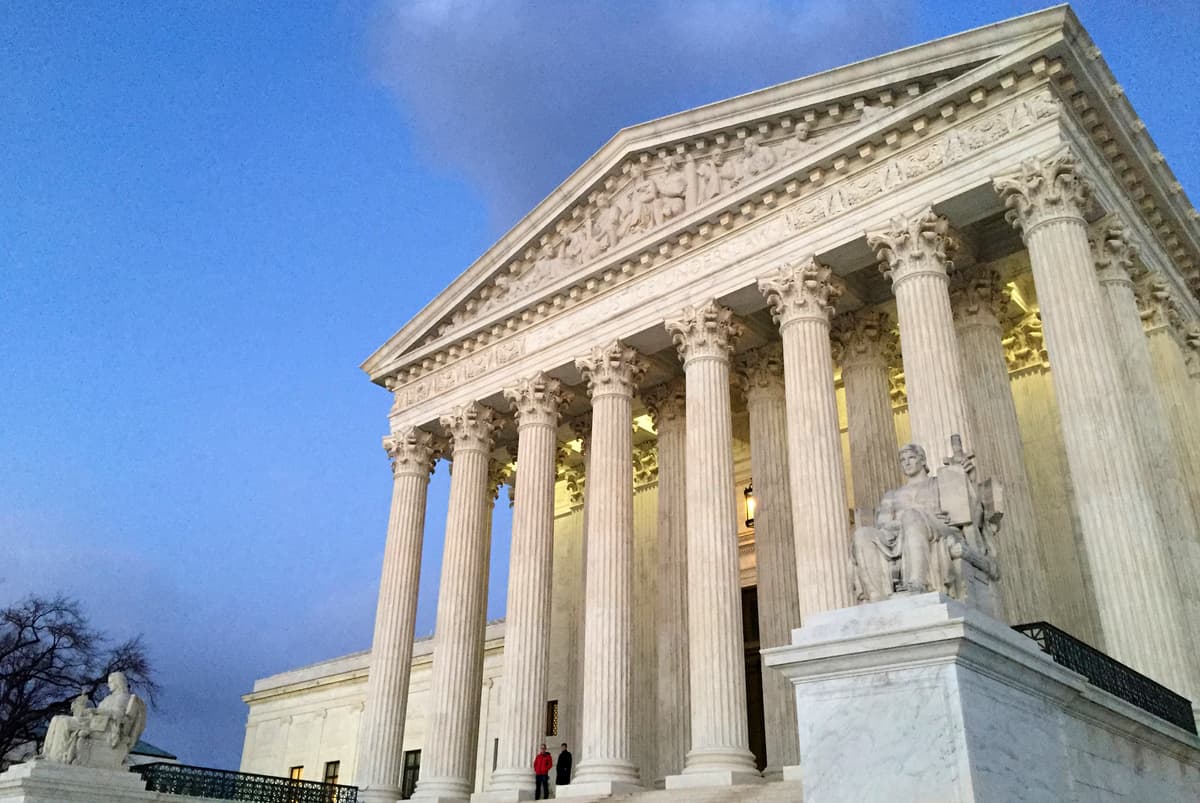

The Supreme Court will soon hear arguments about a ban on conversion therapy that could have major consequences for free speech and the government’s ability to regulate it among health care professionals.
On October 7, the justices will hear oral arguments in the case of Chiles v. Salazar, which centers on Colorado’s law banning so-called conversion therapy for minors. The case centers on the question of whether the law regulates professional conduct or violates the First Amendment’s protection for free speech.
Colorado passed the law, HB19-1129, in 2019 after years of failed attempts. The law prevents a licensed physician who specializes in psychiatry or a licensed or certified mental health provider from “engaging in conversion therapy with a patient under 18 years of age.” State law defines “conversion therapy” as “efforts to change an individual’s sexual orientation, including efforts to change behaviors or gender expressions or to eliminate or reduce sexual or romantic attraction or feelings toward individuals of the same sex.” Colorado is not alone in prohibiting such discussions, twenty-three states and the District of Columbia have banned “conversion therapy” for minors.
A licensed counselor in Colorado, Kaley Chiles, is suing to challenge the law, arguing that it violates her free speech rights and her free exercise of religion. The law firm representing Ms. Chiles, the Alliance Defending Freedom, says the law forces licensed health care professionals to only engage in conversations regarding sexual orientation and gender identity that the government favors.
Colorado casts the measure as an effort to protect children from allegedly harmful treatments and substandard care. Lawyers for the state allege that the plaintiff’s argument threatens to “destabilize longstanding and sensible healthcare regulation.” A law professor at the University of Colorado Boulder, Scott Skinner-Thompson, who wrote an amicus brief in support of Colorado’s law, tells the Sun that, typically, the government can regulate the conduct of medical professionals to ensure they are not lying to clients or providing substandard care, which he said “of course includes the regulation of speech.”
“Laws burden speech all the time,” Mr. Skinner-Thompson said. “But that doesn’t mean they’re going to be subject to First Amendment scrutiny. The object or target of the regulation matters. And here the Colorado law targets conduct – therapy – this therapist happens to use communication as part of that therapy. But that doesn’t mean it’s targeted at her speech.”
Lower courts have held that the law is constitutional, as they have labeled Ms. Chiles’ conversations “professional conduct” because they occur in the process of trying to help clients.
However, an attorney with the ADF, Jon Scruggs, tells the Sun that the talk therapy that his client wants to engage in falls outside of the bounds of the government’s ability to regulate conduct and qualifies as First Amendment-protected speech. Mr. Scruggs noted that his client “only engages in willing conversations” with clients and is not performing any surgeries or prescribing drugs.
“There’s no conduct to regulate, it’s just speaking,” Mr. Scruggs said. “I’m not really sure how you can say that this is regulating a procedure or treatment when there’s no procedure or treatment… all you have is these types of conversations.”
Supporters of the law argue that it is necessary to protect children from harmful treatments. At the time of the signing of the law, Colorado’s governor, Jared Polis, said it would ensure that “no one can be forced” to “attend a torturous conversion therapy pseudoscience practice.” LGBTQ activists insist the practice is “debunked.” The Trevor Project, an LGBTQ advocacy group, said such conversations lead to “psychological harm, pointing to its own study, which found that “LGBTQ youth” who had undergone “conversion therapy” were “two and a half times as likely to report multiple suicide attempts.”
Mr. Skinner-Thompson says that talk therapy can cause “harm” by “denying” a client’s identity and “telling them that they are in need of changing, that they are abnormal, and that something needs to be changed.” But Mr. Scruggs notes that Colorado failed to meet the burden of providing evidence that talk therapy, which his client practices, causes harm. Instead, he said the studies produced by the state focused on other practices that can be described as conversion therapy, such as electric shock therapy, to show harm.
“The First Amendment says, look, if you’re going to regulate speech, you need to prove there’s a problem, you can’t just take the government’s word for it when you’re talking about banning conversations,” Mr. Scruggs said.
While Colorado insists that conversion therapy causes harm, the ADF argues that the law engages in viewpoint censorship and “pushes these young people down an unproven, dangerous, and increasingly rejected path,” according to its petition filed with the Supreme Court.
Attorneys for Ms. Chiles highlight a study published in the United Kingdom in 2024, known as the Cass Review, which found that there is “no good evidence on the long-term outcomes of [these] interventions to manage gender-related distress.”
The ADF says the “best available evidence does not support” gender-affirming care for children, and that the state is unconstitutionally preventing clients from receiving talk therapy even though they are seeking it out.
“Counselors cannot help them grow comfortable with their bodies or realign their identity and sex. They may only encourage a child’s gender identity and the accompanying ‘gender transition’ … even if the client doesn’t want that, and even though Colorado’s expert admits ‘gender identity evolves’ for some people,” the ADF says.
The case could have a significant impact on free speech rights. Mr. Scruggs says that if Colorado’s argument wins, the government could label any conversation with a professional as a “treatment,” even in the absence of any other procedures or the prescription of drugs, giving it the ability to regulate those conversations as “conduct.”
Mr. Skinner-Thompson warns that ruling in favor of Ms. Chiles would lead to the “upending of a whole host” of medical malpractice laws. However, Mr. Scruggs says that the Supreme Court could easily rule in favor of Ms. Chiles without upending medical malpractice law by preventing the government from regulating conversations absent evidence showing that those conversations have actually caused harm.
A decision in the case is expected by summer 2026.