

Supreme Court Set To Hear Case on Trump’s Authority To Fire Heads of Independent Agencies
The case could upend a 1930s precedent and expand the powers of the executive branch.
The Supreme Court is set to hear a case Monday that challenges a nearly 90-year-old precedent related to the separation of powers between the executive and legislative branches.
Trump v. Slaughter centers on President Trump’s ability to fire the heads of independent federal agencies who have been confirmed by Congress.
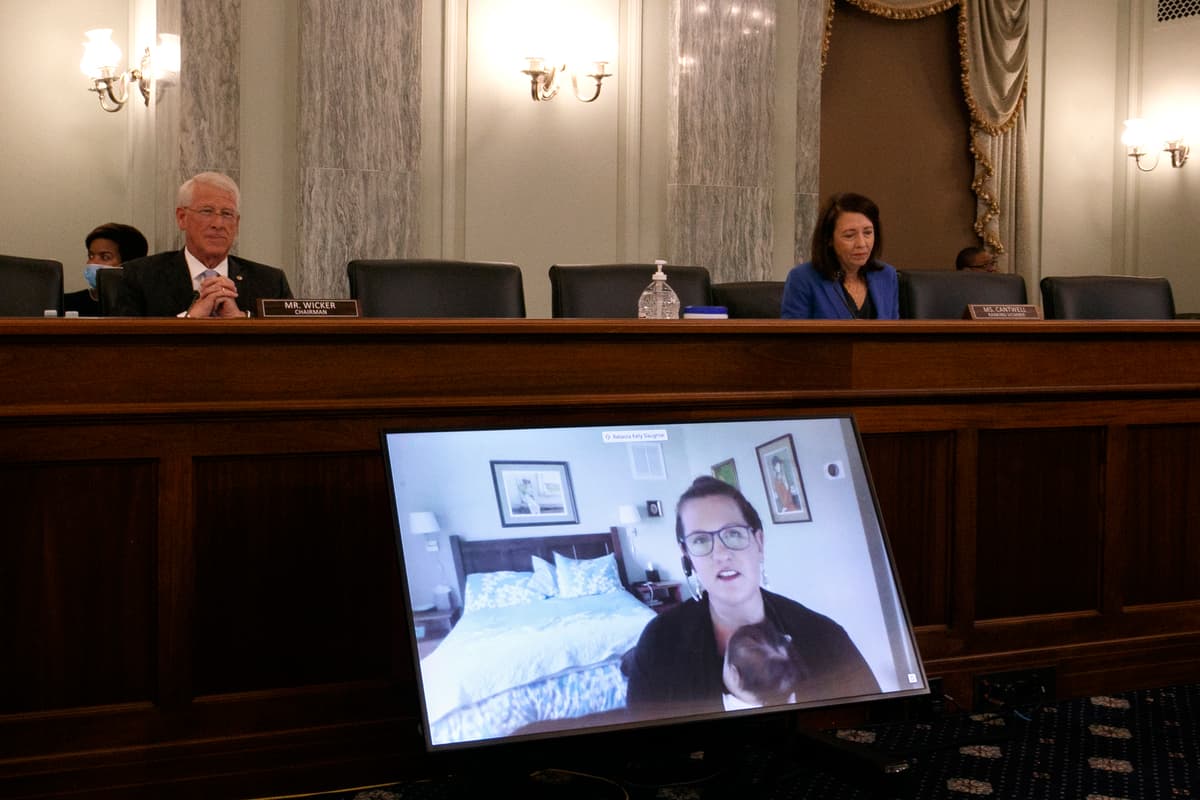
Mr. Trump fired a commissioner of the Federal Trade Commission, Rebecca Slaughter, in March. Ms. Slaughter sued and lower courts ordered her to be reinstated.
Chief Justice Roberts put a temporary hold on the reinstatement orders and the full court allowed Ms. Slaughter’s firing to remain in effect but agreed in September to hear her case due to the constitutional issues around her firing.

Congress designed the commission to be led by a bipartisan group of five commissioners with no more than three belonging to a single political party. The commissioners are appointed by the president and confirmed by the Senate.
Commissioners are appointed to staggered terms to enable future presidents to appoint new members. Congress enabled the president to remove commissioners for “inefficiency, neglect of duty, or malfeasance in office.”
In March, Ms. Slaughter, and the other Democrat on the panel, received an email from the administration that they were being removed from their positions. The emails contained a message from Mr. Trump stating, “I am writing to inform you that you have been removed from the federal Trade Commission, effective immediately.”
“Your continued service on the FTC is inconsistent with my Administration’s priorities. Accordingly, I am removing you from office pursuant to my authority under Article II of the Constitution,” the message continued.
Article II of the Constitution vests all executive power in the president.
The firings have left only the three Republican commissioners on the panel. In her lawsuit, Ms. Slaughter notes that the message did not indicate that she was being fired for inefficiency, neglect of duty, or malfeasance in office.
A long-time federal law limits the president’s power to fire such officials for political reasons. The justices will hear arguments over whether that law unconstitutionally interferes with a president’s authority over the executive branch.
When President Franklin Roosevelt fired a commissioner of the Federal Trade Commission, William Humphrey, in the 1930s, over disagreements on policy issues, FDR was sued.

The Supreme Court ruled in Humphrey’s Executor v. United States that the president could not fire Humphrey except under for-cause removal reasons. The justices noted that siding with the president would expose “countless other federal positions — like judgeships on the U.S. Court of Claims — to unfettered removals.”
The Supreme Court has previously allowed Mr. Trump to fire members of the National Labor Relations Board and the Consumer Product Safety Commission. That has led to speculation that the court is leaning toward a decision in the president’ favor in this case.
If The Nine overturns the precedent in Humphrey’s Executor, it will solidify the Article II powers of the executive branch and limit Congress’s ability to block the president’s staffing decisions involving regulatory agencies.
It is unclear if Slaughter will impact another high profile firing. Mr. Trump has attempted to remove Lisa Cook from the Federal Reserve board of governors.

The president says he was justified in her removal because of claims she committed mortgage fraud. Ms. Cook has denied the fraud claims and she has not been charged with any crime.
Ms. Cook claims her firing is illegal and the Supreme Court is set to hear her case in January.
The Supreme Court has previously suggested that the Federal Reserve may have more independence than other agencies, which could help Ms. Cook.