
Texas Turns to Illinois Court Seeking Arrest of Democrats Who Fled To Block Redistricting Effort
The Texas attorney general says ‘comity between states’ demands that Illinois enforce its arrest warrants.
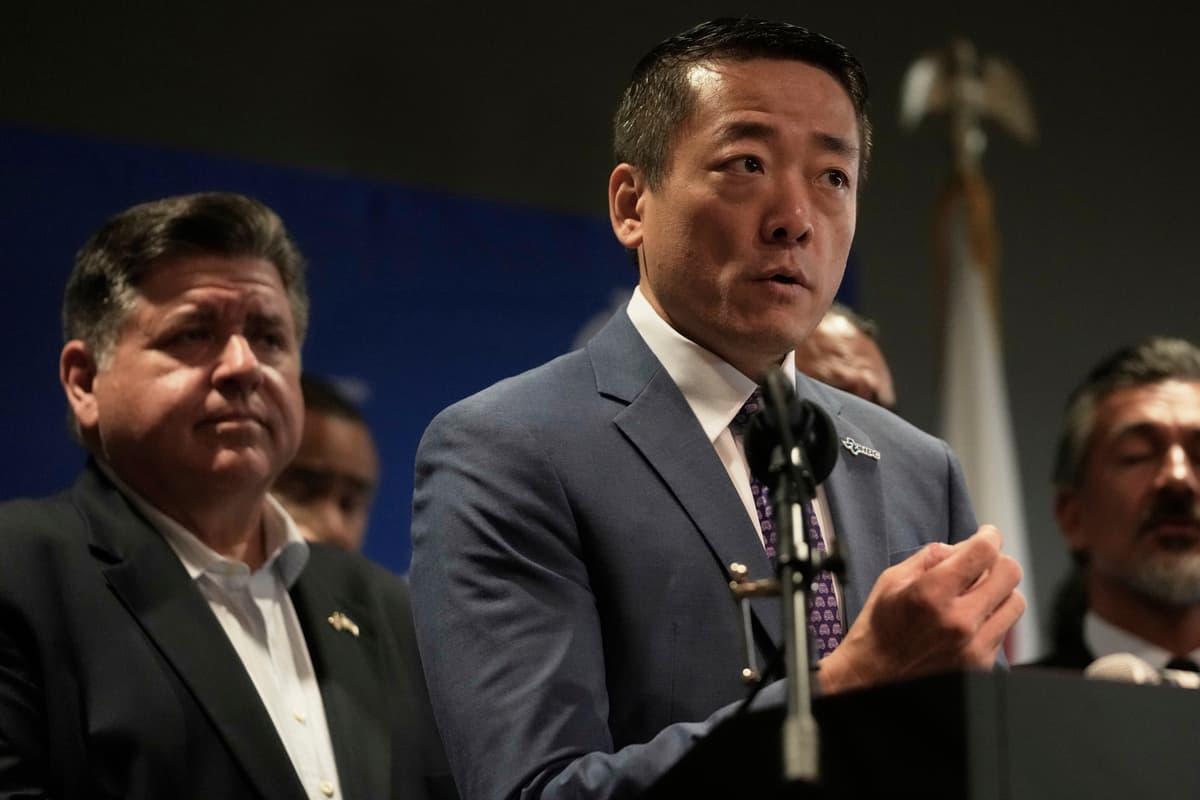
Texas is asking a court in Illinois to enforce its warrant for the arrest of Democratic lawmakers who fled the state in an attempt to stop its redistricting efforts.
More than 50 Democrats left Texas last week to deny Republicans a quorum in the state house in an attempt to block passage of a new congressional map. The house speaker, Dustin Burrows, issued civil arrest warrants and ordered the sergeant-at-arms and state troopers to arrest the absent lawmakers.
The move was seen as symbolic, as civil arrest warrants are only enforceable within Texas and Illinois’s governor, J.B. Pritzker, has said his state will “do everything we can to protect every single one” of the Democrats who traveled there. However, the FBI has said it will help locate the lawmakers.
On Thursday, the Texas attorney general, Ken Paxton, and Mr. Burrows escalated the standoff by asking Illinois’s Eighth Judicial Circuit Court to enforce the warrants.
The decision by Democrats to flee the state is not a new tactic — Democrats left the state in 2003 and 2021 to deny Republicans a quorum — but what is new is the decision to try to enforce the arrest warrants outside of the state.
In the filing on Thursday, Mr. Paxton said, “The Texas Representatives named herein hope the State of Illinois will provide safe harbor for their political actions and shield them from legal process.”
“The United States Constitution, federal statute, and the doctrine of comity between states demand otherwise,” he wrote.
Mr. Paxton suggested that Illinois would want to enforce the warrants to ensure that “factionists and disorganizers” in the Prairie State do not disrupt legislation by adopting the same tactic as the Texas Democrats.
The attorney general said Illinois should enforce the arrest warrants in accordance with the Constitution’s full faith and credit clause, which requires states to enforce other states’ judgments.
States routinely honor each other’s judgments, including requests for extradition. However, the practice has been tested this year as Texas and Louisiana have sought to penalize a doctor in New York, Margaret Carpenter, for allegedly mailing abortion-inducing medication to their states, where abortion is restricted.
New York has a so-called shield law, which is designed to protect doctors from civil or criminal penalties for sending abortion medication to states where the procedure is restricted.
A Texas court issued a civil judgment of more than $100,000 against Dr. Carpenter, but officials in New York declined to file the judgment, citing the state’s shield law.
Louisiana’s governor, Jeff Landry, signed an extradition order in an attempt to have Dr. Carpenter sent to that state to face criminal charges, but New York’s governor, Kathy Hochul, has refused to honor the request.
In July, Mr. Paxton filed a petition in New York seeking a writ of mandamus to force the state to enforce the civil judgment against Dr. Carpenter.
The efforts by Texas and Louisiana to force New York to honor their judgments are widely seen as attempts to get the Supreme Court to weigh in on whether shield laws are legal.