Thailand-Cambodia Cease-Fire, While Shaky, Has White House Calling for a Nobel Peace Prize for Trump
Trump gets through to both sides by citing the advantages of coming to terms rather than risking important trade deals with Washington.
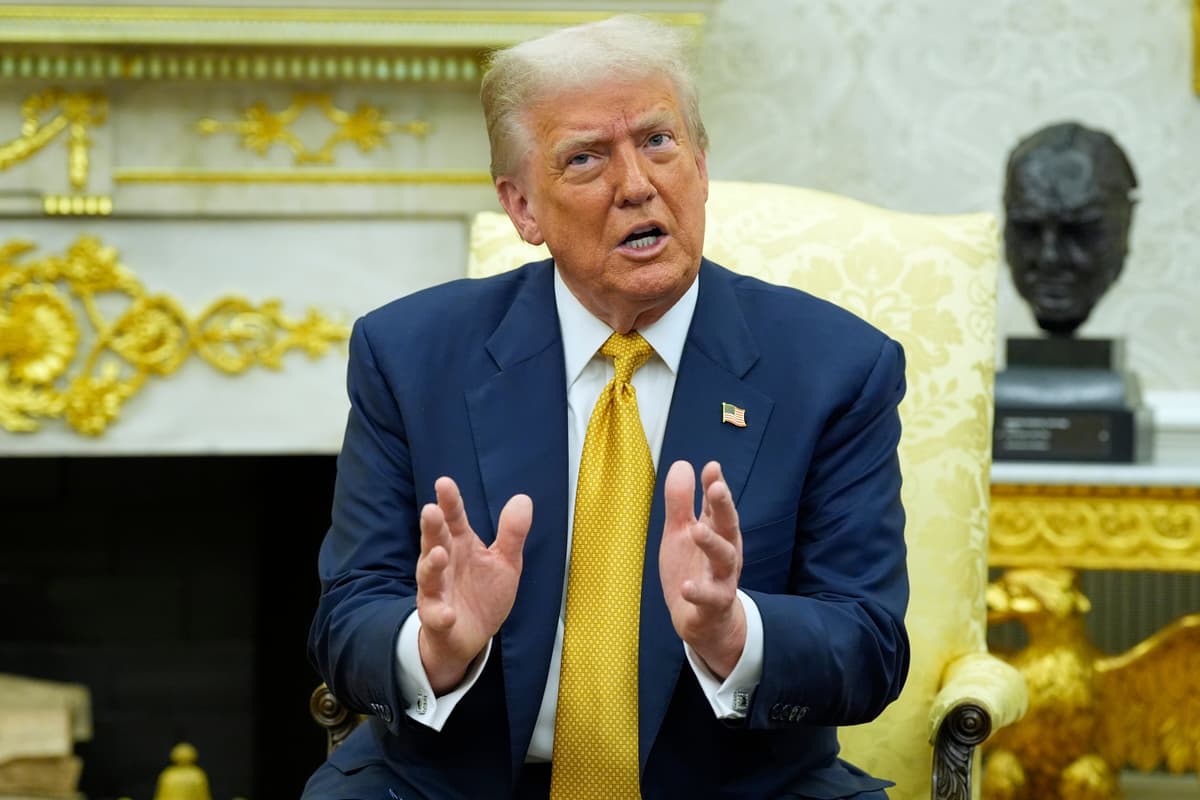
President Trump appears to be burnishing his credentials for a Nobel Peace Prize as the guns have fallen silent along the 500-mile Thai-Cambodian border following five days of fighting that killed several dozen people on both sides and forced several hundred thousand to flee their homes.
The cease-fire deal was signed by Thailand’s acting prime minister, Phumtham Wechayachai, and Cambodia’s prime minister, Hun Manet, at the Malaysian administrative capital of Putrajaya under the watchful eyes of the Malaysian prime minister, Anwar Ibrahim. The deal follows intensive American diplomacy climaxed by calls from Mr. Trump to both the Thai and Cambodian leaders.
Mr. Trump got through to them by citing the advantages of coming to terms rather than risking important trade deals with Washington, and he called Mr. Pkumtharm afterward to offer congratulations. “When all is done, and Peace is at hand,” he posted, “I look forward to concluding our Trading Agreements with both!”
Cambodia’s prime minister fully acknowledged Mr. Trump’s role, writing on X, “The purpose of this meeting is to achieve an immediate ‘ceasefire,’ initiated by President Donald Trump.”
The White House was quick to seize on the outcome as another reason why Mr. Trump should get a Nobel. “President Trump made this happen,” the press secretary, Karoline Leavitt, posted on X: “Give him the Nobel Peace Prize!”
Much of the credit goes to Secretary Rubio, who got the summit going through calls to the foreign ministers of both Thailand and Cambodia. Mr. Rubio’s involvement “was part of a broader US engagement in the region, with the US State Department assisting peace efforts and monitoring the situation closely,” according to Singapore’s Channel News Asia. “The ceasefire declaration was announced in Kuala Lumpur, and the US expressed gratitude to Malaysia for hosting the talks.”
The deal also reflected unusual cooperation between Washington and Beijing, which had also called for a cease-fire but aligns strongly with Cambodia, to which it supplies virtually all its weapons. Thailand has been a staunch American ally for more than 70 years. Washington took top credit as “co-organizer” of the peace parley, while China was credited as a “participant.”
A pivotal figure in the process was Malaysia’s Anwar Ibrahim, who convened the talks as chairman of the Association of Southeast Asian Nations. Jailed between 1999 and 2004, he has won a reputation as a populist political figure and reformer after previous leaders were mired in corruption scandals. Malaysia borders southern Thailand and faces Cambodia across the Gulf of Thailand.
He called the agreement “a vital first step toward de-escalation and the restoration of peace and security.”
Lasting peace, however, may not be that simple. Agence France Presse reported the sound of artillery fire just as Mr. Anwar was announcing the deal, and commanders from both sides are to meet Tuesday to work out details for ensuring an end to hostilities. A general border committee is to convene next week to work out details for ensuring an end to misunderstandings blamed for the worst fighting along the border since a series of clashes between 2008 and 2011.
Cambodia “spent centuries straddling fault lines,” a journalist, Carl Robinson, who has covered the region for years, writes. “Squeezed between Siam (now Thailand) and Vietnam, it became the perennial plaything of two expanding powers, trapped at the juncture of the Sino and Indic worlds. A vassal of one, then the other.”
Then, in 1863, “fresh from their conquest of Saigon, the French stepped in,” he writes, “Paris then wrote the borders for a Cambodia with a faded memory of empire” — borders that are disputed by both sides as they wrangle for domination over relatively small pieces of territory that are of huge significance to both countries.
Resentment seethes. Channel News Asia reported that Cambodia’s defense ministry spokeswoman had accused Thailand of using heavy weapons “with the deployment of a lot of troops to grab Cambodia’s land.” Thailand said Cambodia snipers were holing up in temples ready to fire, cease-fire or not.