
Thank You, Jeeves, for 110 Hilarious Years
The quintessentially English butler first appeared in an American weekly.
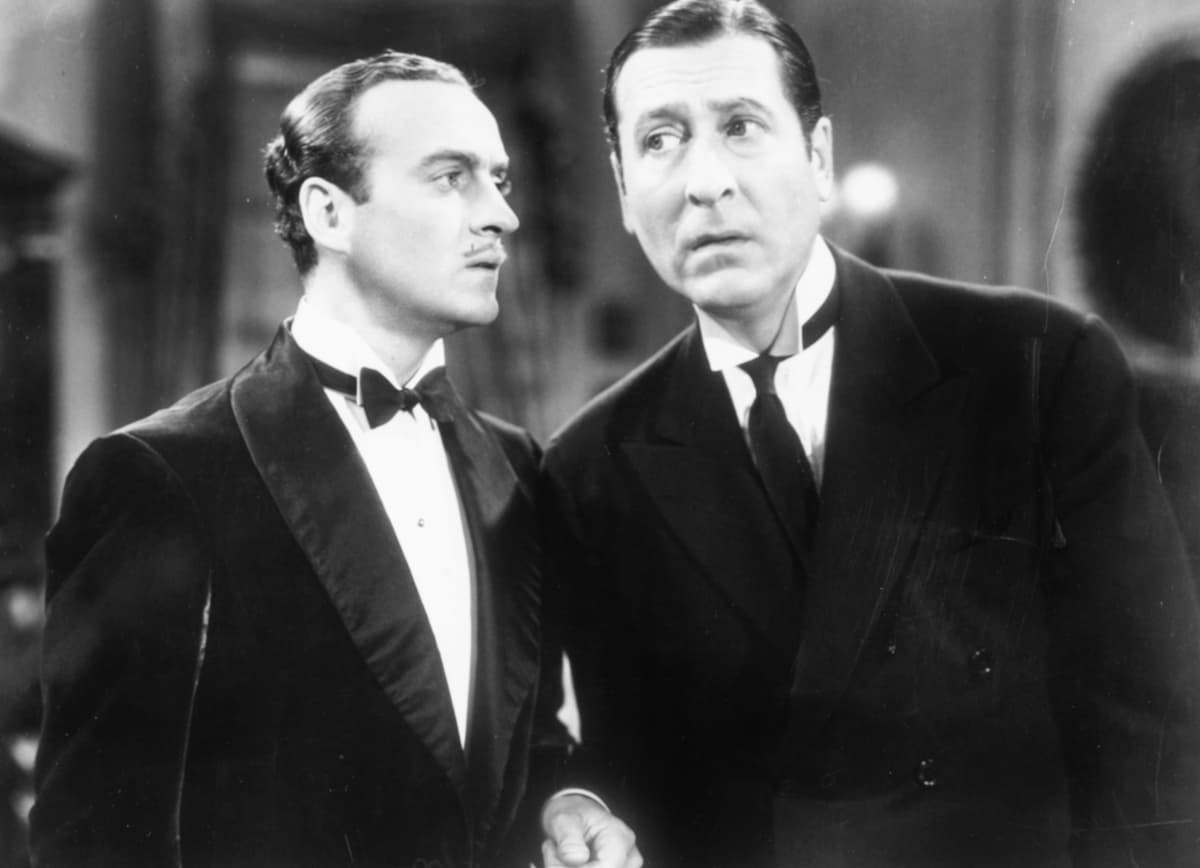
Who is the most famous butler in the world? It’s not a question you hear often these days even in the politest company. Yet it’s a question with only one answer, and that answer is Jeeves — the implacable gentleman’s gentleman invented by British writer P.G. Wodehouse 110 years ago.
The very first Jeeves story was published on September 18, 1915 in the Philadelphia-based weekly, the Saturday Evening Post. “Extricating Young Gussie” was the first appearance of well-meaning but hapless upper-class layabout Bertie Wooster and his hardworking butler, Jeeves.
It was early days for the soon-to-be iconic duo. Bertie was not yet a Wooster and Jeeves was not yet solving all the young master’s problems, but there they were in print for the first time — and it was in America.
“Extricating Young Gussie” was published in the U.S. months before the story found its’ way to a British audience in the Strand Magazine, which had helped to launch the career of Sherlock Holmes back in the 1890s.
Over the next 60 years, Wodehouse — known to his friends as Plum — would publish 11 novels and 35 short stories about Bertie and Jeeves before finishing with a flourish in the comic Aunts Aren’t Gentlemen in 1974. Released in America as “The Cat-nappers,” this final novel returned to old themes for Wodehouse — the feline and the materterine.
Among Wodehouse’ most famous works are 1934’s “Thank You, Jeeves” and 1938’s “The Code of the Woosters.” But he was a prolific writer of comic novels, authoring the Jeeves-adjacent “Blandings Castle” series and chronicling the adventures of Psmith, journalist, to name just the best-known.
Wodehouse spent much of his life at New York, so it’s no surprise that Jeeves and Wooster often found themselves in the City That Never Sleeps. He once compared arriving at New York to going to Heaven without the bother or expense of dying.
Yet wherever Bertie went — big city, English country house, or London flat — his problems were the same: unwanted guests, interfering relatives, and a habit of putting his proverbial foot in his mouth.
Enter Jeeves (first name withheld): problem solver, soul of discretion, banisher of hangovers.
Indeed, Jeeves’s uncanny ability to fix Bertie’s problems — and everybody else’s — has led many readers to ask: Is Jeeves God?
“Great Scot, Jeeves! Do you know everything?” Bertie asks in “Jeeves and the Feudal Spirit.”
“Oh, no, sir,” comes the laconic reply.
It’s no coincidence that Ask Jeeves was one of the earliest internet search engines.
Jeeves quickly became the archetypal butler, copied and parodied in film for generations, right down to the butlers Church and Bannister in HBO’s “The Gilded Age,” set in 1880s New York and still going strong following its recent third season.
Even William Powell, Hollywood royalty in his heyday, had his turns as a butler in 1936’s “My Man Godfrey” and again in 1938’s “The Baroness and the Butler,” opposite the icily beautiful Annabella.
Quintessentially English, the Jeeves stories have won admirers all over the world. Wherever there are rich twits and overworked servants, Bertie and his valet have made readers laugh, cry, and nod along knowingly in despair.
Though much of the comedy comes from the low stakes and high dudgeon, Wodehouse’s love of the English language holds it all together. He’s particularly remembered for the transferred epithet — a method better demonstrated than explained.
“It was plain that I had shaken him. His eyes widened, and an astonished piece of toast fell from his grasp,” Bertie notes in 1960’s “Jeeves in the Offing.”
The stories have been adapted for television twice. In the 1960s, Jeeves was played by the appropriately snooty Dennis Price in BBC’s “The World of Wooster.”
Price is perhaps most famous for starring in the deliciously dark Ealing comedy “Kind Hearts and Coronets” as far back as 1949. The unfortunately typecast Ian Carmichael supplied the bumbling but plummy Bertie.
Unfortunately, much of “The World of Wooster” was lost due to the BBC’s policy of re-using videotape. A later BBC series, filmed in the 1990s, is still widely available.
Comedians Stephen Fry and Hugh Laurie — who later appeared as the eponymous physician in the medical series “House” — produced a masterly adaptation of the Jeeves stories that lovingly played with Wodehouse’s characters — from nephew-crushing aunts to fascist lingerie salesmen.
Wodehouse drew his characters from real life, telling an interviewer in the 1960s that he had known men like Bertie Wooster. But Wodehouse might have been a bit of a Bertie himself.
When Adolf Hitler’s forces invaded France in 1940, Wodehouse was staying in the seaside resort of Le Touquet, a place where he spent a lot of his time. The Nazis did not hesitate to exploit this unexpected catch.
In 1941, Wodehouse, who was being held in internment by the German government, was whisked off to Berlin, put up in the Adlon Hotel, and put to work. He made five broadcasts under Nazi direction aimed at an American audience. This would hang over him for the rest of his life.
The criticism was vicious — even scurrilous. A.A. Milne, creator of “Winnie the Pooh” and a personal friend of Wodehouse, made a stinging attack on him. Was he playing Jeeves to Hitler’s Wooster?
Cooler heads — and post-war relief — prevailed. Wodehouse would not be hauled before the British courts as a traitor, like the notorious Lord Haw Haw. The general opinion was that Wodehouse had blundered but not betrayed. Yet the damage was done. The creator of Jeeves was not like Jeeves after all. He was a bumbling Bertie through and through.
Stephen Fry has suggested that the Jeeves stories are like a fantasy world where Bertie and his friends are just children playing at being grown-ups, while the real grown-ups are the stuffy fathers, demanding aunts, and irate magistrates.
Across nearly 60 years, time in Bertie’s world moves on, new inventions arrive, new music is made, but events — those things that so troubled Harold Macmillan — just don’t happen. But there is Jeeves. There is always Jeeves — and there always will be.
The many bizarre coincidences and acts of wanton stupidity that drive the Jeeves stories forward might seem unbelievable to us now.
Still, not too many years ago at a drinks reception at Oxford University a well-heeled young lady asked an older gentleman what he did for a living.
The man replied drily: “I’m the archbishop of Canterbury.”
The girl replied: “Oh. I thought you were the butler.”
_______________
Correction: Philadelphia is where the Saturday Evening Post was published at the time of Wodehouse’s first Jeeves story. An earlier version misstated the city.
Wodehouse was interned by the German government during World War II. This article was updated to clarify the circumstances of his wartime broadcasts for the German government.