Thanksgiving for Higher Prices?
The collapse in the value of the dollar is dampening the holiday this week — and it’s not just the turkey.
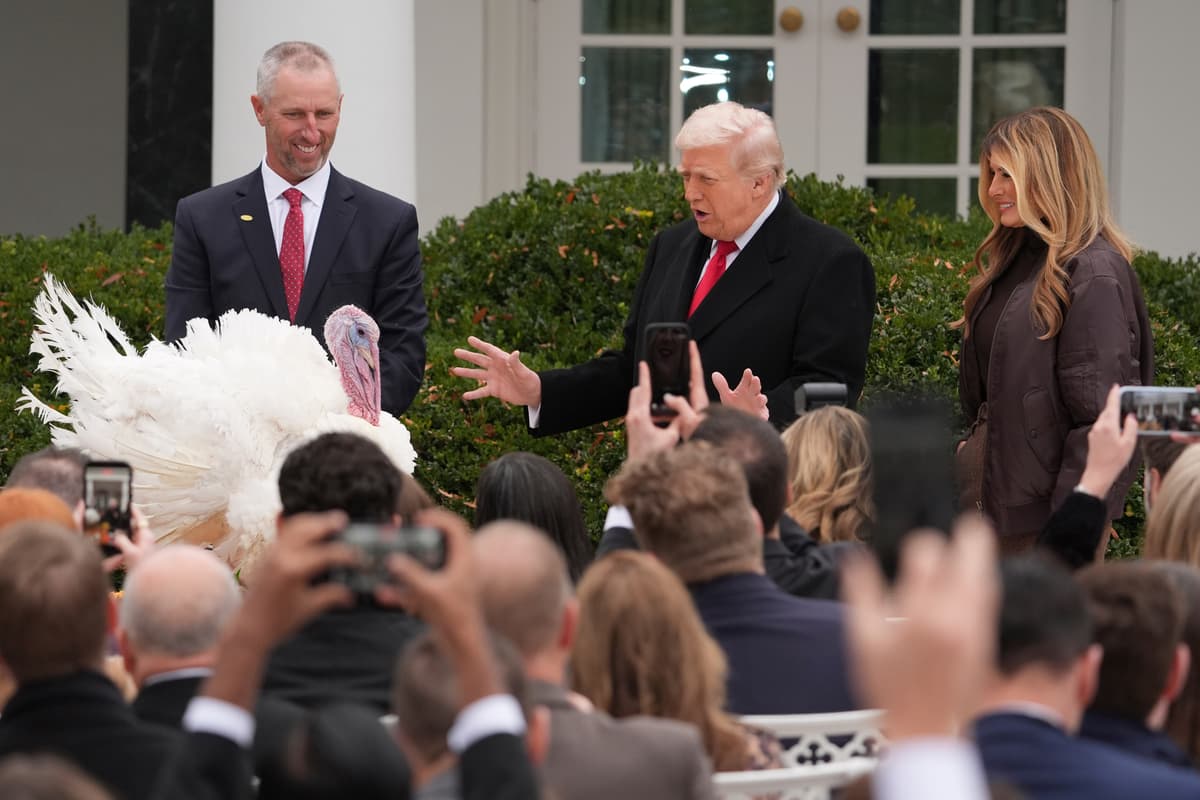
President Trump pardoned two Thanksgiving turkeys today, but there’s no holiday reprieve for consumers when it comes to inflation. Higher costs are pinching families as the holiday nears, the American Institute for Economic Research reports, with “creeping food prices” pushing the cost of a homemade Thanksgiving dinner near an all-time high. It’s a political problem for Mr. Trump and the GOP that is best fixed by a return to honest money.
The inflated cost of a turkey with all the trimmings is of a piece with a broader rise in prices since President Biden’s tenure in the White House. Eating at home, per the St. Louis Fed, costs some 24 percent more today than it did at the start of 2021. Yet even if prices are now rising more slowly than they did during the Biden inflation tsunami, it’s the cumulative effect that dismays consumers. For that, our system of fiat money is largely to blame.
After all, when America was on a gold standard, and the dollar was defined in law as a fixed weight of specie, prices did sometimes rise — usually, in times of war. Yet the discipline of gold convertibility, by which dollars were traded for gold at the legal rate, ensured that prices soon retreated. That’s why, over the span of years between 1790 and 1913, America’s average annual inflation was but 0.2 percent, economists William Luther and Alexander Salter report.
When America severed the dollar’s last link to gold, by closing the so-called “Gold Window” where foreign governments traded in dollars at the fixed rate of a 35th of an ounce, the monetary guardrail on inflation was eliminated. The ensuing age of fiat money was ushered in by the stagflation of the 1970s. Since then, prices have inexorably ratcheted higher — without ever, as consumers today would prefer, going back down.
The base line of this long-term inflationary spiral can be traced in the dollar’s plunging gold value. America’s fiat currency has been flirting with record lows when measured in terms of the monetary metal. In trading today, the greenback fetches but a 4,100th of an ounce of gold. The dollar’s decades-long collapse explains today’s “gloom of inflation,” as these columns call it, as Americans use increasingly debased fiat money to purchase goods and services.
That frustration underpinned Mr. Trump’s victory last November as voters blamed Mr. Biden and Vice President Harris for the reckless overspending and other policy errors that fueled inflation. Yet Mr. Trump campaigned on a vow to weaken the dollar, these columns lamented, and from the earliest days of his tenure, we cautioned, was failing to take seriously the threat of inflation and the need to steer a course back toward honest money.
To be sure, it’s not too late for Mr. Trump to do something. Yet that will require a hard look at the root cause of the price increases that AIER spotlights in its Thanksgiving Index. Since 2020, staples like turkey cost some 38 percent more. Potatoes are up by 20 percent. The result is what AIER’s Peter Earle calls “a plateau of high but not rapidly rising prices,” in spite of “misleading retailer promotions and political posturing suggesting prices have fallen.”
More broadly, CBS News is reporting that while inflation has slowed from the peak of 9.1 percent in June 2022, “many people feel squeezed by the cost of simple daily necessities.” It seems unwise, then, for the Trump White House to pursue, as columnist David Harsanyi puts it, “a strategy of gaslighting consumers” by denying inflation. Better for Mr. Trump to push for honest money, something for which all Americans could give thanks.