The Congress Regrets
Senator Grassley introduces a bill to enable the legislature to start clawing back the tariff powers that it, in a weak moment, delegated to the president.
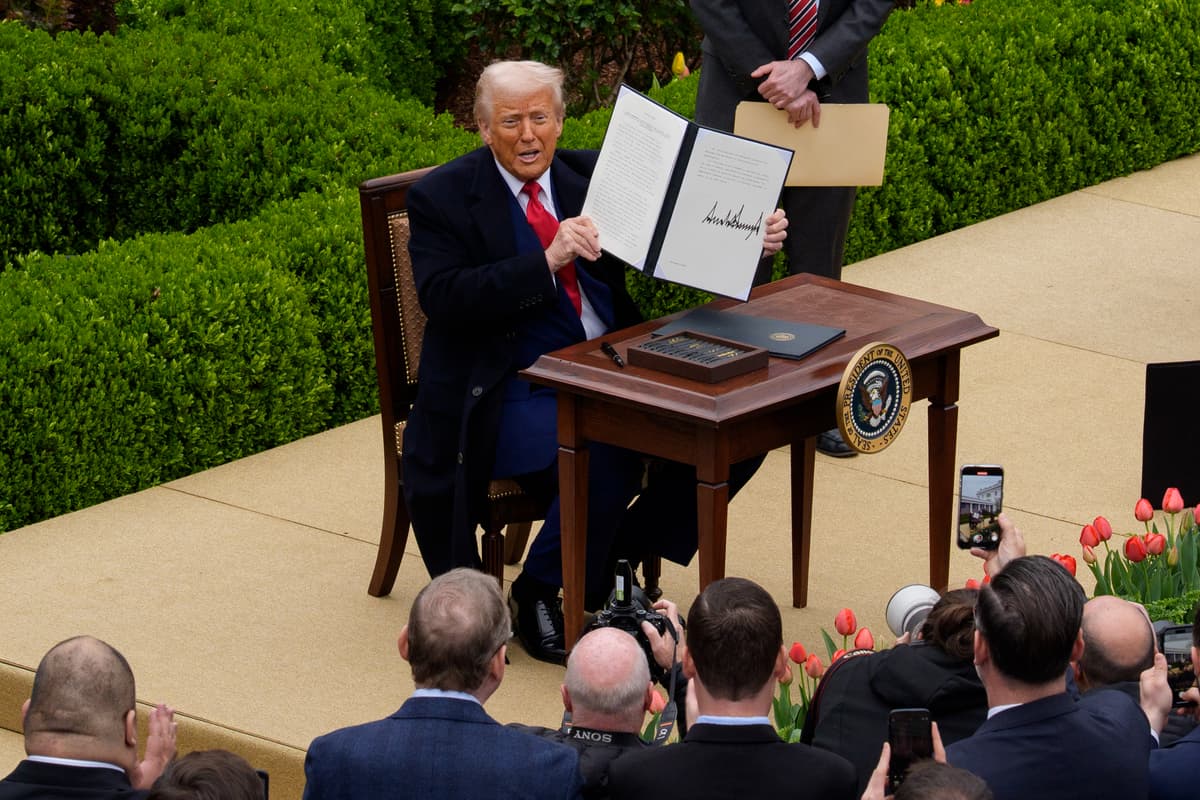

President Trumpâs tariff spree is, we gather, being met with a wave of regrets on Capitol Hill. The poor dears. The Framers, in their wisdom, delegated solely to Congress the authority to lay and collect tariffs.* Yet after the infamous Smoot-Hawley tariff of 1930, the solons let this power slip out of their hands. Congress passed a series of laws giving the president the ability to impose tariffs, largely at his discretion. Now some legislators want to reclaim their power.
A bill pushed by Senator Grassley, Politico reports, would require the president âto notify Congress within 48 hoursâ of setting a tariff. Congress, then, would have a leisurely 60 days to approve the new tariff. Absent the congressional okay, the tariff would not go into effect. âThe bill also would allow Congress to end any tariff at any time,â Politico adds. The proposal âsends a strong signal about the GOPâs growing unease with Trumpâs actions,â Politico reports.
âCongress has a constitutional role through the Commerce Clause on trade matters, and we should re-assume that role,â avers Senator Grassley. He represents Iowa, whose agricultural exports could be hard-hit by retaliatory tariffs. Yet the wellspring of congressional tariff power is found in the Taxing Clause, as Senator Paul marked on Tuesday. He was among four Republicans to join Democrats to pass a rebuke of Mr. Trumpâs power to impose tariffs on Canada.
âIs this really just symbolic?â Fox Newsâs Bret Baier asked of the Senate bill. âOnly if you think the Constitution is symbolic and doesnât mean anything,â the Bluegrass sage replied. âThe Constitution says taxes originate in the House and come to the Senate. Taxes are the purview of Congress, not of one person.â So âsymbolic or not, I think itâs an incredibly important argument,â Dr. Paul reckons.
There appears to be little appetite in the House leadership for restoring the constitutional standing on tariffs. House Democrats, though, aim to force, via a discharge petition, a vote on the Senate bill cancelling Mr. Trumpâs tariffs on Canada. Thatâs partly an attempt to put Republicans on record on Mr. Trumpâs tariffs. Even if the bill passes, though, a veto looms. Could the attempt to reassert Congressâ power have come 90 years too late?
In 1934, FDRâs rubber-stamp Congress passed the Reciprocal Trade Agreements Act, allowing the president to adjust tariff rates by some 50 percent. Later measures, like Section 232 of the Trade Expansion Act of 1962, Section 301 of the Trade Act of 1974, and the International Emergency Economic Powers Act of 1977 give the president largely discretionary power to set tariffs. This power, having been surrendered, will now be hard to claw back.
Thatâs not to say a reassertion by Congress would be impossible. And why stop there? As with tariffs, the Framers assigned to the Congress between 99 percent and 101 percent of the monetary powers of the federal government. Yet the legislators in 1913 delegated this authority to the Federal Reserve. Since then, the dollarâs value has plunged by some 99 percent, to less than a 3,100th of an ounce of gold. Federal debt so enabled is now surging.
Regardless of how one views Mr. Trumpâs tariffs â which could yet prove to be a boon â we mark this constitutional point. It is that the Framers envisioned such duties being imposed not by executive fiat, but via the deliberation of the elected legislators. One can imagine how allowing that process to play out today could have prevented some of the shock and apparent disruption that is roiling the markets and our partners in trade.
Todayâs tariff debacle â and the intertwined crisis, sparked by fiat money, of debt and inflation â are a caution against tampering with the delicate balance of powers ordained by the Framers in the Constitution. They meant the legislature, the most political of the three branches, to control taxes and spending. The 119th Congress, it seems, is coming to grips with the scale of its predecessorsâ default in ceding so much of this authority to the president.
________
* Duties is the word they used, in Article I, Section 8, for tariffs.