

The Crusade for Diversity, Equity, and Inclusion Might Be Unraveling
A former president of Harvard, Larry Summers, says it aided and abetted antisemitism on college campuses.
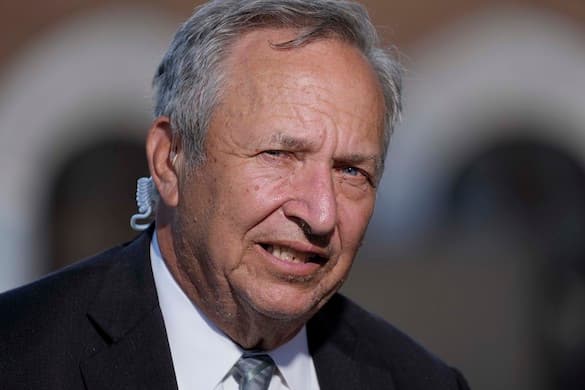
A former president of Harvard, Larry Summers, is assigning blame to âidentity politicsâ while the âcancerâ of antisemitism metastasizes on college campuses.
The campaign for âdiversity, equity, and inclusionâ in higher education has paradoxically fueled prejudice toward certain groups on campus, Mr. Summers argues in an essay published on his website Monday. Jewish and Israeli students are the victims of such prejudice, he says, as they face a surge in antisemitic incidents that university leaders have been slow to denounce.
âIt is shameful,â the former Treasury secretary writes, âthat no honest observer looking at the record of the last few years and especially at the last month can suppose that universitiesâ responses including Harvard to antisemitism have paralleled in vigor or volume the responses to racism or other forms of prejudice.â
âUnacceptableâ is how Mr. Summers described the âdouble standardsâ exposed by university leadersâ responses to anti-Israel rhetoric and behavior across college campuses. âI believe though that those of us concerned with prejudice against Jews make a grave mistake if we embrace the approach of identity politics and seek only to be an equally recognized identity.â
Mr. Summers took aim at âthose most directly charged with confronting prejudiceâ â university offices of diversity, equity, and inclusion. The office bearing that responsibility at Harvard pledges to foster âa place where everyone can thriveâ through âinclusive excellence.â It has yet to release a statement, though, responding to any of the political protests that have rocked its campus in recent weeks.
âThere may even have been cases,â Mr. Summers said of these offices, âwhere they did more to support the prejudiced than victims. Ideologies arising out of identity politics have too often had the effect of driving discrimination against groups whose members have been most committed to the values of rigorous study and intellectual inquiry.â
Since the Israel-Hamas war erupted on October 7, these comments mark Mr. Summersâs most robust statement concerning his alma mater, where he became an economics professor in 1983. Yet he has long been a fearless critic of antisemitism at the nationâs oldest and richest university.
In a 2002 speech delivered at Memorial Church in the center of campus early in his presidency, Mr. Summers said a petition to divest Harvardâs endowment from Israel would âsingle out Israel among all nations as the lone country where it is inappropriate for any part of the universityâs endowment to be invested.â Proponents of the movement, he said, were âantisemitic in their effect if not their intent.â
What Mr. Summers now calls âidentity politicsâ engendered the turmoil he sparked in 2005 after suggesting there might be inherent cognitive differences between men and women at a conference on diversifying the science and engineering workforce. Those comments led to a bitter battle waged by Harvardâs Faculty of Arts and Science, which ultimately pushed him out of office.
âThere can be no mistake that this fight is about way more than gender differences,â the Sun argued in an op-ed that year. âThe issues swirling around Mr. Summers include the current war against Islamic terror and the struggle for a Jewish state in Israel, and it has become a fight for the soul of Americaâs oldest and greatest university.â
Nearly two decades later, Mr. Summers is still waging that fight. âWe come together at a moment of danger,â he told a crowd at the Harvard Medical and Dental School Shabbat Observance on Friday, where he initially delivered a version of the essay. âAntisemitism is a cancer â a lethal adversary best addressed as rapidly, thoughtfully, and aggressively as possible.â
Harvardâs office of Equity, Diversity, Inclusion & Belonging did not immediately respond to the Sunâs request for comment.