
The ‘HONEST Act’ and the Battle Over a Congressional Stock Ban

‘Public perception is very important. If the public thinks all politicians are corrupt, it doesn’t much matter if none of them actually are,’ says the CATO Institute’s Ilya Shapiro.
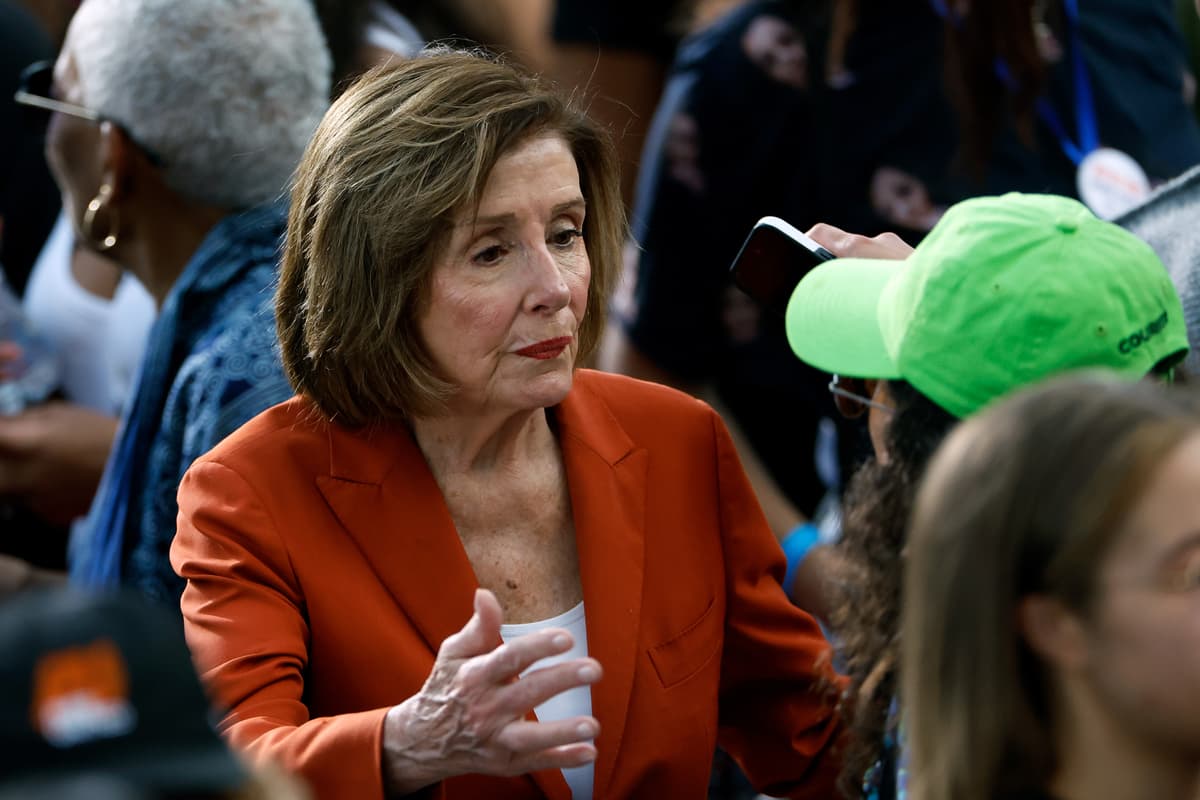
Kevin Dietsch/Getty Images
Nancy Pelosi faced criticism after her husband bought up to $5 million in Nvidia stock shortly before a major vote on semiconductor subsidies. Ms. Pelosi, who initially opposed a trading ban, later reversed course and voiced support in principle. Kevin Dietsch/Getty Images

In a rare show of bipartisan momentum, a Senate panel has advanced a bill that would ban lawmakers from trading individual stocks — a move that could reshape how Congress navigates conflicts of interest and public trust.

The HONEST Act, formerly the Ban Congressional Stock Trading Act, passed the Senate Homeland Security Committee in a 6-3 vote last month. It would bar lawmakers, their spouses, and dependent children from trading individual stocks while in office, with violators facing $1,000 daily fines and forfeiture of post-passage profits.

While polls show strong public support for curbing lawmakers’ access to the markets they regulate, critics underscore that there are prominent downsides that could hurt the American public. 

“The HONEST Act is very destructive. It goes beyond banning members of Congress from trading individual stocks to actually banning plain ownership in publicly traded and many private companies,” Senior Fellow and Director of Finance Policy at the Competitive Enterprise Institute, John Berlau, tells the New York Sun. 

“In most cases, the law prohibits members even from keeping these holdings in a blind trust. Founders who built businesses, who have valuable real-world insights about public policy’s impact on business development, would face massive disincentives to serving in Congress if they had to immediately divest the ownership interests in the companies they created.”

The Case Against a Ban

Opponents of the stock trading ban frame it as a solution in search of a problem. Senator Rand Paul, who voted against the bill in committee, underscored that it would discourage “good people” from holding office, and essentially insults members of Congress by assuming bad faith. Others warn that it could deter qualified candidates from running for office.

According to Mr. Berlau, if the HONEST Act becomes law “it will likely result in most of Congress being from either a political class wholly devoid of the experience of building businesses in the private sector, or a class of mega-wealthy individuals who can hire a cadre of financial advisors to manage the compliance costs.”

Mr. Berlau warned that the bill could discourage small business owners and startup founders from seeking office, depriving Congress of real-world expertise.

Yet some legal scholars argue the risks are overstated.

“The ban would not discourage private-sector professionals from entering public service so long as they are not forced to sell with a large capital gains tax,” Legal professor at the University of Minnesota, Richard Painter, tells the Sun. 

“The Internal Revenue Code should likewise postpone the tax for members of Congress who are required to divest before taking office. The same divestment and tax rule should apply to presidents and vice presidents who should divest conflicts of interest before taking office, and shift assets to conflict-free diversified mutual funds.”

In other words, the ban, he said, wouldn’t deter professionals from public service if they could delay capital gains taxes on required stock sales. 

Acting Vice President of Policy and Government Affairs at the Project On Government Oversight, Dylan Hedtler-Gaudette, also tells the Sun that “members of Congress would still be able to make investments, just not in individual stocks that they control.”

Meanwhile, some lawmakers point to blind trusts as a viable middle ground — allowing lawmakers to avoid conflicts without divesting completely. Under a blind trust, assets are managed by an independent trustee without the owner’s input or knowledge of trades. However, only a small fraction of members currently use blind trustees, in part due to legal complexity and cost.

Even with proposed workarounds, the underlying tension about how best to balance ethics with practicality persists. 

Why the STOCK Act Fell Short

The debate over congressional stock trading has simmered for years, and there is already some legislation in place to address the matter. In 2012, Congress passed the STOCK Act (Stop Trading on Congressional Knowledge) to ban insider trading by lawmakers and increase financial transparency. 

The law requires lawmakers to publicly disclose stock trades within 45 days and affirms that they are subject to the same securities laws as the public. Yet enforcement has been inconsistent. Since 2020, more than 100 lawmakers from both parties have been cited for violating the STOCK Act’s reporting rules, often facing little more than nominal fines or warnings.

This is why, some say, the HONEST Act is pivotal. 

“As it stands now, our representatives in Washington, D.C., can legislate in ways that move markets and potentially benefit their stock portfolios,” said Mr. Hedtler-Gaudette. “A stock trading ban would better ensure members of Congress are acting in the interest of the public.”

Some policy analysts also stress that ongoing congressional stock trading undermines public confidence, and even the appearance of self-dealing erodes credibility in government.  

“Public perception is very important. If the public thinks all politicians are corrupt, it doesn’t much matter if none of them actually are,” Director of Constitutional Studies at the CATO Institute, Ilya Shapiro, tells the Sun. “So, eliminating the appearance of impropriety is as important a reason to have these kinds of reforms as eliminating the actual impropriety.”

Investigations in recent months found that dozens of lawmakers or their spouses had traded stock in sectors directly impacted by tariffs or legislation they helped shape, including several who bought shares in companies poised to benefit from President Trump’s 2025 tariff package.

Among them was Rep. Marjorie Taylor Greene, who purchased shares in steel and aluminum companies days before Trump announced plans to expand import duties on those very materials. Greene has denied any wrongdoing, calling the purchases “routine.”

Former Speaker Nancy Pelosi also faced criticism after her husband bought up to $5 million in Nvidia stock shortly before a major vote on semiconductor subsidies. Ms. Pelosi, who initially opposed a trading ban, later reversed course and voiced support in principle.

“Public perception is critical. The present arrangement, where a Paul Pelosi can trade but Rep. Nancy Pelosi can shrug and say, ‘I have nothing to do with our investments,’ is no good,  even if what she is saying is 100 percent true,” Senior fellow at the American Enterprise Institute, Kevin Kosar, tells the Sun. “The public wants additional reassurance.”

Banning trades outright, advocates argue, is the most straightforward way to restore trust — especially at a time when only 23 percent of Americans say they approve of Congress’s job performance, according to a recent Gallup poll.

For some, the current bill, while helpful, does not go far enough. 

“Banning individual stock trading among members of Congress does reduce conflicts of interest, although the prohibition should also extend to Members making other investments while in office in addition to publicly traded stocks,” Mr. Kosar contended.

Presidential Controversy

Others maintain the bill is only a first step — and leaves critical gaps unaddressed.

The legislation on the table is not without controversy. Critics have raised concerns about a specific provision that they argue could shield the current president from a key requirement of the bill. 

While the bill would prohibit the president and vice president from buying new stocks immediately upon becoming law, it gives them until the start of their next term to sell off conflicting investments. 

Since this is Mr. Trump’s last term, the provision effectively exempts him from the divestment mandate. This has led to accusations of a political compromise, particularly since the president’s financial holdings, including in Trump Media & Technology Group, have been a focus of scrutiny. 

Supporters of the exemption, however, argue that banning Trump Media stock would amount to political discrimination and open the door to future abuse.

The Road Ahead: What Comes Next

Despite clearing the Senate committee, the bill’s future is uncertain. Speaker Mike Johnson has not committed to bringing it up in the House, and conservative figures have voiced skepticism.

The issue of implementation, if passed, is also murky. 

“This is the thorniest part of the entire stock trading ban debate. Some members of Congress bristle at one of the other branches of government, the executive branch/DOJ, to be specific, having a role in this kind of internal ethics issue, given the potential for weaponization of investigations,” Mr. Hedtler-Gaudette explained. 

“On the other hand, lots of us have watched for years as the Ethics Committee in both the House and Senate has largely sat idly by and done almost nothing to hold members of Congress accountable for ethical misdeeds. Some kind of stiff and meaningful financial penalty levied in a mandatory way by Congress itself is probably the best route, albeit still imperfect.”

Mr. Painter, however, argued that “divestment would be relatively easy to monitor because members of Congress, and the president and vice president, already file a financial disclosure form each year.”

“Knowing misrepresentation on this form would be a crime,” he continued. “Preventing members of Congress, or others, from passing nonpublic government information on to others who trade is more difficult to monitor, although it could be criminal insider trading if the public official is given anything in return for the information.”

Others, however, see a different solution to the matter altogether — one that doesn’t involve an outright prohibition. 

“Transparency can alleviate many of the concerns about conflicts of interest,” added Mr. Berlau. “Voters at the ballot box, rather than this blanket rule, are the best mechanism to address these concerns. The HONEST Act and similar legislation would have honestly awful consequences for the future of American self-government.”


The New York Sun

© 2025 The New York Sun Company, LLC. All rights reserved.

Use of this site constitutes acceptance of our Terms of Use and Privacy Policy. The material on this site is protected by copyright law and may not be reproduced, distributed, transmitted, cached or otherwise used.

The New York Sun

Sign in or  create a free account

or
By continuing you agree to our Privacy Policy and Terms of Use