

The Real Life Gatsby Who Made Himself — and a Fortune
Clarence Dillon was one of the ruthless inventors of modern finance.
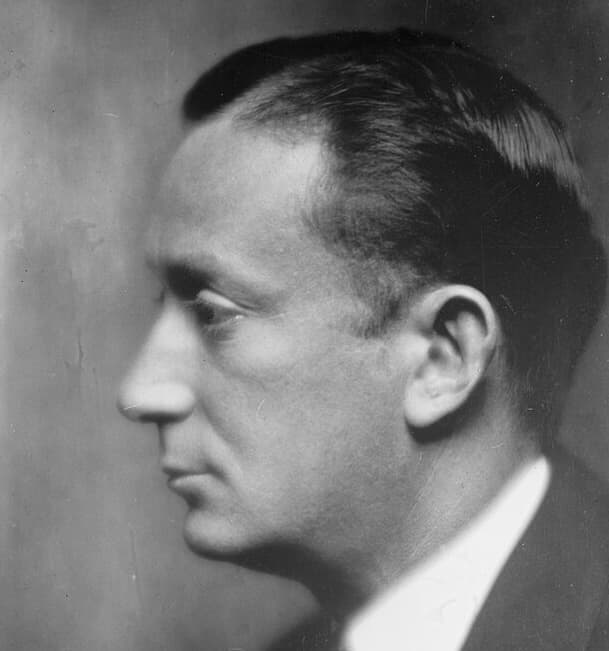
‘The Baron of Wall Street: Clarence Dillon and the Making of the Modern Financial World’
By William R. Loomis Jr.
Hanover Square Press, 336 pages
Son of Sam Lapowski, a Jewish immigrant from Poland, Clarence legally changed his name to Dillon, invented a Christian heritage for himself, and emerged something like F. Scott Fitzgerald’s Jay Gatsby or Woody Allen’s Zelig, as a wholly owned subsidiary of himself, allowing others to project into him their desire to make it big in America, which is to say make lots of money.
William R. Loomis Jr. ranks Dillon right up there with J. P. Morgan as the master inventor of modern finance, selling junk bonds before they were called that, figuring out how to make money out of bankruptcies and leveraged buyouts, and creating dummy corporations so that he was often paid twice for transactions in the pre-regulation days of the 1920s.
Such self-dealing and insider trading was not illegal, if in some instances unethical. Dillon believed, as Mr. Loomis explains, in the invisible hand of the market as described by Adam Smith. If the financier took care of himself, thought only about his own profits, he would nonetheless benefit society by increasing wealth and the desire for prosperity.
In short, Dillon could be ruthless so that by the time he entered Harvard he already had earned that baronial title and sense of entitlement to the riches he created for himself and for others who worked for or were allied with him. He was, Mr. Loomis emphasizes, a world class poker player. He knew when to bluff, to raise, and sometimes to just get out of the game, so that his firm was not harmed by the 1929 crash.
That Dillon could be unscrupulous is evident in his touting, for example, of virtually worthless South American bonds that gullible America investors gobbled up, not for a moment distrusting the immaculately dressed Dillon who certainly looked the picture of probity, making sure his offices did not look plush or ostentatious, as though to say he was all business and therefore reliable.
Dillon was so circumspect about his motivations, and so unlike Gatsby or Zelig in never romanticizing his achievements, that a biographer is hard put to say what Dillon was thinking or feeling at any given moment. Mr. Loomis rarely speculates and that is all to the good because the point about Dillon is that he was elusive — even to his own son Douglas, who became a renowned diplomat.
Mr. Loomis overcomes what he cannot know about Dillon by making a Plutarchian move, charting the parallel lives of his subject and Joseph P. Kennedy, another ruthless wheeler-dealer. As Mr. Loomis tells it, Kennedy’s cruelty — the ways he romanced and dropped both Gloria Swanson and Hollywood after he took out his profits — surpasses anything that could be set against Dillon, who could be tough, but not gratuitously so.If the happily married Dillon ever engaged in adultery he did so discretely, Mr. Loomis observes, so that no evidence exists of affairs.
Dillon’s business acumen was so prized that presidents could not do without his advice. That included FDR, no matter what he said about the “malefactors of great wealth.” FDR appreciated what Dillon could tell him about the unregulated world of Wall Street even as New Deal legislation outlawed many of the maneuvers that had made Dillon a rich man. Also, Dillon was more reliable than Kennedy, who went about saying Great Britain could not win against the Axis, much to FDR’s exasperation.
Although Dillon did occasionally get into trouble over some of his more shady dealings, he was so adept at politics that he got a congressional committee to go easy on him and even had them praising his cooperation with their investigation. The press, as Mr. Loomis shows, essentially went along with extolling Dillon’s financial genius.
Here’s a good example of how Dillon triumphed: Serving on the War Industries Board, he got involved in a dispute between “army and navy priorities over using the port of Norfolk, Virginia.” He told the contending general and admiral he would follow a “50/50” policy, ruling for the army, then the navy, and so on until World War I ended. This seemed like such a “flippant” policy that the general and admiral worked out their disagreements among themselves, which is exactly what Dillon intended.
Mr. Rollyson is the author of “American Biography.”