The Triangulated Life of Sylvia Plath, and Why It Is So Often Rewritten
The author has made the most of her access to recently opened archives providing greater insight into the lives and works of Plath, Ted Hughes, and Assia Wevill.
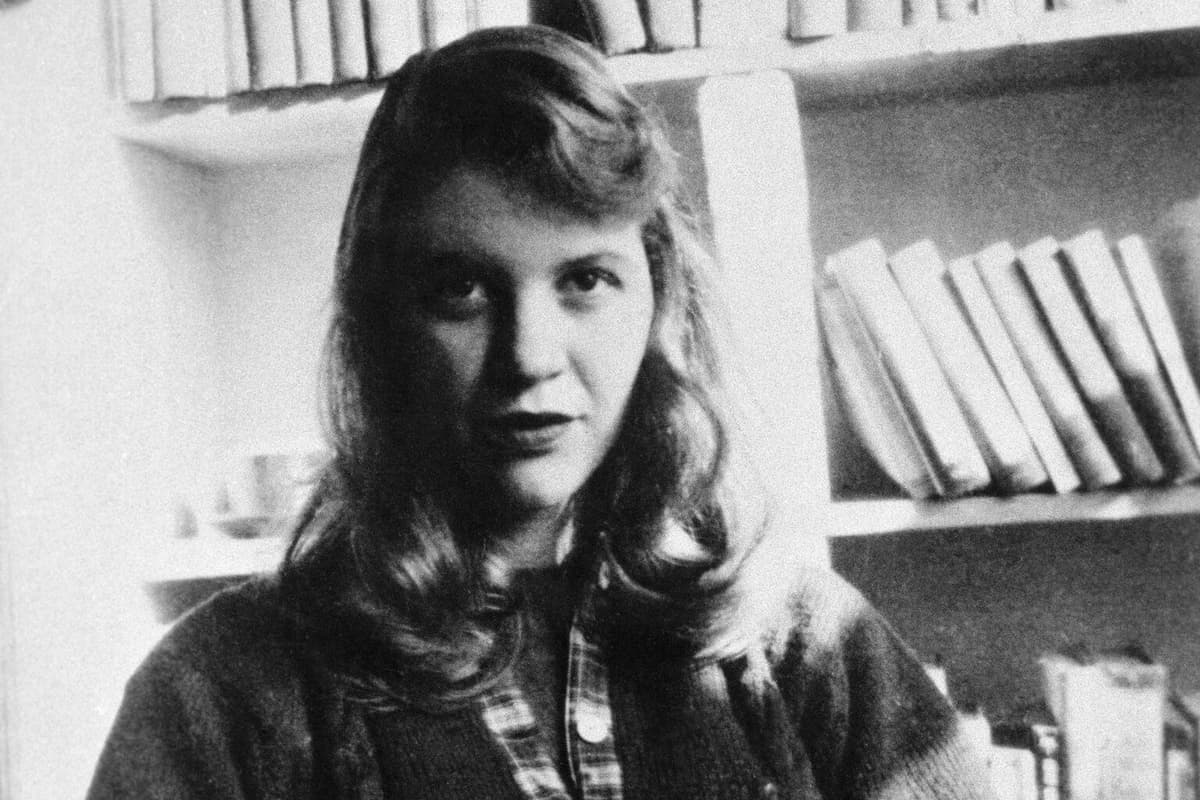

Lives Revised: Assia Wevill, Ted Hughes, and Sylvia Plath
By Julie Goodspeed-Chadwick
Louisiana State University Press, 196 Pages
Even if you have read every biography of Assia Wevill, Ted Hughes, and Sylvia Plath, this revisionist account of all three will startle you. Julie Goodspeed-Chadwick, author of the excellent “Reclaiming Assia Wevill” and co-editor of “The Collected Writings of Assia Wevill,” has made the most of her access to recently opened archives providing not only greater insight into the lives and works of these three controversial figures but also a profound exploration of why the same lives are rewritten in one biography after another.
Part 1 shows how new biographical facts and stories emerge, delving into the Emory University archive of recorded interviews conducted by Harriet Rosenstein for a biography of Plath that was never written. Ms. Goodspeed-Chadwick identifies the motivations and biases of Rosenstein’s interviewees, especially in regard to Wevill, often depicted as the femme fatale who occasioned the suicide of Sylvia Plath.
Virtually all the witnesses of Wevill’s life recalled her wondrous beauty — all but making her into a figure as alluring as Elizabeth Taylor. Because of the way Wevill looked, she was frequently treated in melodramatic terms — even by Ted Hughes in his poetry. The actual woman, superb translator and successful advertising copywriter, suffered from negative judgments based on her glamor.
Although Wevill’s friends insisted on her keen intelligence and accomplishments, the overriding narrative after Plath’s death depicted her as a displaced person, moving from Europe, Israel, parts of Asia, and England, married three times, having escaped Holocaust. Hughes claimed her traumatic experience made her one of Hitler’s last victims.
Wevill desperately wanted to settle down, and for a time Hughes seemed to want to give her a permanent home, until he told her bluntly that Plath would always stand in their way, and that he would never fully recognize her and the child she had borne by him. One of the most terrible discoveries in this book is Hughes’s decision, after Wevill had committed suicide and taken the life of her 4-year-old daughter as well, never to disclose (not even to Wevill’s sister) where her ashes had been buried.
Part 2 drives deeply into Emory University’s Hughes archive and into poems in a Hughes notebook acquired in 2023. Ms. Goodspeed-Chadwick is the first scholar to examine drafts of poems that Hughes never meant to be published but were preserved and had been in the possession of his sister Olwyn.
Ms. Goodspeed-Chadwick portrays a harrowing story of trauma as Hughes tried to reckon with his responsibility for Wevill’s suicide. He often blamed himself, but also like trauma victims he regarded his suffering as beyond his control. Ms. Goodspeed-Chadwick’s charitable presentation of Hughes minimizes the brutality of certain poems, though she does cite instances of his physical abuse of Plath and Wevill.
Her remit is not to draw up a charge sheet but to show how intricately trauma infected the poet’s efforts to recover from the deaths of a wife, a lover, and a child that he only fitfully acknowledged. As to Wevill, she saw in Hughes — for all his wavering loyalty to her — a kind of savior figure, not all that different from Plath’s own vision of him in the prime of her married life.
Race enters into this story, as Hughes demonized (my word) Wevill, turning her into the oriental other. He often wrote about Wevill in coded fashion even as he admitted that much of his poetry about her was confessional. As a trauma sufferer himself, experiencing a loss of control — as Ms. Goodspeed-Chadwick puts it — Hughes regarded himself as a victim.
Largely absent from “Lives Revised” is the poet Susan Alliston, with whom Hughes was spending the night when Plath committed suicide. Like Wevill, she was obsessed with Plath as a powerful woman whom Hughes had left and yet could never relinquish, which is to say that more than trauma is at work in the Wevill-Hughes-Plath nexus, with Plath still at the apex of fraught lives and a concatenation of tragic events that even more biographers will undoubtedly try to decipher.
Mr. Rollyson is the author of “American Isis: The Life and Art of Sylvia Plath,” “The Last Days of Sylvia Plath,” “Sylvia Plath Day by Day,” “The Making of Sylvia Plath,” and the forthcoming “Searching for Sylvia.”