‘They’re Really Just Lying to You’: Consumer Watchdog Warns of ‘Fake’ Black Friday Deals, Deceptive Pricing
Bass Pro Shops, Bed Bath & Beyond, Dick’s, Foot Locker, Gap, JCPenney, Michaels, Nordstrom, Old Navy, and Wayfair were named as primary offenders.
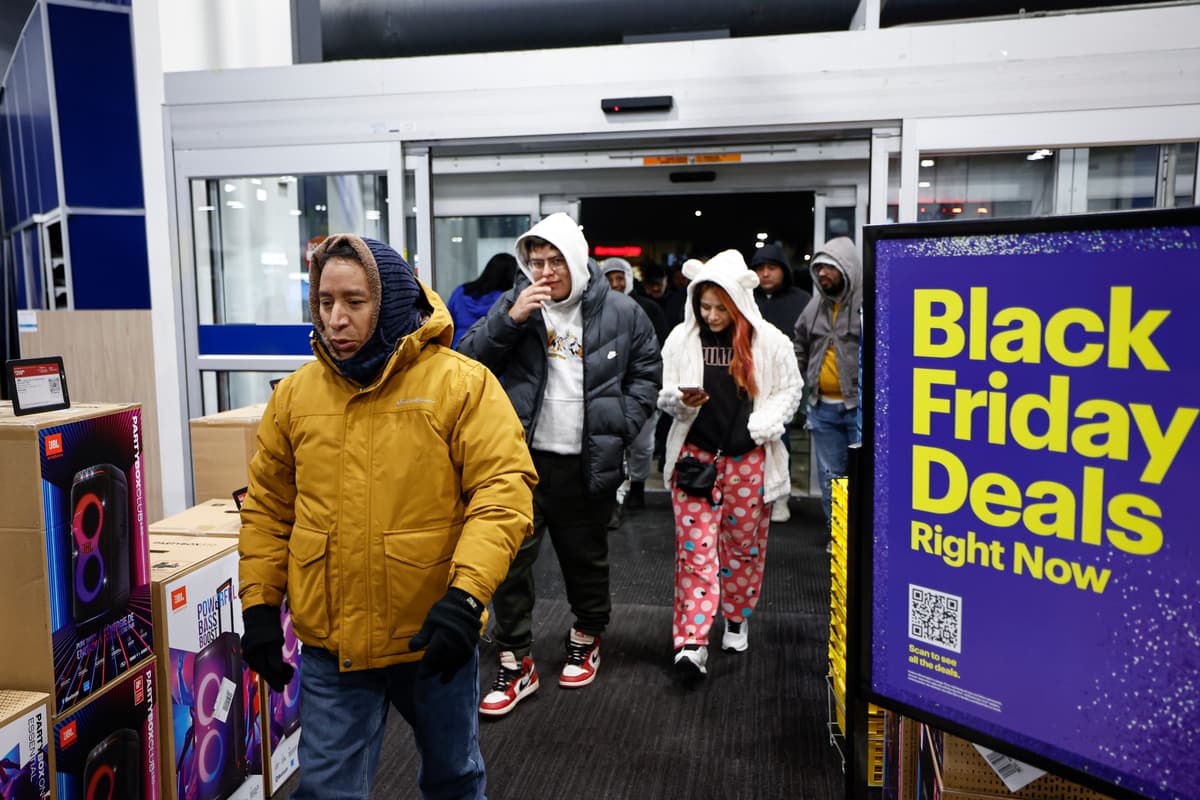

With Thanksgiving approaching and desperate retailers already offering Black Friday discounts, shoppers are on the hunt for holiday bargains. But a D.C.-based consumer expert says of many tempting sale prices: “They’re really just lying to you.”
According to a new report titled “Sales Prices Are Usually Fake Discounts” by Washington Consumers’ Checkbook, the majority of advertised markdowns are misleading.
“Our researchers spent six months tracking prices at 25 major retailers and found pretty much all the markdowns that are offered by most stores aren’t special prices or savings at all,” said the executive editor of Washington Consumers’ Checkbook, Kevin Brasler.
The investigation, which began in February 2025, tracked prices for more than 25 items at 25 national chains over 24 weeks. Researchers found that retailers frequently utilize a strategy involving “anchor prices.”
“What they’re doing is, they’re showing a list or regular price, then crossing that out and giving a supposed discount,” Mr. Brasler said. “But, they’re rarely, if ever, charging those list or regular prices.”
Mr. Brasler noted that the original price “is just fabricated” before a sale price is advertised in order “to make it seem like they’re saving us a lot of money.”
The psychological impact of these tactics is significant. “When someone says to you, ‘I’m going to offer you something for 40% off and for only a certain amount of time,’ it’s very powerful,” Mr. Brasler said. “It makes you think, ‘Oh, I’m saving a bunch of money, I better not shop around, or speak to my spouse about whether even to spend this money, or not.’”
The study found that deceptive pricing is becoming an industry standard. “And, at many retailers, the fake sales never end,” Mr. Brasler said. “For 12 of the 25 companies, our shoppers found more than half the items we tracked were offered at false discounts every week or almost every week we checked.”
The report identified several retailers with the most egregious pricing practices. Bass Pro Shops, Bed Bath & Beyond, Dick’s, Foot Locker, Gap, JCPenney, Michaels, Nordstrom, Old Navy, and Wayfair were named as the primary offenders, with most tracked items being “on sale” almost constantly.
Conversely, only a few retailers were found to offer consistently legitimate discounts: Apple, Costco, and Dell. Walmart was identified as a borderline case, with tracked items on sale 48 percent of the time.
While the Federal Trade Commission has rules regarding “former price comparisons” – stating that discounts are illegal if the former price is fictitious – enforcement is rare.
Retailers often bury their pricing definitions in the fine print. For example, Kohl’s disclaimer states that a regular price may be based on a “future offered price,” leading the report to jokingly ask, “Does Kohl’s have a time machine?!”
Despite the deceptive practices, Mr. Brasler says consumers can still find deals if they ignore the claimed discounts.
“When you’re shopping, what you need to focus on is not what the supposed savings are, but what the actual cost of the item is,” Mr. Brasler said. “Just doing a quick internet search will show you what other retailers are selling that item for. You often can find ‘Oh I can save even more by just switching my business to a different store.’”
Other ways to protect yourself, according to Mr. Brasler:
-Ignore the “Sale” Sign: Don’t assume a sale price is actually a good deal. The store likely offers that price most of the time.
-Shop Around: Compare prices across different retailers. A quick internet search can reveal if a competitor is offering the item for significantly less.
-Use Price-Tracking Tools: Websites like CamelCamelCamel track Amazon price history. “Amazon doesn’t always have the lowest price, but at least CamelCamelCamel will tell you ‘OK, this is the lowest price that Amazon offered for that item over the last six months or year,’” Brasler said. Shopping bots like Pricegrabber.com are also useful.
-Ask for a price match: If you find a lower price online, ask the retailer to match it. Most major retailers have consumer-friendly price-match policies.
-Don’t Rush: Many stores will agree to hold a sale price for you even after the sale ends. Don’t let the fear of missing out manipulate you into impulse buying.