‘Trifole’ Raises a Question: Can a ‘Feel Good’ Movie Leave One Heartbroken?
The film explores the ramifications of age, the upsetting of traditions, and the continuity provided by family — that is to say, forces that are unstoppable, often contentious, and sometimes maddening.
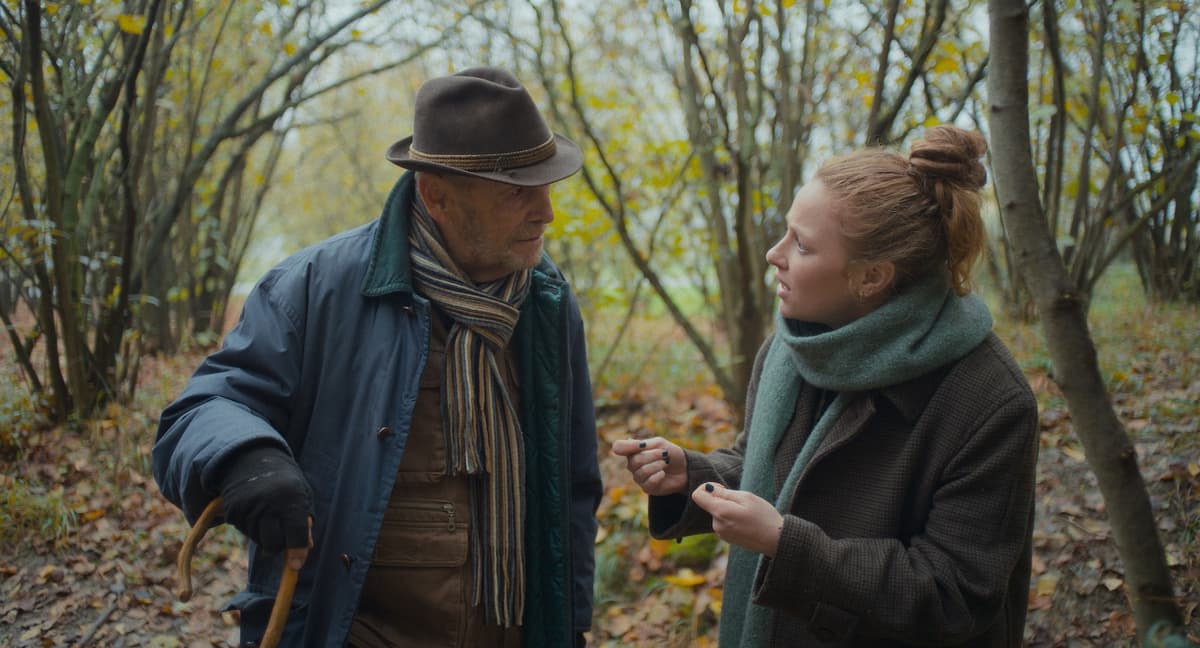

Gabriele Fabbro’s “Trifole” is a winning confection, though in many regards it is a very sad picture. Can a movie be “feel good” if it makes us feel heartbroken? “Trifole” is a deeply conservative or, as Mr. Fabbro might put it, “preservative” venture. The film explores the ramifications of age, the upsetting of traditions, and the continuity provided by family — that is to say, forces that are unstoppable, often contentious, and sometimes maddening.
Mr. Fabbro co-wrote the story and script with Ydalie Turk, following up on their initial screenwriting collaboration, “The Grand Bolero” (2021). This time Ms. Turk is also a leading lady, playing Dalia, a recent college graduate who has been strong-armed into a task by her mother, Marta (Margherita Buy). The 20-something woman was living an aimless life at London. What better way to gain meaning and purpose than to check up on a family member who’s gone incommunicado?
Dalia’s grandfather Igor (Umberto Orsini) lives at Langhe, an area in northwest Italy. This hilly region should be known to oenophiles and gastronomes for its rolling vineyards and crumbly crutin, a cheese made with cow’s milk and black truffle flakes. Langhe is home to the elusive white truffle, a rare commodity that can set a shopper back as much as $300,000. Should you get a notion to search for one of these pricey tubers, bring water-proof hiking boots and, not least, a dog who’s got a nose for the things.
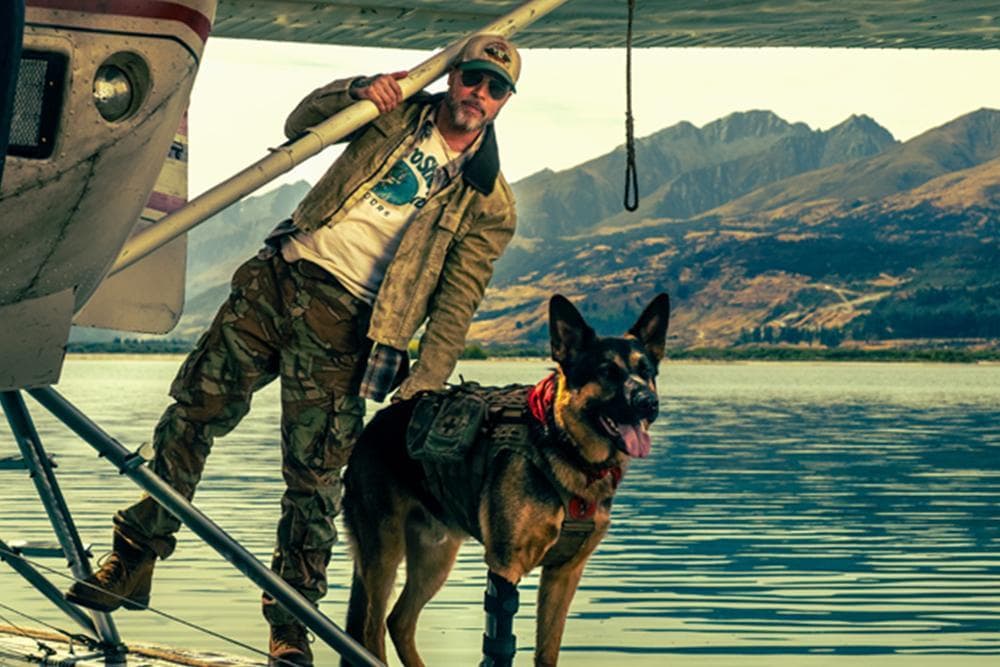
Did I mention that “Trifole” is, in significant part, a dog movie? Birba is of mixed heritage — please, let’s not call her a “mutt” — with a knack for locating truffles, a skill encouraged by her original owner, Aurelio Consterno. Movie-goers may recognize the names from a 2020 documentary by Michael Dweck and Gregory Kershaw, “The Truffle Hunters.” Consterno has since passed on, but Birba was adopted by a couple who have maintained their charge’s truffle-sniffing skills. The press release describes Birba as “a dog of extraordinary intelligence.” How could she not be?

After hiking through a landscape of extraordinary beauty — cinematographer Brandon Lattman has more than earned his keep here — Dalia arrives at Igor’s home, a structure as weatherbeaten as the man himself. Igor is suffering memory loss; the only way in which Dalia can placate him is by pretending to be Marta. Still, the old man’s ability to intuit emotional registers is intact: He’s on to Dalia’s frustrations with life in general.
Dalia’s not happy with her current situation, not a bit, and tells mom as much on the rare occasion she’s able to get reception on her cellphone. When Igor has an accident that precludes him from truffle hunting, he trusts Dalia to do so — with Birba’s assistance, of course. Again, we follow Dalia over hill and through dale, this time with Igor’s journal and its roughly rendered maps and figures. On these travels, our hapless heroine becomes less hapless, more through the ministrations of her canine guide than by her phone, which is, early on, lost in the woods.
Further elaboration would spoil the tragedy, mystery, and comedy that ensues. Mr. Fabbro and Ms. Turk have crafted an enormously pleasurable film with tangents of plot and character that skirt the predictable with a gratifyingly deft hand. The four principal actors — and, yes, I’m including Birba — do outstanding work embodying characters who are careworn with experience. Ms. Turk is especially good as the film reaches a denouement that is, in equal parts, farcical, suspenseful, and devastating.
You know those 10 Best lists that film critics indulge in at the end of each calendar year? Here’s betting that “Trifole” will be on a bunch of them. It will certainly be on mine.