Trump Administration Secures Another Victory as Northwestern Settles Antisemitism Probe for $75 Million
The settlement will ‘ensure that American educational institutions protect Jewish students and put merit first,’ Attorney General Pam Bondi says.
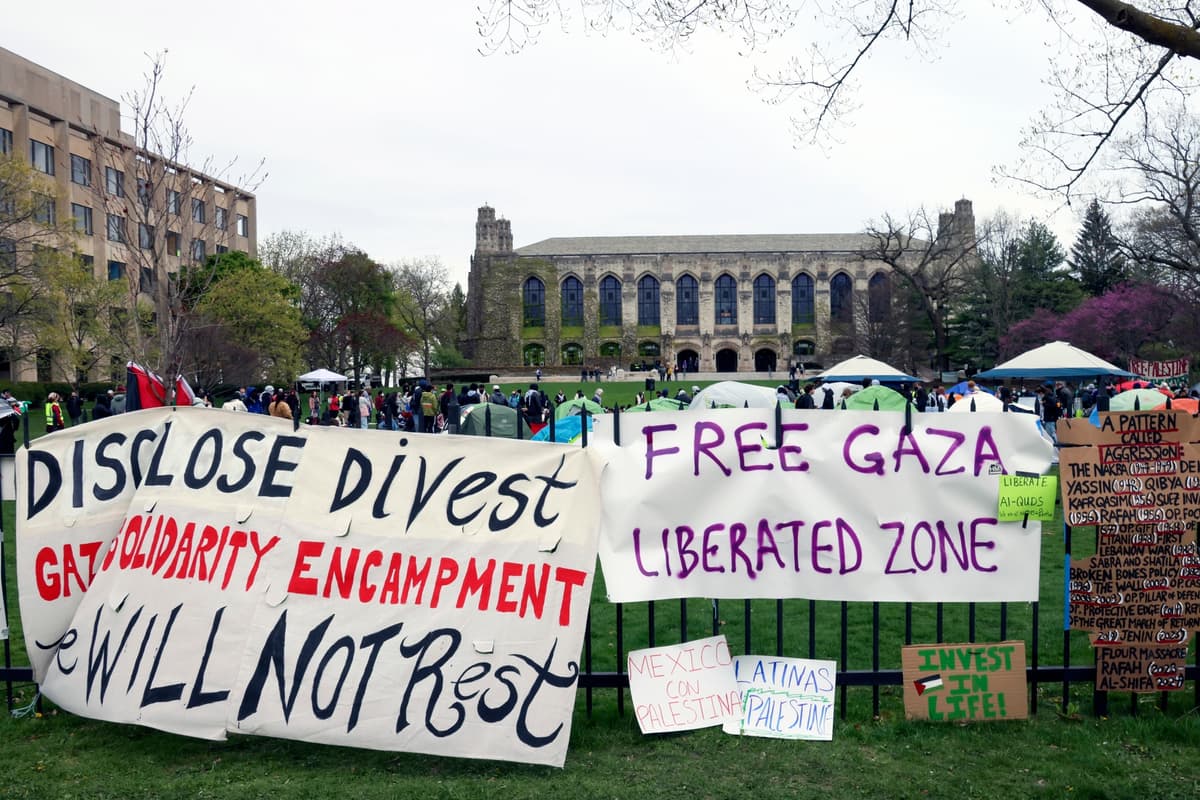

In another significant win for the Trump administration’s effort to combat antisemitism on college campuses, Northwestern University has agreed to pay the federal government $75 million.
The deal, announced Friday, will end a federal investigation into antisemitism at the institution and release $790 million in frozen research funds.
The settlement marks the latest in a series of victories for the administration, which has successfully pressured several major universities, including Harvard, Columbia, Cornell, and Brown, to address charges of civil rights violations and antisemitism on campus.
“Today’s settlement marks another victory in the Trump Administration’s fight to ensure that American educational institutions protect Jewish students and put merit first,” Attorney General Pam Bondi said in a statement. “Institutions that accept federal funds are obligated to follow civil rights law — we are grateful to Northwestern for negotiating this historic deal.”
The administration froze Northwestern’s federal funding in April, accusing the school of fostering a hostile environment for Jewish students. The move made Northwestern the first non-Ivy League institution targeted by the White House over its handling of on-campus antisemitism.
Under the terms of the settlement, Northwestern will pay $75 million over three years. In return, the university expects all frozen federal funds to be fully restored within 30 days.
In addition to the payment, Northwestern has committed to several key actions. The university will review its international admissions process and implement training for international students on campus norms. It will also reaffirm measures to protect Jewish members of the community and establish a special committee to ensure compliance with the agreement.
In defending the settlement, Northwestern’s interim president, Henry Bienen, stressed that the university has maintained its autonomy.
“As an imperative to the negotiation of this agreement, we had several hard red lines we refused to cross: We would not relinquish any control over whom we hire, whom we admit as students, what our faculty teach or how our faculty teach,” Mr. Bienen said in a statement. “I would not have signed this agreement without provisions ensuring that is the case. Northwestern runs Northwestern. Period.”
However, the decision was not without controversy. In August, a group of Northwestern faculty penned an open letter urging the university not to negotiate, arguing it would make the institution “complicit in an assault on higher education.”
The funding freeze had significant financial consequences for the university, leading to a hiring freeze, layoffs, and cuts to programs and benefits. The crisis also contributed to the resignation in September of the university president, Michael Schill, after he testified to Congress about the school’s response to pro-Palestinian encampments.
Justice Department officials lauded the outcome. “We appreciate the significant improvements Northwestern has made and are gratified to reach an agreement that safeguards the rights of all the university’s applicants, students, and employees,” the assistant attorney general of the Civil Rights Division, Harmeet K. Dhillon, said in a statement.
Education Secretary Linda McMahon also praised the settlement, calling it a “huge win” that “cements policy changes that will protect students and other members of the campus from harassment and discrimination.”