Trump, After Vanquishing Letitia James on $500 Million Verdict, Sets His Sights on Alvin Bragg’s Criminal Convictions

The 47th president is the first one to be a convicted felon — for now.
Getty Images
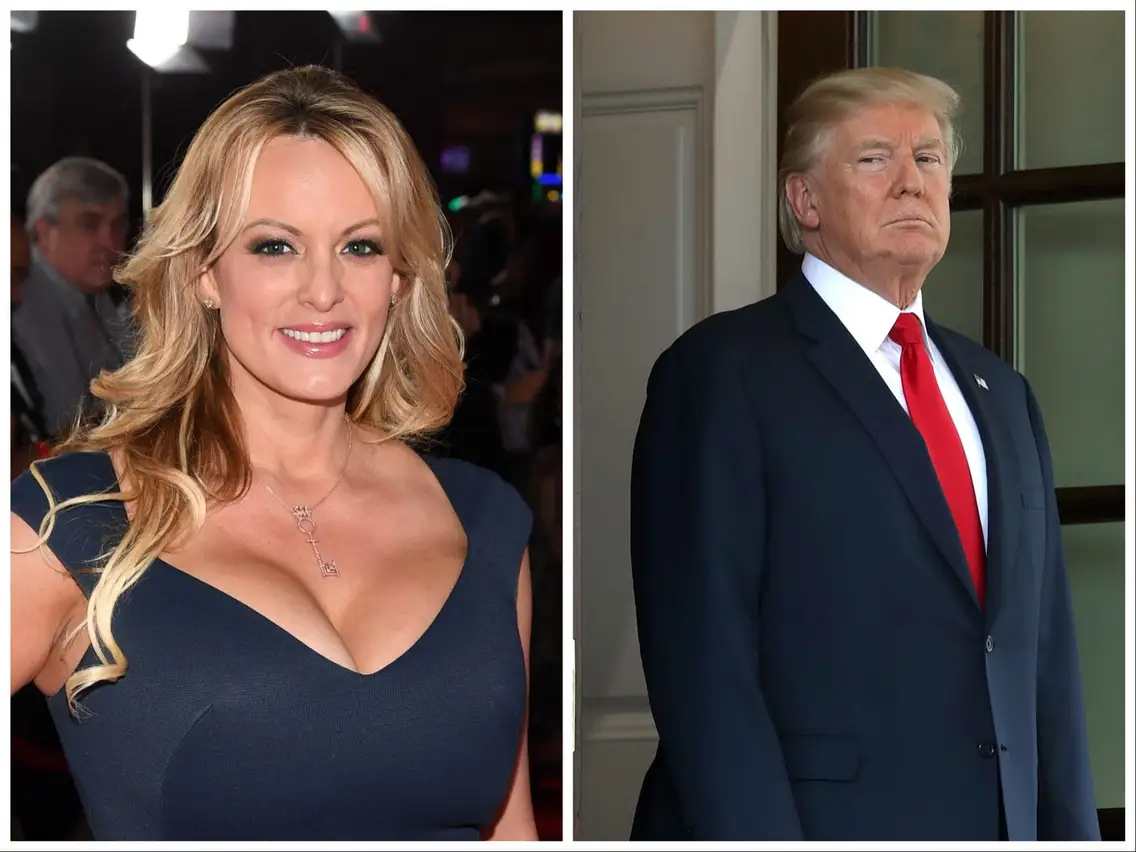
The adult film star Stormy Daniels and President Trump. Getty Images

President Trump’s status as a convicted felon could soon come to an end — if he can persuade a New York state appellate court to overturn his 34 “guilty” verdicts in the hush money case brought by District Attorney Alvin Bragg. 

Mr. Trump’s case for why the appellate division of the New York state supreme court ought to do just that is due on September 29. He has of late enjoyed success before that tribunal, which last month erased the $500 million civil fraud verdict secured by New York’s attorney general, Letitia James. Both Mr. Trump and Ms. James have appealed that ruling to New York’s highest court.

Undoing Mr. Trump’s criminal conviction, though, could be a heavier lift. The fraud verdict was handed down by Judge Arthur Engoron on summary judgment, without a jury trial. Mr. Trump’s criminal convictions, though, were brought in by a Manhattan jury, who found him guilty on each and every count. Appellate courts are usually more deferential when it comes to jury findings.

While a jury convicted Mr. Trump, the trial judge, Juan Merchan, played a crucial role in the case’s outcome. His jury instructions explained that to convict Mr. Trump of a felony, jurors need only find that falsification of business records — a misdemeanor —were committed in the service of a second crime. The jury did not need to be unanimous about the nature of that second crime. The mere existence of one elevated the misdemeanors to a low-level felony.

The case stemmed from a series of payments made by Mr. Trump’s erstwhile lawyer, Michael Cohen, to the adult film performer Stormy Daniels, whose real name is Stefanie Clifford. Ms. Clifford claims that Mr. Trump slept with her in 2006. Mr. Trump denies that the two ever had sexual relations. Mr. Cohen eventually pleaded guilty on eight counts, including perjury and tax evasion.

The Manhattan district attorney, Alvin Bragg, during a press conference at New York, April 4, 2023.
The Manhattan district attorney, Alvin Bragg, during a press conference at New York, April 4, 2023. AP/John Minchillo, file

Judge Merchan and Mr. Trump clashed throughout the trial, with the 47th president calling for the judge’s recusal and denigrating him as a “tyrant” and a “certified Trump hater.” Mr. Trump also zeroed in on Judge Merchan’s small donations to Democrats and the Biden campaign — totaling $35 — in 2020. Judge Merchan’s adult daughter Loren worked for a political consulting firm that numbered Vice President Kamala Harris as a client.

Mr. Trump’s efforts to punt his sentencing in the case until after the end of his term failed when the Supreme Court, by a five-to-four vote that saw Chief Justice Roberts and Justice Amy Coney Barrett vote with the liberals, declined to intervene. Judge Merchan, though, sentenced Mr. Trump to only an “unconditional discharge,” a rare outcome that prescribes no further punishment.

The president in June asked the Second United States Appeals Court to move the case to federal court. Mr. Trump’s lawyer, Jeffrey Wall, reasoned that a “federal officer is entitled to a federal forum, not to have those arguments heard in state court. And if that’s true for a normal federal officer in a normal criminal prosecution, it certainly ought to be true for the president of the United States and for what … is an anomalous one of its kind prosecution.”

While Mr. Bragg conceded, “This defendant” — meaning Mr. Trump — “is a very unusual defendant,” New York’s position is that removal to federal court is unavailable after sentencing. Mr. Trump has lost on several previous efforts to find a federal forum. One judge, Alvin Hellerstein, found that the “hush-money payments were private, unofficial acts, outside the bounds of executive authority.”

The question of whether the hush money payments were official presidential acts is also central to Mr. Trump’s effort, so far unsuccessful, to invoke presidential immunity to best Mr. Bragg. Judge Merchan in December of last year asked, “Is a President’s in-office conduct to conceal payments to an adult film actress to keep information from the public eye relating to an encounter that occurred prior to his Presidency official or unofficial?” His answer was in the negative.

Mr. Trump, though, could renew that argument on appeal in the hopes that the appellate court takes a more expansive view of presidential action. Some of the payments to Ms. Clifford, which totaled $130,000 in all, were made from the Oval Office. Mr. Bragg contends that if protected evidence made its way into the record, it was of the “harmless” variety. Mr. Trump fires back that “presidential immunity errors are never harmless.”


The New York Sun

© 2025 The New York Sun Company, LLC. All rights reserved.

Use of this site constitutes acceptance of our Terms of Use and Privacy Policy. The material on this site is protected by copyright law and may not be reproduced, distributed, transmitted, cached or otherwise used.

The New York Sun

Sign in or  create a free account

or
By continuing you agree to our Privacy Policy and Terms of Use