Trump Demands Washington, Which Abolished Capital Punishment Decades Ago, Bring Back the Death Penalty
The president says his justice department is prepared to pursue the death penalty for those convicted of murder.
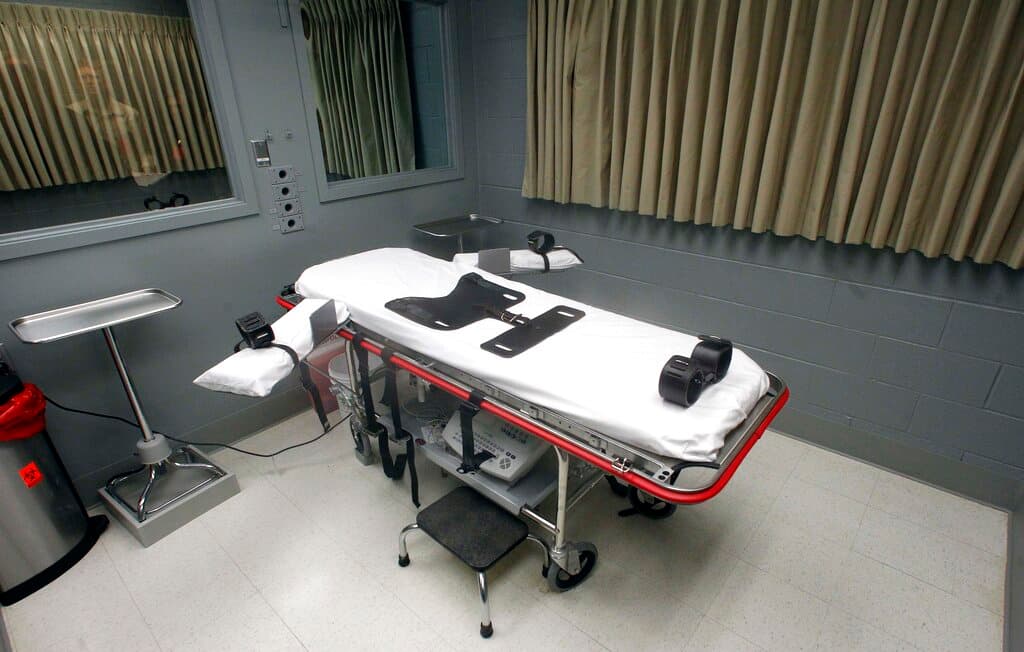

Despite the city abolishing the death penalty decades ago, President Trump is now saying his administration will pursue the death penalty for anyone convicted of murder at Washington, D.C. The death penalty was struck down in a court decision in the 1970s, and the city council and city voters have reaffirmed that decision in the decades that followed.
According to the most recent data available from the FBI, the District of Columbia is the 10th most dangerous city in the United States with respect to homicide and nonnegligent manslaughter. Mr. Trump has been celebrating that the city went 12 days without a murder, though he now says he wants to try to deter homicide even more aggressively.
âItâll be a crime-free city,â Mr. Trump said during a Cabinet meeting at the White House on Tuesday. â[If] anybody murders [someone] in the capital â capital punishment.â
âIf somebody kills somebody in the capital â Washington, D.C. â weâre going to be seeking the death penalty, and thatâs a very strong preventative, and everybody thatâs heard it agrees with it,â the president said.
Use of the death penalty at the nationâs capital has been soundly rejected by elected officials and voters dating back to the 1970s. As a result of the 1973 Supreme Court case Furman v. Georgia, the districtâs use of capital punishment was done away with after the court found inconsistent uses of the death penalty violated individualsâ constitutional rights.
In 1981, after the city was granted some independence from Congressâs governance via the Home Rule Act â which Mr. Trump is now using to federalize the police force â the city council voted to formally repeal the death penalty law.
During a spike in crime in the 1990s, Congress passed a resolution requiring residents of the city to vote on a ballot initiative to either bring back or continue to outlaw capital punishment.
The initiative to bring back the death penalty failed by a two-to-one margin at a time when the number of murders being committed annually was about four times as high as it is today.
Mr. Trump met with his Cabinet and top aides for nearly four hours on Tuesday to mark both the Labor Day holiday and his federal takeover of the nationâs capital. His attorney general, his defense secretary, and others mentioned how excited they were about the crackdown.
Near the top of the meeting, Mr. Trump invited a reporter from NTD News, Iris Tao, who was mugged in the city two years ago, to speak. âIt was a Saturday morning, in broad daylight, I was on my way to work and a young man with a black ski mask pointed a gun at my face and threatened me to hand over my phone, my wallet, my laptop, and everything else,â Ms. Tao told the president. âWhen I refused, he used the butt of his handgun to strike me across the face.â
Mr. Trump also told reporters that he wanted to see his administration and the city crack down on youth crime, which is something the districtâs United States attorney, Jeanine Pirro, has said before.
âTheyâre children, but theyâre criminals, and theyâre really bad criminals,â the president said. âTheyâre used by older people because they never get charged because you canât do anything to them. But we are getting that changed, Pam, I hope,â he said to his attorney general.
âYou have 14-year-old kids that are evil, that are sick, and they have to be put away. Something has to be done,â he added.