Trump Denounces Comey as a ‘Dirty Cop’ and a Liar, but Can His Hand-Picked Prosecutor Put the Former FBI Boss in Prison? 

The erstwhile FBI director could challenge his prosecution as ‘selective’ — and unconstitutional.
Kevin Dietsch/Getty Images
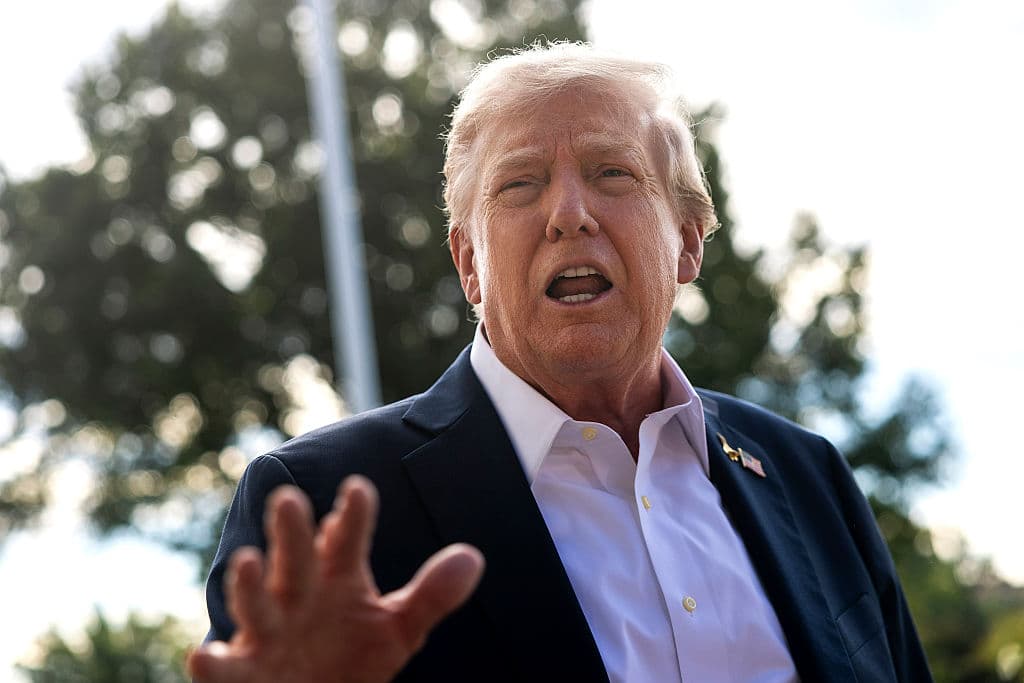
President Trump speaks to members of the media as he departs the White House September 26, 2025 at Washington, DC. Kevin Dietsch/Getty Images

The charging of a former director of the FBI, James Comey, with two felonies amounts to a gamble by the Trump administration that it can convict the man who was once America’s top spook and, before that, one of the country’s most formidable federal prosecutors.

That a grand jury in the Eastern District of Virginia returned an indictment against Mr. Comey could be counted as a victory for Attorney General Pam Bondi and the interim United States attorney for the Eastern District of Virginia, Lindsey Halligan, who previously represented Mr. Trump in the Mar-a-Lago documents case and most recently was leading the White House’s effort to reform the Smithsonian.  

The two charges — for obstruction of justice and making a false statement — were secured despite doubts, according to ABC News and other media outlets, among career prosecutors about the strength of the case. Mr. Comey could try to access any records conveying those doubts as part of his defense.

Mr. Trump has celebrated the indictments, writing on Truth Social that Mr. Comey “LIED! It is not a complex lie, it’s a very simple, but IMPORTANT one. There is no way he can explain his way out of it. He is a Dirty Cop … words are words, and he wasn’t hedging or in dispute. He was very positive, there was no doubt in his mind about what he said, or meant by saying it.”

The president is referring to the testimony from September 2020 that sits at the heart of the case against Mr. Comey, whom Mr. Trump calls a “destroyer of lives.” Mr. Comey is accused of lying to Congress when he denied under oath orchestrating leaks to the press about the FBI’s 2016 investigation into Russian meddling in that year’s election.  

One major leak at issue was behind an explosive Wall Street Journal article, published in October 2016, that said the FBI and the Department of Justice were quarreling over an ongoing criminal investigation of the Clinton Foundation. The story hit like a bomb, just days before the election.  The new indictment of Mr. Comey, only two pages long, was signed by Ms. Halligan, who has never prosecuted a case, rather than a subordinate. 

A second false statement charge was rejected by the grand jury. Mr. Comey, in a video message following his indictment, declared, “We will not live on our knees, and you shouldn’t either.” He faces up to five years in prison if convicted on both counts. The indictment argues that Mr. Comey “​​did willfully and knowingly make a materially false, fictitious, and fraudulent statement in a matter within the jurisdiction of the legislative branch of the Government of the United States.” 

The government claims that Mr. Comey falsely stated that he did not authorize “‘someone else at the FBI to be an anonymous source in news reports’ regarding an FBI investigation concerning PERSON 1,” who is likely Secretary Hillary Clinton, a co-founder of the Clinton Foundation.

The Department of Justice contends that that “statement was false, because, as JAMES B. COMEY JR. then and there knew, he in fact had authorized PERSON 3 to serve as an anonymous source in news reports.” Person 3 is likely Mr. Comey’s former deputy, Andrew McCabe. Senator Ted Cruz in 2020 pressed Mr. Comey whether he had authorized Mr. McCabe to leak with respect to the FBI’s investigations of Mr. Trump and Mrs. Clinton. Mr. Comey responded, “I can only speak to my testimony. I stand by the testimony you summarized that I gave in May of 2017.”

Mr. Comey’s reference was to earlier testimony when he also denied authorizing leaks. The indictment does not specify what details Mr. Comey leaked, though a look at the timeline, and testimony from Mr. Comey’s deputy, Mr. McCabe, indicates the leak was about the Clinton Foundation. 

Mr. Cruz has presented evidence that Mr. McCabe gave sworn statements repeatedly, including to the FBI’s inspector general, that Mr. Comey authorized the leaks about the Clinton Foundation. Mr. McCabe, who has a history of making contradictory statements, may not be the most reliable witness. 

Mr. Trump on Truth Social argues that Mr. Comey “left himself ZERO margin of error on a big and important answer to a question.” Mr. Comey on Thursday, though, declared, “I’m innocent. So let’s have a trial.” Mr. Comey’s lawyer — a former federal prosecutor, Patrick Fitzgerald — led the prosecutions of two governors of Illinois, Rod Blagojevich and George Ryan, as well as the investigation into Vice President Dick Cheney’s chief of staff, Scooter Libby. 

Mr. Libby’s case in some ways mirrors Mr. Comey’s. The former Bush national security official was accused of lying under oath about whether he was leaking to the press in 2003. He was eventually convicted of obstruction of justice in 2007 and sentenced to prison, though President Bush commuted the prison portion of his sentence. 

Mr. Bush’s refusal to give a complete pardon enraged Mr. Cheney at the time. In 2018, Mr. Trump granted Mr. Libby a full pardon. Mr. Trump also pardoned  Mr. Blagojevich — his former co-star of “Celebrity Apprentice” — who now calls himself a “Trumpocrat.”

Mr. Fitzgerald could seek to have the case against his client dismissed as a “selective prosecution.” That legal doctrine stems from the Fifth Amendment’s guarantees of equal protection under the law and “due process of law.” The Supreme Court in a case from 1996, United States v. Armstrong, set a dauntingly high standard for defendants to make good on a claim of selective prosecution. They must show that others similarly situated were not prosecuted for similar conduct and that the prosecution was motivated by a discriminatory purpose.

Mr. Trump opined on Friday that Mr. Comey’s indictment is “about justice really, it’s not revenge. It’s also about the fact that you can’t let this go on. They are sick, radical left people, and they can’t get away with it and Comey was one of the people.”

The presiding magistrate judge, Linsey Vaala, appeared perplexed by the grand jury’s decision to indict on two charges but not on the third. “I’m a little confused,” she said. “This has never happened before.” Mr. Comey’s firing from the FBI eventually led to the appointment of Special Counsel Robert Mueller, another former FBI leader. 

Mr. Mueller did not recommend that Mr. Trump be criminally charged for colluding with Russia during the 2016 election. Mr. Comey went on to a post-FBI career that has included writing a book critical of Mr. Trump and becoming a regular guest on television shows where he denounces the 47th president. The DOJ recently fired Mr. Comey’s daughter, Maureen, who served as a federal prosecutor at the Southern District of New York — where her father once worked.


The New York Sun

© 2025 The New York Sun Company, LLC. All rights reserved.

Use of this site constitutes acceptance of our Terms of Use and Privacy Policy. The material on this site is protected by copyright law and may not be reproduced, distributed, transmitted, cached or otherwise used.

The New York Sun

Sign in or  create a free account

or
By continuing you agree to our Privacy Policy and Terms of Use