Trump Emerges as a One-in-Five Long Shot for the Nobel Prize

Norwegians are expected to announce on Friday their decision on the most distinguished of the Nobel prizes.
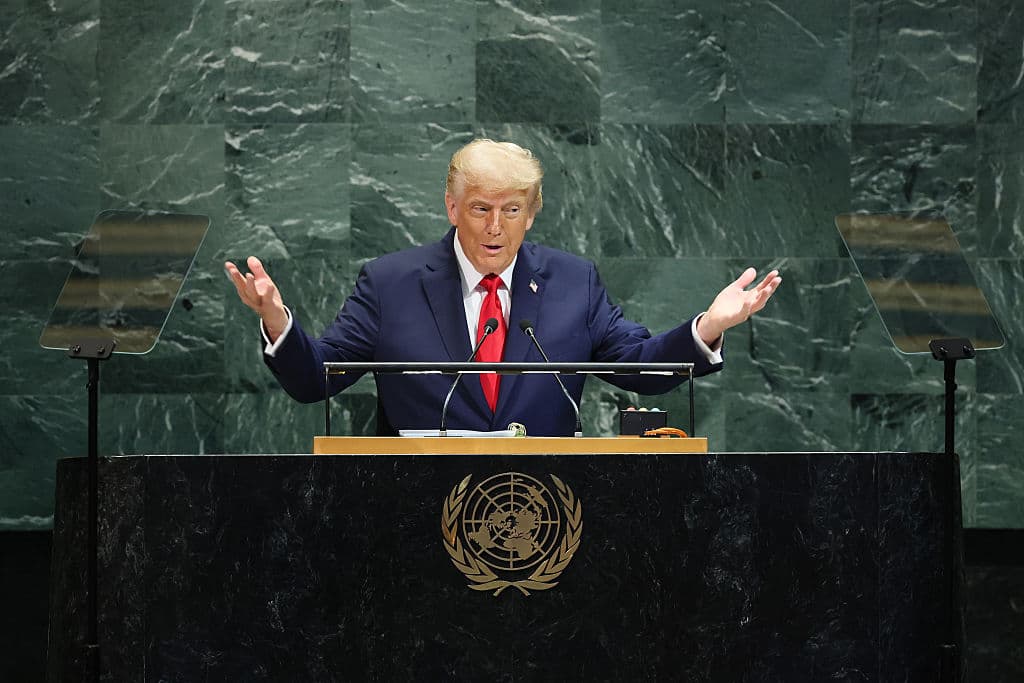

Michael M. Santiago/Getty Images
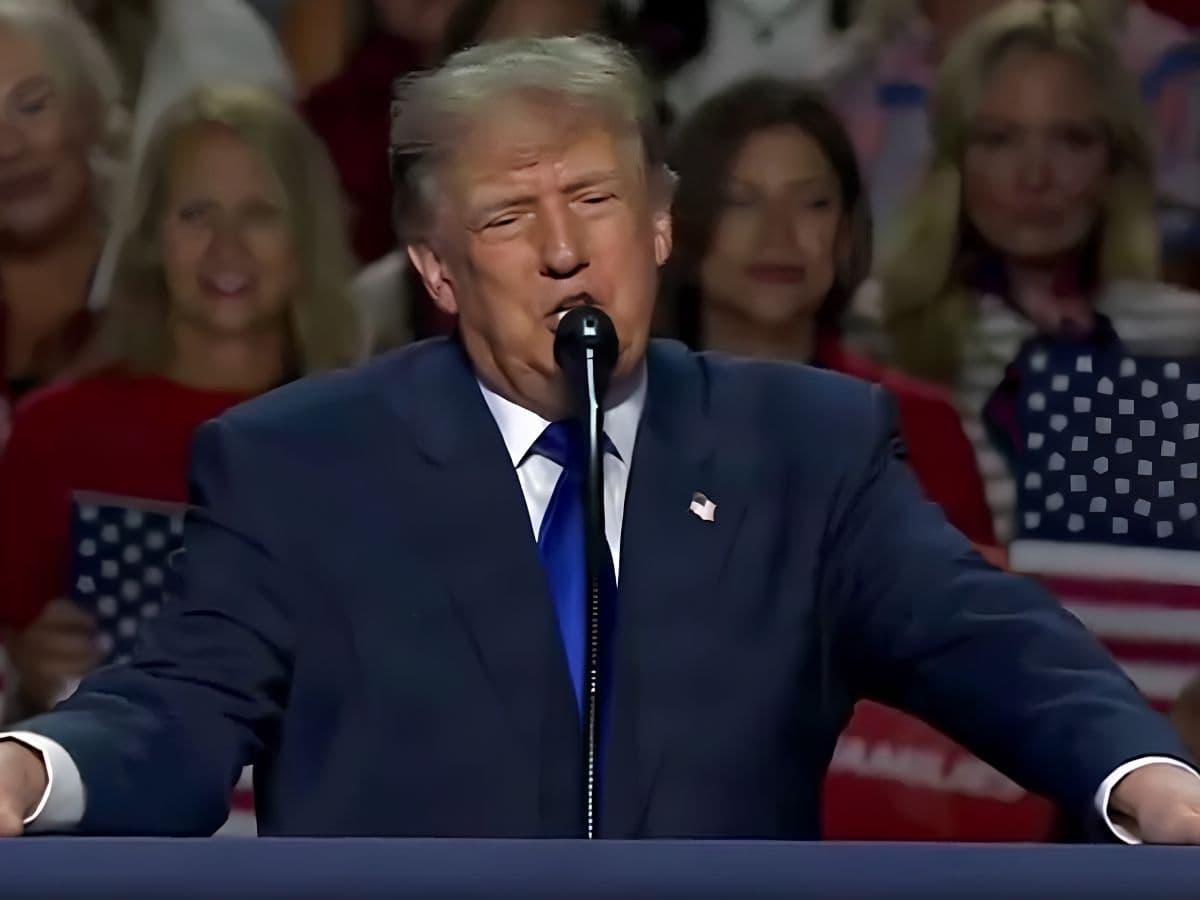
President Trump speaks during the United Nations General Assembly at the UN's New York headquarters on September 23, 2025. Michael M. Santiago/Getty Images

Will President Trump get his wish Friday, when the Nobel committee announces this year’s winner of its prize in peace, or will the December award ceremony celebrate one of the usual suspects, such as some United Nations agency?

The Nobel committee’s announcement, expected at Oslo, seems to be on Mr. Trump’s mind. In speeches, he often highlights ending “seven unended wars.” This week he is consumed with stopping the Gaza war and ending “3,000 years of catastrophe,” as he terms it. 

“Melania and I send along our sincerest thanks to the Hostage and Missing Families Forum for your letter of nomination to the Nobel Peace Prize Committee,” Mr. Trump on Tuesday wrote to the Israeli advocacy group for Gaza hostages. “As President, I remain steadfastly committed to, and will work tirelessly towards, restoring a foreign policy of peace through strength ending the years of endless wars, not just in the Middle East, but around the world.”

The first Nobel prize was awarded in 1901. Presidents or former presidents who have been awarded the prize include Theodore Roosevelt, Woodrow Wilson, Jimmy Carter, and Barack Obama, as well as Vice President Al Gore. 

Yet, efforts at making peace frequently mattered to nominating committees more than actually achieving peace. One of the most frequent go-to institutions for awarding the prize has been the UN, whose leaders and agencies have received the peace prize more than a dozen times. 

The man who popularized the term “peace through strength,” President Reagan, was never awarded the Nobel, even though he is widely seen as having led America to victory in the decades-long Cold War. When the committee awarded the prize to Mr. Obama in 2009 “for his extraordinary efforts to strengthen international diplomacy and cooperation between peoples,” it could cite no war-ending agreement over which he presided.

So could the committee decide to give the award to someone with similarly thin achievements on brokering peace, such as the UN secretary-general, Antonio Guterres?

“I don’t work for the Nobel Committee, and I don’t have the list of people who’ve been nominated,” Mr. Guterres’s spokesman, Stephane Dujarric, told the Sun Tuesday. “This is not an issue that he has been focused on or paid any attention to.” He allowed, though, that “the announcement of the Nobel Peace Prize on a Friday in October always carries a lot of interest in this building.” 

Mr. Trump, in addressing the UN General Assembly last month, highlighted his disregard of the building that he once offered to refurbish. “All I got from the United Nations was an escalator that on the way up stopped right in the middle,” he said, “and then a teleprompter that didn’t work.” Rather than solve problems, he added, all the UN can do is “write a really strongly worded letter.”

Highlighting his own restrictive emigration policies, Mr. Trump told the assembled dignitaries that with open borders, “your countries are going to hell.” Such talk is unlikely to be music to the ears of the Norwegian committee that decides to whom the Peace Prize goes. 

In 1954 the UN’s High Commission for Refugees was the world body’s first agency to receive the Nobel for peace. The agency, the Nobel committee said, “shows us that the unfortunate foreigner is one of us; it teaches us to understand that sympathy with other human beings, even if they are separated from us by national frontiers, is the foundation upon which a lasting peace must be built.”

Those words might be an anathema to Mr. Trump, but they had a powerful resonance in the aftermath of World War II and as colonies gained independence. The next time such global upheaval led to mass migration was in the so-called Arab Spring of the last decade. The UNHCR chief at that time was Mr. Guterres, and the agency was hardly present while a global refugee crisis rocked Europe and beyond. 

Mr. Trump seems eager to complete a deal for ending the Gaza war before the Friday announcement. Yet, all indications are that his sensibilities are far from those that have traditionally guided the Nobel committee. 

At the same time, Mr. Guterres’s lack of influence over world affairs hardly puts him in the same category as his two predecessors who won the peace prize, Dag Hammarskjöld in 1961 and Kofi Annan in 2001. Or even that of the first UN official to win the prize, Ralph Bunche.

Mr. Bunche, an African American, received the Nobel for negotiating the 1949 armistice agreement that ended Israel’s war of independence. Even if Mr. Trump outdoes him by ending Israel’s longest war, or brokering peace deals with Arab neighbors, oddsmakers are giving him no better than a one-in-five chance with the Nobel committee.


The New York Sun

© 2025 The New York Sun Company, LLC. All rights reserved.

Use of this site constitutes acceptance of our Terms of Use and Privacy Policy. The material on this site is protected by copyright law and may not be reproduced, distributed, transmitted, cached or otherwise used.

The New York Sun

Sign in or  create a free account

or
By continuing you agree to our Privacy Policy and Terms of Use