Trump, in Mourning Hulk Hogan, Salutes a Fellow Celebrity Who Prevailed Over the Press
His defeat of the gossip blog Gawker is a victory for celebrities who fear having their privacy violated.
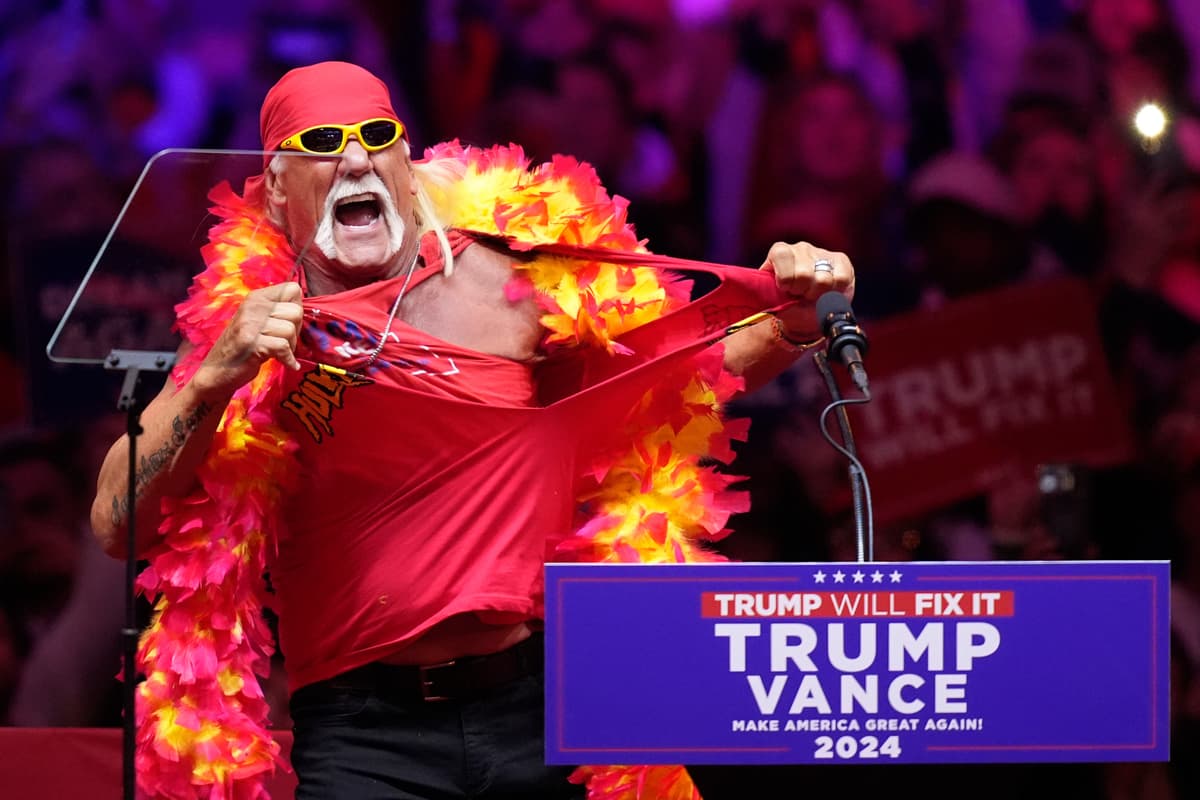

Wrestling’s Hulk Hogan, Terry Bollea, is being remembered for his performances in the ring and shirt-tearing appearance at last summer’s GOP convention. A quieter and longer-lasting legacy is Bollea defeating the gossip blog Gawker — a victory for celebrities who fear having their privacy violated.
President Trump saluted “the Hulkster” across social media on Thursday. “We lost a great friend today,” he said of Bollea, describing him as “MAGA all the way: Strong, tough, smart, but with the biggest heart.” He saluted the wrestler’s “electric speech” at the RNC and said that “the cultural impact he had was massive.”
A few messages previous, Mr. Trump had celebrated a “big and important win in our historic lawsuit against ‘60 Minutes,’ CBS, and Paramount.” The media company settled with the president for $16 million in a lawsuit alleging that it had edited an interview with Vice President Harris to boost her campaign.
Mr. Trump called the settlement “another in a long line of victories over the Fake News Media,” which included a $15 million payout from ABC News last year. The network apologized for their anchor and former aide to President Clinton, George Stephanopoulos, saying that Mr. Trump had been “found liable for rape” when he had actually been found liable for sexual assault but not liable for rape.
The latest target of Mr. Trump’s litigation is the Wall Street Journal. Last week, it published a ribald birthday letter they say he sent to the disgraced financier, Jeffrey Epstein, 20 years ago. The president says it’s a forgery and brought suit.
Politicians and celebrities have taken press outlets to court before with mixed results. America treasures its free press and the First Amendment offers journalists broad protections. Unscrupulous or careless actors abusing that right has been the norm since President Jefferson employed an infamous hatchet man, James Callender.
Callender “was a Scotchman of whom nothing good is known,” John Lawson wrote in 1918’s “American State Trials,” about the journalist’s prosecution for sedition in 1800. “He had the pen of a ready writer and the brazen forehead of a knave.”
After attacking Jefferson’s rivals, President John Adams and Secretary Hamilton, Callender expected to be rewarded. When denied a government post, he turned on Jefferson, spreading the story of his fathering children with his wife’s half-sister, an enslaved woman, Sally Hemmings.
“Defamation,” Jefferson wrote a friend, “is becoming a necessary of life,” as Bollea learned in 2012. That’s when Gawker published parts of a “Hulk Hogan sex tape” featuring Heather Clem — the wife of radio personality, Todd Clem, known as Bubba the Love Sponge.
More damaging than the affair was Bollea’s comments about his daughter, Brooke Hogan, dating a Black man. The wrestler expressed his objections using crude language and “the N-Word.” Of his feelings, Bollea said, “I guess we’re all a little racist.”
World Wrestling Entertainment terminated its contract with Bollea; his reputation was destroyed. He was no longer a beloved icon of wrestling fans or a cultural icon. He told People magazine there was “no excuse” for his “offensive language,” beginning a climb to redemption that culminated with his speech for Mr. Trump.
Bollea took Gawker Media to court, charging they’d invaded his privacy, infringed on his personality rights, and inflicted emotional distress. In 2016, a Circuit Court awarded him $115 million in compensatory damages and $25 million in punitive damages.
The video, Bollea charged, had been recorded without consent. Although Mr. Clem agreed to the liaison, he called his “best friend” a “hypocritical fraud” for the suing and his estranged wife “the real victim.” Three months after the verdict, Gawker filed bankruptcy. They later reached a $31 million settlement with the wrestler.
Following Bollea’s passing, Mr. Clem expressed remorse to his “friend” over the ordeal. “I’m saddened,” he said, “that I will never be able to tell him how sorry I am for the way I handled things.” The wrestler settled his dispute with the couple for $5,000 and an on-air apology.
Hulk Hogan has left the ring, and his behavior stands as part of his legacy. Yet so does his willingness to seek redress against press coverage deemed malicious. Gawker’s knockout is a cautionary tale for journalists, celebrities, and politicians as they wrestle with the legal line separating the public’s right to know and the right to privacy.