Trump, Meeting Putin in Alaska, Can Walk Theodore Roosevelt’s Path to Peace
Nobel Prize in peace honors the 26th president’s efforts to end the war between Russia, Japan.
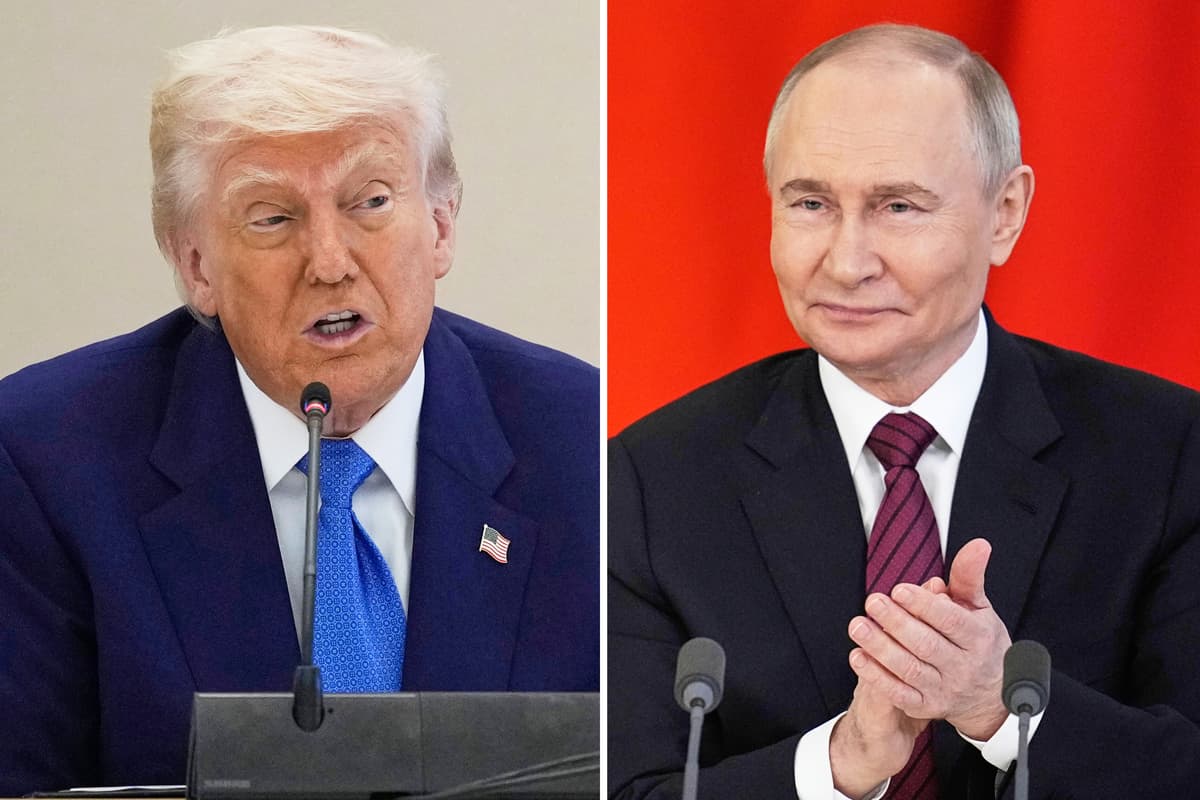
President Trump is meeting President Putin of Russia in Alaska on Friday. Many comparisons will be made to Cold War summits. Since the topic will be ending the conflict in Ukraine, though, the 47th president could find an example in President Theodore Roosevelt brokering peace as an outsider in the Russo-Japanese War.
Earlier this week, Mr. Trump, to force negotiations, repeated his pledge to impose fresh sanctions on Moscow and “secondary” ones on countries that purchase its energy. Friday on Truth Social, he described his meeting with Mr. Putin as “highly anticipated.”
Ukraine’s absence at the summit, combined with Mr. Trump’s suggestion that a deal might mean “some swapping of territories,” is sure to draw comparisons to Munich in 1938. At that meeting, Czechoslovakia’s Sudetenland was ceded to Adolf Hitler without the Czech’s consent by the U.K., France, and Italy who hoped appeasement would avoid war.
President Zelensky’s apparent rejection of the idea of ceding any territory to Russia stirs echoes of the Czechoslovaks’ indignation over the Munich pact. It also raises doubts over the potential usefulness of the Alaska summit between Messrs. Putin and Trump.

In 1904 America was the neutral nation mediating between two combatants, Imperial Japan and the Russian Empire. TR had favored Moscow at first. He soured after pogroms against its Jewish population, declaring he was “thoroughly well pleased” with Japan’s victories.
Between 1904 and 1905, the Russian Empire and Imperial Japan were clashing over territory in Manchuria and Korea. Japan, foreshadowing its strike on Pearl Harbor in 1941, started the war by surprising the Russian navy at Port Arthur. After the port fell, Tsar Nicholas sent his Baltic fleet on a seven-month journey to strike back, only to see it sunk as well.
Lacking the resources to press its advantage, Tokyo appealed to America for mediation. Roosevelt invited the warring delegations to his home, Sagamore Hill in Long Island, and brought them aboard the presidential yacht, United States Ship Mayflower, to talk.
From the start, there were pitfalls over protocol like who’d sit at Roosevelt’s right hand for dinner and which leader to toast first. Roosevelt overcame these challenges and set the delegates up at Portsmouth, New Hampshire, arbitrating from afar.

A key sticking point was Japan’s insistence on territory and money, which made the Russians threaten to resume hostilities. In a letter to his son, Kermit, Roosevelt expressed frustrations like those Mr. Trump has voiced over the current conflict.
“I am having my hair turned gray” by the negotiations, Roosevelt wrote. The Japanese ask too much, he said, but the Russians “are ten times worse … because they are so stupid and won’t tell the truth.” Yet, with uncharacteristic patience, he ensured the conference was a success.
Roosevelt called it “magnificent” when Russia and Japan at last signed the Treaty of Portsmouth. He told his wife, Edith, that it was “a mighty good thing” for both countries and “a mighty good thing for me, too.” He was awarded the Nobel Peace Prize in 1906 for his role.
Mr. Trump has a more difficult task than Roosevelt, since America has backed Ukraine since Russia was the aggressor. By criticizing both Presidents Putin and Zelensky, and expressing sympathy for those lost on both sides, the American is positioned to go into Alaska as a foe of the war itself, not an enemy of either nation.
Unlike Mr. Trump, Roosevelt didn’t have to worry about accusations he was soft on the Kremlin. Yet Russia is again seeking to save face, with an opponent it considered easy prey mounting stiff resistance. Ukraine, like Japan, can win in negotiations more than it can on the battlefield against the much larger Russian war machine.
On September 8, 1905, The New York Sun reported that Washington officials feared that the Japanese disliked the “unhappy result” at Portsmouth and that it would “arouse anti-American feeling.” Yet Roosevelt had “received full credit for bringing about peace” and “it was due to American influence that such a peace was made possible.”
Mr. Trump, like Roosevelt, is putting American prestige on the line to end a war. Getting Mr. Putin to talk in Alaska could be the first step in achieving that diplomatic thaw. There’s fear of Munich-style appeasement, but also hope for peace, which would be a good thing for Russia and Ukraine — and for Mr. Trump, too.