Trump Says He Is Considering End to Capital Gains Taxes on Home Sales

After a reporter asks him about the topic in the Oval Office, the president says, ‘Nobody knew that, how did you find that out?’

AP/Matt Rourke, file
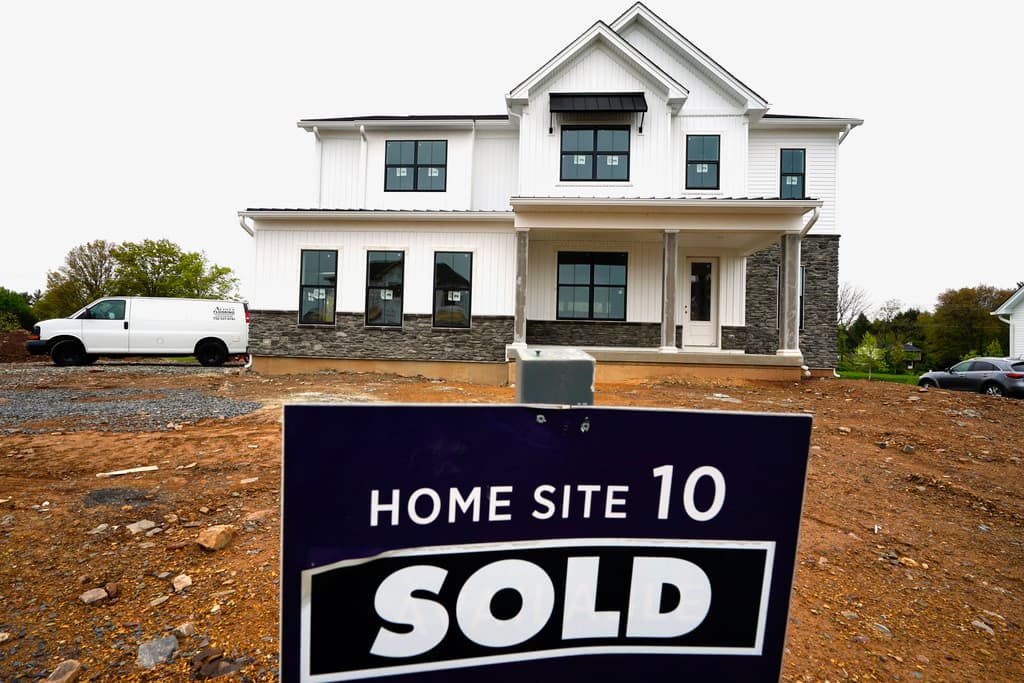
A home under construction marked as 'SOLD' at a development at Eagleville, Pennsylvania. AP/Matt Rourke, file

President Trump on Tuesday disclosed that his administration is considering a proposal to eliminate federal capital gains taxes on home sales, a move he believes could boost the housing market.

“We are thinking about no tax on capital gains on houses,” Mr. Trump said during a meeting in the Oval Office with the president of the Philippines. “We’re thinking about that.”

The idea aligns with a bill recently introduced by Congresswoman Marjorie Taylor Greene, the “No Tax on Home Sales Act,” which seeks to end the federal capital gains tax on the sale of primary residences. 

Mr. Trump was asked about the measure by a reporter for the Real America’s Voice network, Brian Glenn. “Nobody knew that, how did you find that out?” Mr. Trump responded to Mr. Glenn, leaving room for speculation about the administration’s coordination with the House legislation. 

Under the current law, single homeowners can exclude up to $250,000 in capital gains from taxable income on sales of their primary residences, while couples filing jointly can exclude up to $500,000. These exemption limits have been unchanged since 1997. 

The National Association of Realtors estimates that some 29 million homeowners, particularly in high-cost states like California and Massachusetts, may have accrued enough equity to exceed these thresholds, making them liable for capital gains taxes.

But Mr. Trump can’t do it alone. Cutting taxes on home sales would require congressional approval, meaning the president lacks the authority to implement such a proposal unilaterally. 

While Mr. Trump floated the idea of ending capital gains taxes on home sales, he also emphasized his belief that the Federal Reserve could provide an alternative solution by lowering interest rates. “If the Fed would lower rates, we wouldn’t have to do that,” Mr. Trump said. 

The president has been a longtime critic of the Federal Reserve chairman, Jerome Powell, often urging him to reduce rates to spur economic growth. Mr. Powell has resisted, saying in April that under Mr. Trump’s tariffs, “unemployment is likely to go up as the economy slows, in all likelihood, and inflation is likely to go up as tariffs find their way and some part of those tariffs come to be paid by the public.”


The New York Sun

© 2025 The New York Sun Company, LLC. All rights reserved.

Use of this site constitutes acceptance of our Terms of Use and Privacy Policy. The material on this site is protected by copyright law and may not be reproduced, distributed, transmitted, cached or otherwise used.

The New York Sun

Sign in or  create a free account

or
By continuing you agree to our Privacy Policy and Terms of Use