Trump to Putin: Make a Ukraine Deal Within 50 Days or Face Consequences Including Tariffs, Sanctions

A bill advancing in Congress would authorize tough secondary sanctions on countries that do business with Russia, including China and India.
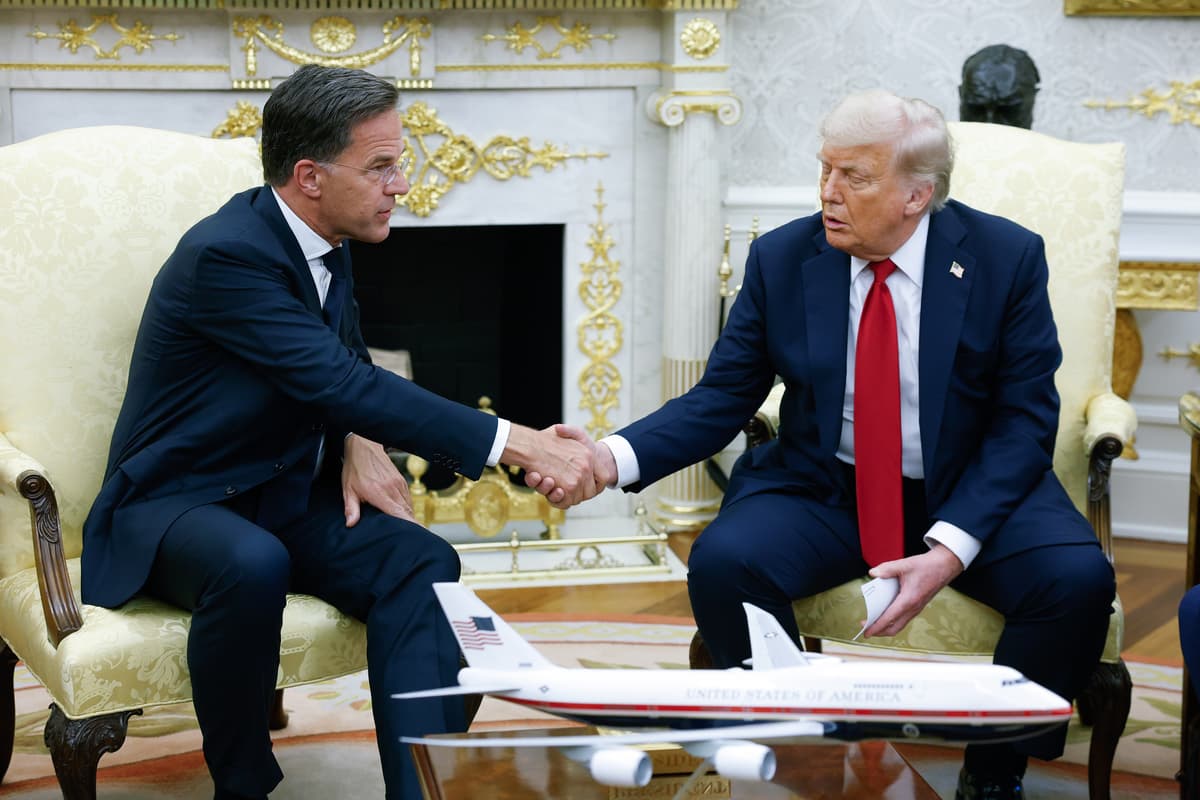

Kevin Dietsch/Getty Images
President Trump greets the NATO secretary general, Mark Rutte, at the White House, July 14, 2025. Kevin Dietsch/Getty Images

President Trump says Russia has 50 days to come to some kind of a peace agreement with the Ukrainians or face significant consequences, including new tariffs and sanctions. During a meeting Monday with the NATO secretary general, Mark Rutte, Mr. Trump said President Putin needs to take concrete steps. 

The president has expressed mounting frustration as Mr. Putin has repeatedly promised to kick off peace talks with a cease-fire, only to then launch fresh attacks on Ukraine. Mr. Trump campaigned stridently on his promise to end the Russia-Ukraine war within a matter of days rather than months. 

“We are very unhappy — I am — with Russia,” Mr. Trump said in the Oval Office, seated next to Mr. Rutte. “We’re very, very unhappy with him and we’re gonna be doing very severe tariffs if we don’t have a deal in 50 days.” The president said the sanctions or tariffs could be “about a hundred percent.”

“I’m disappointed in President Putin because I thought we would’ve had a deal two months ago, but it doesn’t seem to get there. So, based on that, we’re gonna be doing secondary tariffs if we don’t have a deal in 50 days. It’s very simple,” Mr. Trump said. 

The so-called secondary tariffs would hit countries that do business with Russia, including buying its energy products or other items. Those sanctions or tariffs would likely affect to the greatest extent China, India, and some European countries. 

“I think we felt, I felt 
 that we had a deal about four times, and here we are, still talking about it,” Mr. Trump told reporters. “We shoulda had a deal done a long time ago, but it just keeps going on and on and on, and every night people are dying.”

Mr. Rutte criticized Russia for not sending “serious people” to talks in Turkey, where Secretary Rubio and Mr. Trump’s special envoy, Steve Witkoff, were trying to negotiate a cease-fire in mid-May. The NATO leader praised Ukraine for engaging in the effort in good faith. 

Mr. Trump has said he believes the Russian attacks on Ukraine are devastating for the country, which signed an economic partnership with the United States in April. 

“[Russia is] taking out the electric — it’s gonna take years to rebuild it. That’s gonna be the next problem. 
 Many of the cities are knocked down to the ground. Many of the people have left, but many have stayed,” Mr. Trump said Monday. He praised the Ukrainian people for their fortitude, saying it is “incredible” that “most have stayed” in their country despite the war. 

Mr. Trump welcomed a new Russia sanctions bill that would explicitly empower him to issue secondary sanctions on countries continuing to do business with Russia. The lead sponsor, Senator Graham, has said he believes that the sanctions bill — which has more than 80 co-sponsors in the Senate and the support of Speaker Johnson — could come up for a vote soon. 

“I’m not sure that we need it, but it’s certainly good that they’re doing it,” Mr. Trump said of the bill. “Lindsey Graham’s working hard.”

“They’ve crafted a pretty good piece of legislation. It’s probably gonna pass very easily, and that includes Democrats,” the president told reporters. 

Mr. Rutte lavished praise on Mr. Trump during the impromptu press event. NATO has promised, as part of a new deal announced Monday, to buy more weapons from the United States to be shared among member and non-member countries alike, including Ukraine. 

“First phone call with Putin — I think you did exactly what I hoped you would do, that is breaking the deadlock, starting the conversation, because you have to test him,” Mr. Rutte said to the president. “You really gave him a chance to be serious, to get to the table, to start negotiations.”

“You breaking the deadlock was crucial because you had to start that process. You were the only one that was able to do that,” Mr. Rutte said.


The New York Sun

© 2025 The New York Sun Company, LLC. All rights reserved.

Use of this site constitutes acceptance of our Terms of Use and Privacy Policy. The material on this site is protected by copyright law and may not be reproduced, distributed, transmitted, cached or otherwise used.

The New York Sun

Sign in or  create a free account

or
By continuing you agree to our Privacy Policy and Terms of Use