

Trump, With Pam Bondi Listening, Calls Jack Smith ‘a Criminal’ — Could Criminal Charges Be Next for Prosecutor?
The special counsel is emerging as a Resistance hero — and a target for Republicans.
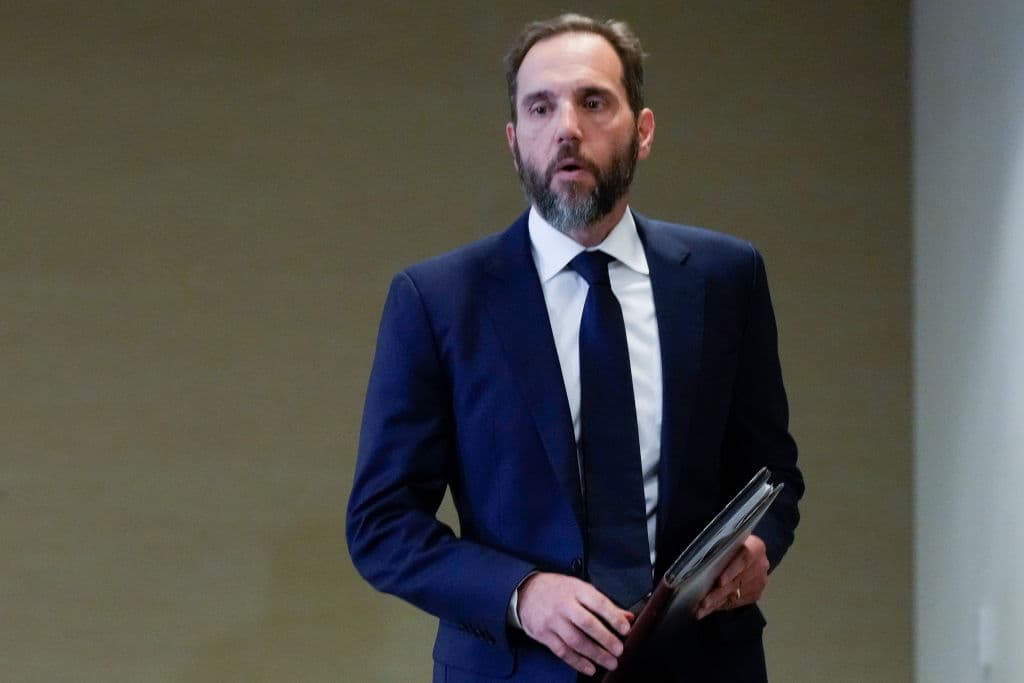
Special Counsel Jack Smith’s emergence, on a London stage, as a vocal critic of President Trump, whom he twice tried to jail for decades, comes just as congressional Republicans appear to be laying the groundwork to ratchet up Mr. Smith’s legal jeopardy.
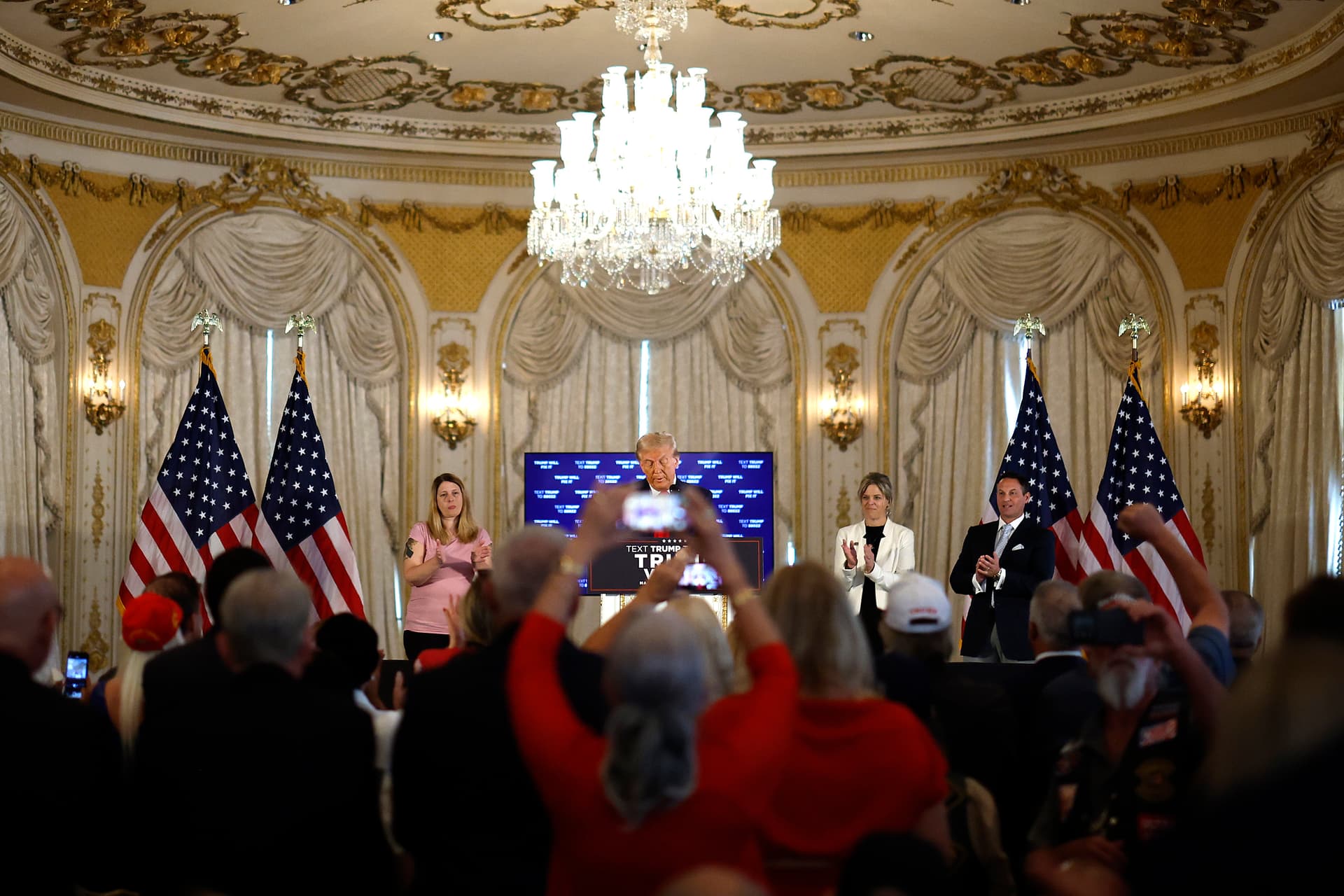
Mr. Trump’s declaration in the Oval Office next to Attorney General Pam Bondi that “Deranged Jack Smith, in my opinion, is a criminal” appears to telegraph that the White House is interested in pursuing charges against the former war crimes prosecutor. Similar sentiments expressed toward the former director of the FBI, James Comey and New York’s attorney general, Letitia James, led to criminal charges.
Last week, the 47th president ventured on his social media platform, Truth Social, that “Deranged Jack Smith got caught with his hand in the cookie jar. A real sleazebag.” That came after the disclosures that Mr. Smith secured telephone data of senators aligned with Mr. Trump — something that outraged one of the surveilled senators, Lindsey Graham.
Mr. Smith’s pivot from invisible to nearly ubiquitous has been startling. Silent since he resigned days before Mr. Trump retook the White House, he now appears to be executing a strategy of persistent critique of the 47th president. Last month, Mr. Smith delivered a lecture at George Mason University and shared that “what I see happening at the Department of Justice today saddens me and angers me.”
Last week, Mr. Smith was interviewed in London by the paid MSNBC contributor and attorney, Andrew Weissmann, a devoted foe of Mr. Trump who was a top deputy to Robert Mueller in the Russia probe. Over the course of more than an hour Mr. Smith defended his two prosecutions of Mr. Trump and blasted the president’s handling of the Department of Justice, reckoning that “Nothing like what we see now has ever gone on.” He also called the suggestion that he was motivated by politics “ludicrous.”
Next came Mr. Smith’s appearance on Wednesday in a video produced by Justice Connection, an organization that describes itself as “a network of Department of Justice alumni mobilizing to support DOJ’s apolitical workforce — and the democratic norms that protect us all.” Justice Connection declares that “Our justice system is under attack like never before.”
Mr. Smith defended his staff to Mr. Weissman as “team players who don’t want anything but to do good in the world. They’re not interested in politics.” He contends that “They do not like to tell their own story. They cannot start a sentence with I; they start that with we.”
A secondment to Mr. Smith’s staff for a career DOJ prosecutor was voluntary. Upon his return to power, Mr. Trump fired nearly everyone who worked with Mr. Smith, from lawyers to support staff and paralegals, much to the consternation of Democratic lawmakers.
The Trump administration has also targeted Mr. Smith more directly. Ms. Bondi convened a “Weaponization Working Group” whose remit includes probing “Special Counsel Jack Smith and his staff, who spent more than $50 million targeting President Trump.” That body is now being led by the Special United States Attorney for Mortgage Fraud, Ed Martin. He is also supervising the prosecutions of Mr. Comey and Ms. James.
Mr. Smith has also come under scrutiny, via a referral from Senator Tom Cotton, for potential violations of the Hatch Act. That law bans federal employees from engaging in political activities that could affect an election. Mr. Cotton contends that Mr. Smith’s push for accelerated timetables for his prosecutions of Mr. Trump ought to be construed as attempts to influence the last election.
The most imminent threat to Mr. Smith appears to be emanating not from the White House but from Congress. The chairman of the House Judiciary Committee, Congressman Jim Jordan, has issued a letter summoning Mr. Smith to appear before Congress. Mr. Jordan argues that the special counsel’s testimony “is necessary to understand the full extent to which the Biden-Harris Justice Department weaponized federal law enforcement.”
The antagonism between Mr. Smith and Congress has grown in the wake of disclosures that the special counsel sought and secured telephone data belonging to those eight senators. A subpoena is usually the next step after letters requesting testimony like the one Mr. Jordan sent to Mr. Smith. The Ohioan tells Mr. Smith “as the Special Counsel, you are ultimately responsible for the prosecutorial misconduct and constitutional abuses of your office.”
While Congress is empowered to issue subpoenas as part of its oversight responsibilities, enforcement falls to the Department of Justice. The DOJ can elect to pursue criminal charges or refrain from doing so. The DOJ under Attorney General Merrick Garland chose to prosecute two advisors to Mr. Trump, Peter Navarro and Stephen Bannon, who refused to testify before the House January 6 Committee. They each served four months in prison.
If Mr. Smith is subpoenaed he could take the opportunity to share his thoughts before Congress. That, though, would open him up to charges of perjury from a DOJ that would likely scrutinize his every utterance. Mr. Comey is now facing charges of lying to Congress over testimony he delivered in 2020 that referenced earlier testimony from 2017. That was in reference to allegations that he leaked details of FBI investigations.