
Trump, Xi on Course To Settle Scores at Korean Parley
Chinese leader calls for ‘mutual success and shared prosperity’ through ‘joint efforts’ via ‘win win cooperation.’
America and Communist China will soon have a chance to patch up differences, if not reach definitive conclusions, in a most unlikely setting — the historic city of Gyeongju, near South Korea’s southeastern coast, once the capital of an ancient kingdom that conquered Korea’s southwest and united much of Korea.
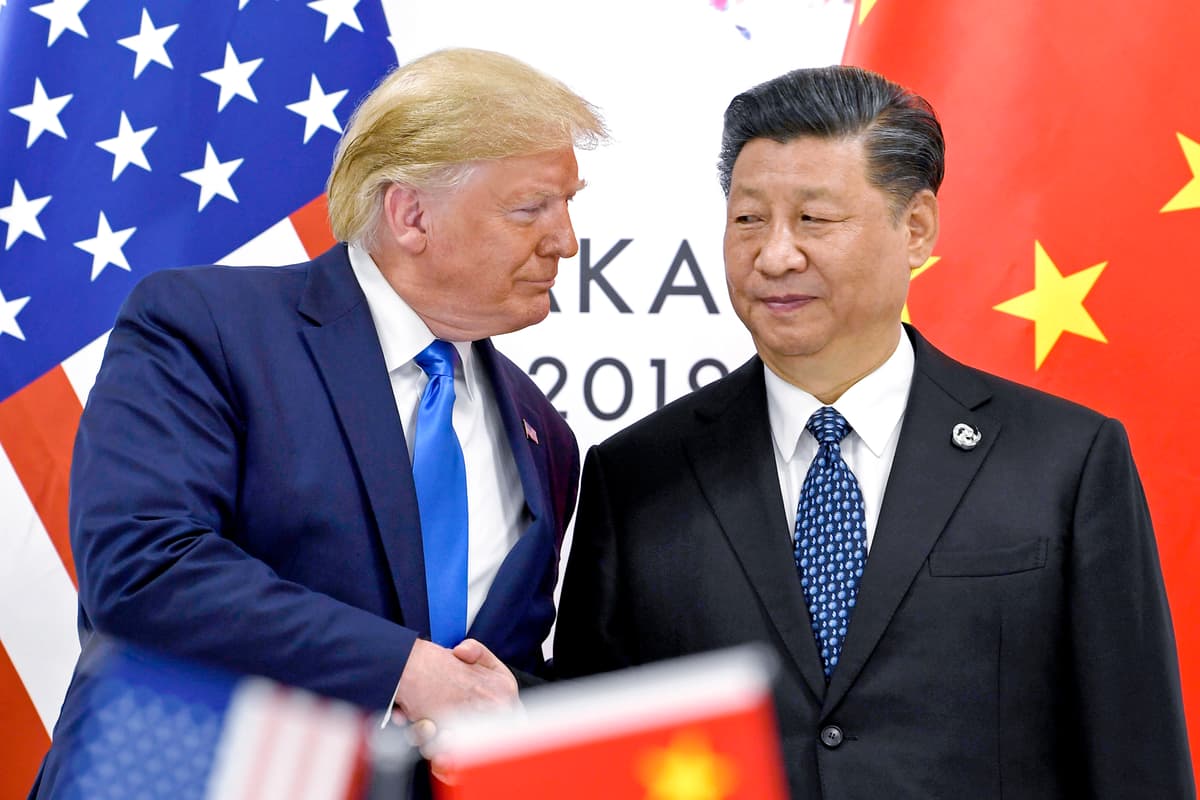
President Trump has said he and President Xi Jinping will meet at Gyeongju at the end of October in what would appear as a reversal of his view of China as almost an “enemy” — or at least a feared competitor for influence over the entire Indo-Pacific region.
Call it a “summit” or just a chat on the sidelines, the upcoming Trump-Xi meeting may not result in definitive agreement on any of the tendentious issues between the two countries — from China’s claims to the South China Sea and pressure on Taiwan to tariffs and trade to TikTok. At least, however, it’s guaranteed to be super-friendly.
China’s state news agency, Xinhua, in its version of a telephone conversation between Messrs. Trump and Xi, reported that the Chinese leader had said their two countries could achieve “mutual success and shared prosperity” if they just made “joint efforts” via “win-win cooperation.”
If those words appeared rather vague, they confirmed the impression Mr. Trump had made when he said that he and Mr. Xi would meet at the summit of leaders of the Asian Pacific Economic Cooperation group at Gyeongju, and he might even go to China for another summit with Mr. Xi.
South Korea’s president, Lee Jae-myung, will also be there but may not meet one-on-one with Mr. Trump, whom he saw recently at Washington and should meet at the UN General Assembly at New York this week. Mr. Xi may not go to the UN gathering, making Apec far more portentous as a safety valve for tensions in the region.
Mr. Trump, who talked to Mr. Xi while flying back from his state visit to London, was hopeful about closing a deal for China’s TikTok to operate in America.
There was, however, one difference between Mr. Trump’s report of his conversation with Mr. Xi and the Chinese version. Xinhua did not mention Mr. Xi’s going to South Korea for Apec, much less meeting Mr. Trump either there or at Beijing.
Nor were the two necessarily in accord on TikTok. The BBC reported “a sticking point in negotiations appears to be who will own the powerful algorithm that pushes content to TikTok’s 170 million American users.”
Mr. Trump, meeting Britain’s prime minister, Keir Starmer, said potential investors in TikTok were “doing it in conjunction with China,” while Xinhua has said China was open to “commercial negotiations based on market rules.”
Beyond trade and tariff issues, the prospect of the American and Chinese leaders meeting suggested diminishing regional differences after Mr. X had raised concerns by hosting Russia’s president, Vladimir Putin, and North Korea’s leader, Kim Jong-un, at a “victory parade” at Beijing marking 80 years since the surrender of Japan in World War II.
Mr. Xi did not mention the American role in the war, notably the Japanese surrender after the atomic bombing of Hiroshima and Nagasaki, but Xinhua reported that he had recalled that China and America were “allies who fought side by side during World War II.” The Chinese, he said, would “never forget the valuable support provided by the United States and other anti-fascist allies to China’s War of Resistance against Japanese Aggression.”
Those words, of course, were contrary to the history of American support for the anti-Communist “Nationalist” army of Chiang Kai-shek, who led his forces to the off-shore island of Taiwan as Mao Zedung’s Red Army was roaring to victory in October 1949. Taiwan ever since has been governed as a province independent of Beijing while China encircles the island at sea and in the air.
Washington may, however, be lightening up on its support for Taiwan.
The South China Morning Post in Hong Kong asks, “Why has the US grown quieter about sending its warships through the Taiwan Strait,” reporting, “Washington has adopted a low-publicity approach since Donald Trump returned to power, possibly in the hope of tamping down tensions.”
Mr. Trump has refused more than $400 million in military aid for Taiwan, the Associated Press reports, while negotiating with China in what looks like “a U-turn in U.S. policy.”