Trump’s Bewildering, Perilous Pivot to Pakistan

The nation is a serial enabler of terrorism, a state whose military and intelligence services are responsible for spilling a great deal of blood.
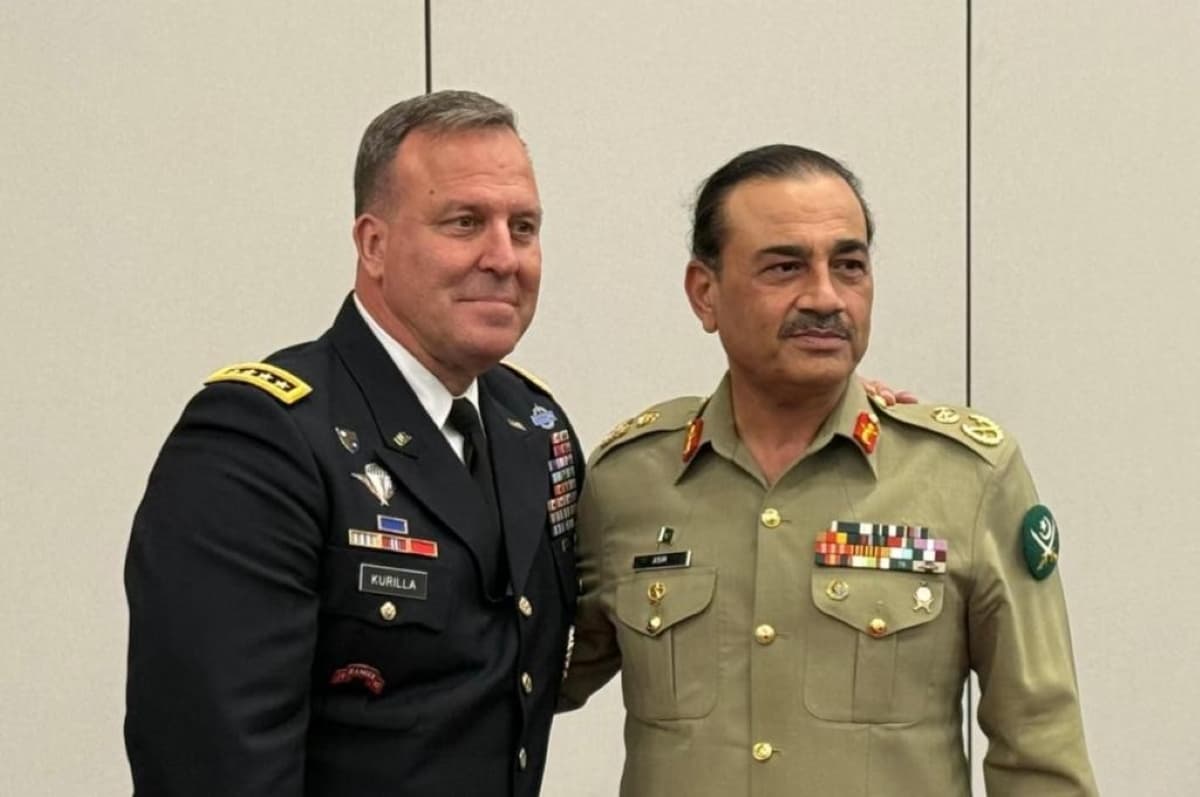

Via Inter Services Public Relations Directorate of Pakistan
Field Marshal Asim Munir of Pakistan at the retirement ceremony of the outgoing commander of the United States Central Command, General Michael Kurilla, at Tampa, Florida, August 10, 2025. Via Inter Services Public Relations Directorate of Pakistan

In the annals of 21st century American foreign policy, few shifts are as bewildering or as fraught with peril as President Trump’s recent embrace of Pakistan. 

During his first term, Mr. Trump lambasted Islamabad for harboring terrorists and providing “nothing but lies and deceit” in exchange for billions in American aid. 

Now, in 2025, he’s rolling out the red carpet for Pakistan’s army chief, Field Marshal Asim Munir, having hosted him in June for an unprecedented private lunch at the White House. 

Trade deals on oil exploration, critical minerals and even cryptocurrency ventures are being advanced with Islamabad, while Mr. Trump praised Pakistan in his address to Congress in March. 

Meanwhile, he’s imposing punitive tariffs — rising to as high as 50 percent — on India, America’s democratic ally in Asia, while also publicly mocking their economy on his Truth Social platform. 

Let’s be clear about what’s happening here. Mr. Trump has pivoted dramatically toward Pakistan, a nation long synonymous with duplicity and deception in the global fight against terror. 

Why is this so troubling? Pakistan isn’t just a flawed partner; it’s a serial enabler of terrorism, a state whose military and intelligence services are responsible for spilling a great deal of blood. 

For decades, Islamabad has played a double game, accepting American dollars with one hand while sheltering jihadists with the other. It was Pakistani soil that played host to Osama bin Laden for years after 9/11. The Taliban, which now rules Afghanistan in barbaric fashion, owes much of its resurgence to Pakistani support. 

For many years, Pakistan was also a prominent patron of the Haqqani Network, a Sunni Islamist extremist group which America designated as a Foreign Terrorist Organization in 2012. The Haqqani network was responsible for numerous attacks against American troops and personnel in Afghanistan, killing and wounding many.

And let’s not forget Islamabad’s troubling legacy of facilitating other terror groups, such as Lashkar-e-Taiba, which has links to Pakistan’s powerful Inter-Services Intelligence agency, and which perpetrated the November 2008 Mumbai terrorist attacks. Or Jaish-e-Muhammad, which participated in the 2001 attack on the Indian parliament.

Indeed, a December 2023 Congressional Research Service report identified more than a dozen terrorist groups operating in Pakistan and said the country serves as “a base of operations” for many of them.

In effect, Pakistan continues to support proxies and promote Islamic militancy while professing alliance with the West.

This policy was on display four months ago when, on April 22, the Pakistan-backed Resistance Front carried out a brutal terror attack at Pahalgam, India, massacring 26 innocent civilians. The assault led to a brief three-day military conflict between the two countries in May that many feared at the time could erupt into a broader war. 

Stirring the pot still further, Pakistan has not hesitated to rattle its nuclear saber, making irresponsible and bone-chilling threats to use atomic weapons. Field Marshal Munir, on a second visit to America just weeks after his June meeting with Mr. Trump, told a recent gathering in Florida that if his country feels threatened, they will resort to their nuclear arsenal. “If we think we are going down,” Field Marshal Munir said, “we’ll take half the world down with us.”

Yet Pakistan has not only served as a destabilizing force in the Indian subcontinent. It has also been expressly hostile towards Israel, America’s closest ally in the Middle East. Islamabad has refused to recognize the Jewish state, viewing it as illegitimate, and its passports even state that they are, “valid for all countries of the world except Israel.”

Some Pakistani leaders have employed openly antisemitic rhetoric and a former defense minister even threatened nuclear retaliation against Israel in 2016 in response to a fabricated news report. 

By cozying up to Pakistan’s military rulers, Mr. Trump risks alienating New Delhi and pushing it closer to Russia and Communist China. This would be a grave strategic mistake, if only because a strong and robust partnership between America and India could serve as a useful check to contain China’s ambitions for hegemony in the region.

By prioritizing short-term deals over long-term strategic and security interests, Washington is playing checkers when it should be playing chess. Snubbing democracies such as India and courting roguish states such as Pakistan erodes American credibility and harms our alliances abroad. 

It’s not too late for the Trump administration to reverse course and to recognize that Pakistan’s generals aren’t partners to be courted; they’re predators to be shunned. Tactical liaisons with rogues might be useful at times, but they cannot come at the expense of strategic romances with long-term partners.

Moral clarity and a shrewd assessment of America’s national interests demand embracing true allies such as India rather than engaging in a dubious dalliance with the likes of a country such as Pakistan.


The New York Sun

© 2025 The New York Sun Company, LLC. All rights reserved.

Use of this site constitutes acceptance of our Terms of Use and Privacy Policy. The material on this site is protected by copyright law and may not be reproduced, distributed, transmitted, cached or otherwise used.

The New York Sun

Sign in or  create a free account

or
By continuing you agree to our Privacy Policy and Terms of Use