
Trump’s Cases Against Letitia James and James Comey Are Dealt Crushing Blows — but Can Pam Bondi Salvage Them?

The disqualification of the president’s handpicked prosecutor as ‘invalid’ is a stunning rebuke to the Department of Justice.
Dia Dipasupil/Getty Images
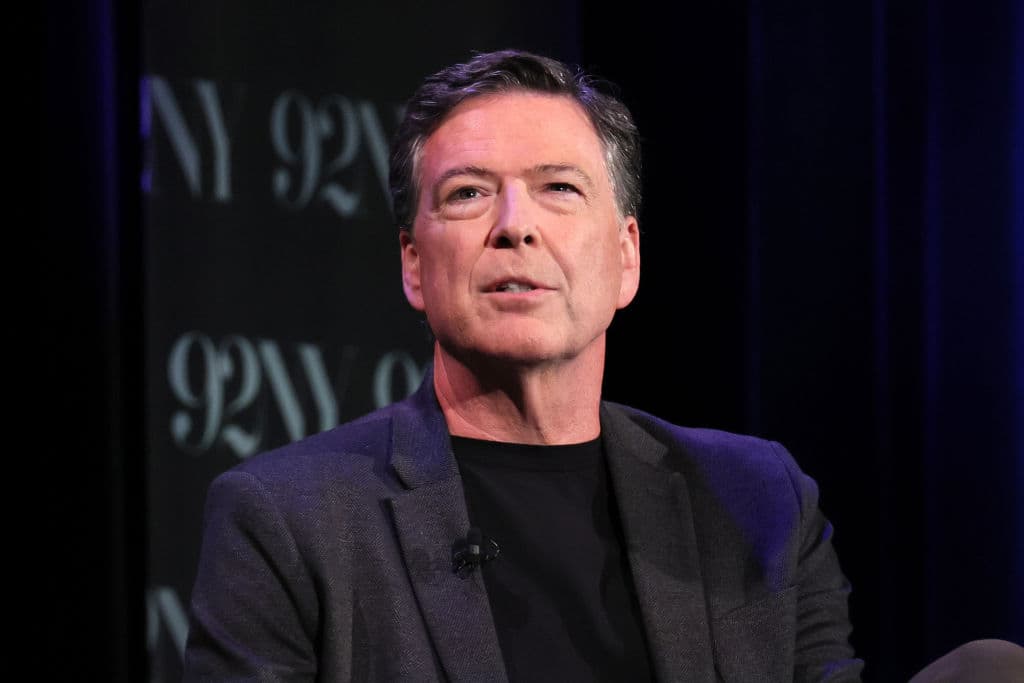
James Comey speaks onstage at 92NY on May 30, 2023 at New York City. Dia Dipasupil/Getty Images

The stunning dismissal by Judge Cameron McGowan Currie of the federal charges against former FBI director James Comey and New York’s attorney general, Letitia James, is a crushing blow to President Trump’s push to bend the Department of Justice to prosecute his political foes. The Trump administration, though, is vowing to appeal. 

The decision came from Judge Currie, an appointee of President Clinton and a South Carolinian, after he was assigned the matter by the presiding judge in Virginia, Michael Nachmanoff. Judge Nachmanoff, who recused himself from  the disqualification issue because federal judges can play a role in the selection of prosecutors in their districts. Judge Nachmanoff, an appointee of President Biden, was hearing other challenges to the cases brought by Mr. Comey and Ms. James.   

Judge Currie ruled that the presiding prosecutor, Lindsey Halligan of the Eastern District of Virginia, was unlawfully appointed. She writes that “The Attorney General’s attempt to install Ms. Halligan as Interim U.S. Attorney for the Eastern District of Virginia was invalid.” Mr. Comey was charged with two counts of lying to Congress, while Ms. James faced two counts of bank fraud relating to a mortgage loan. 

The Comey and James cases are following a familiar path for the Trump Docket in which judges appointed by Democrats make rulings against the Trump Administration, which then appeals the matter to a multi-member appellate court. Mr. Trump’s record on appeal has been largely successful, though the bar for reversing Judge Currie will be high. 

In the Comey and James cases, Attorney General Pam Bondi and her team must now figure out a strategy for the appeal. The situation for the DOJ is bleak but not hopeless as the dismissals are appealable and the judge dismissed the charges “without prejudice,” meaning that they can be refiled. 

The paths to getting both cases back on track, though, will be arduous. That is especially true with respect to the prosecution of Mr. Comey, since, immediately after Ms. Halligan secured the indictment, the statute of limitations  expired on his alleged misrepresentations to Congress in 2020. It’s unclear if the government can file new charges without violating the statute.

Judge Currie  ruled that “all actions flowing from Ms. Halligan’s defective appointment were unlawful exercises of executive power and are hereby set aside.” Among those “actions” are the indictments of Mr. Comey and Ms. James. She writes that any other conclusion “would mean the Government could send any private citizen off the street — attorney or not  … to secure an indictment …That cannot be the law.” 

It will now fall to Virginia’s federal judges in the Eastern District to appoint a new prosecutor. Of the eight federal judges who would vote on this appointment, six were appointed by a Republican president and two were appointed by Democrats. The DOJ’s appeal of the disqualification, though, will be heard by a federal appellate court.

Ms. Halligan, who has never prosecuted a felony before — a fact observed by Judge Currie —served as a personal attorney for Mr. Trump during his Mar-a-Lago case and also was tasked with combating what the Trump Administration considered to be anti-American bias in exhibits at the Smithsonian museums. 

Ms. Halligan  was handpicked for the post after her predecessor, Erick Siebert, resigned following a storm of displeasure from Mr. Trump, who said he objected to the strong support that Mr. Siebert enjoyed from Virginia’s two Democratic senators,Mark Warner and Tim Kaine. ABC News reported that Mr. Siebert refused to prosecute Mr. Comey and Ms. James. Judge Currie cites that report in her opinion. 

The rub, though, was that Mr. Siebert also served as an interim prosecutor. Federal law, Judge Currie ruled, prohibits the president from appointing two consecutive interim United States attorneys. The memorandum taking that position within the DOJ was authored in 1986 by the future Supreme Court Justice Samuel Alito, then working as a government lawyer. 

Federal law, Judge Currie explains, appears to allow the attorney general to make one interim appointment. If that appointment fails to achieve confirmation, the task of appointing a replacement falls to the federal judges in the district. Two days before Ms. Halligan was appointed Mr. Trump posted to social media in a message addressed to Attorney General Pam Bondi that “Nothing is being done. What about Comey, Adam “Shifty” Schiff, Leticia??? They’re all guilty as hell, but nothing is going to be done.”

In October Ms. Bondi, perhaps sensing the shaky legal foundations of Ms. Halligan’s appointment, attempted to retroactively name her as a “special United States attorney.” Judge Currie, though, rejected Ms. Bondi’s efforts to “reach back in time and rewrite the terms of a past appointment.” The government argued that Ms. Halligan’s appointment possessed “de facto validity,” meaning that even if her appointment was troubled her exercise of power ought to be endorsed. 

Judge Currie, though, rejected that suggestion by citing the Supreme Court’s ruling that de facto validity “applies only to some non-constitutional appointments challenges” — but not in circumstances like the present, which turn on the validity of the power exercised under the Constitution’s Appointments Clause. Judge Currie reads precedent as mandating that she unwind the “actions taken by the unconstitutionally appointed officer” — meaning the charges secured by Ms. Halligan.

The DOJ argued that the attorney general — the chief law enforcement officer of the federal government — can, in her executive capacity, choose who she wants to prosecute, or can she be constrained by oppositional judges or by the Byzantine laws involving senior government appointments that can’t get through the Senate. 

The cases against Mr. Comey and Ms. James were troubled even before Judge Currie dealt them a powerful blow. Both defendants alleged that their prosecutions were “selective” and “vindictive,” which are separate grounds for dismissal, though hard for defendants to prove. Mr. Comey has also challenged the means by which his indictment was handed up. Ms. Halligan appeared to admit — before backtracking  —that not all jurors who voted to indict had seen the final text. 

Ms. Halligan is not the first of Ms. Bondi’s prosecutors to face legal challenges over how they secured their jobs. In August a federal judge, Matthew Brann, a conservative who was appointed by President Obama, ruled that another interim appointment, Alina Habba of New Jersey, “is not lawfully holding the office of United States Attorney.” Judge Brann demurred, though, from dismissing charges in all of the cases overseen by Ms. Habba. The DOJ is appealing that ruling. 

Mr. Trump has also been the beneficiary of prosecutorial disqualifications. Judge Aileen Cannon of the Southern District of Florida ruled that Special Counsel Jack Smith was unlawfully appointed by Attorney General Merrick Garland without Senate confirmation. She dismissed the Mar-a-Lago charges against Mr. Trump and his two co-defendants. Before Mr. Smith could successfully appeal her ruling, Mr. Trump won re-election, which effectively ended the case.  

The Georgia Court of Appeals also disqualified the district attorney of Fulton County, Fani Willis, following the disclosure of her secret romance with her handpicked special prosecutor, Nathan Wade. Her suspension was confirmed when the Georgia Supreme Court declined to revisit it on appeal.       


The New York Sun

© 2025 The New York Sun Company, LLC. All rights reserved.

Use of this site constitutes acceptance of our Terms of Use and Privacy Policy. The material on this site is protected by copyright law and may not be reproduced, distributed, transmitted, cached or otherwise used.

The New York Sun

Sign in or  create a free account

or
By continuing you agree to our Privacy Policy and Terms of Use