Trump’s Frustration With Putin Reflects ‘Fault Lines’ Between the West and Rival World Blocs

The nature and stakes of the Russo-Ukrainian conflict are most clearly seen through the lens of Samuel Huntington’s idea of ‘civilizations.’
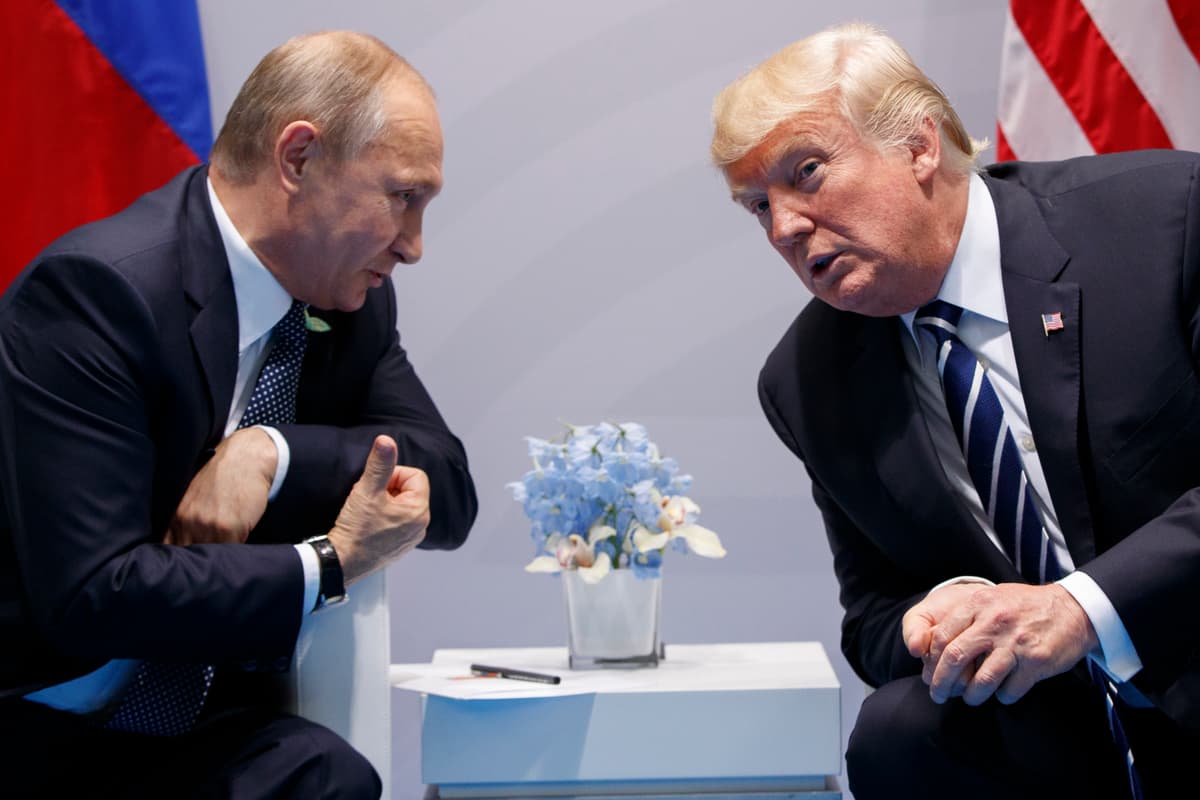
AP/Evan Vucci, file
President Trump, right, meets with President Putin at the G-20 Summit, Hamburg, July 7, 2017. AP/Evan Vucci, file

The West urgently needs a definition of “the West.” Without this, it cannot understand itself, or current and future challenges. If Ukraine is to be saved from dismemberment, and its nationhood not neutered, the nature and stakes of the conflict need to be understood in Huntingtonian terms.

Even when political scientist Samuel Huntington (1927-2008) was mistaken, he was penetrating. In 1993, he wrote that “the likelihood of violence between Ukrainians and Russians should be low. They are two Slavic, primarily Orthodox peoples who have had close relationships with each other for centuries.” Huntington did not foresee the West’s magnetic attraction, pulling Ukraine away from the civilization President Putin intends to enforce.

Huntington was, however, clear-eyed during post-Cold War euphoria. He argued that the West — individualism, constitutional protection of human rights, democracy, the rule of law, free markets — was not destined to become the planet’s “universal civilization.” Because it is not universalizable, the West is fated to exist with, and sometimes clash with, the rest.

Warning against triumphalist complacency after the Soviet Union’s fall, Huntington said, “The fault lines between civilizations will be the battle lines of the future.” Yet again.

In the new book “The West: The History of an Idea,” scholar Georgios Varouxakis, of Queen Mary University of London, explains that the straight line of “Plato to NATO” is a substantial oversimplification. At first, there was the “heliotropic myth” that progress of civilization mimics the sun’s progress to west from east. Although the Roman Empire and then Christendom (when Constantinople was “the New Rome”) had east-west fissures, in recent centuries the West has been less a geographical than a cultural concept centered on Europe and its transatlantic progeny.

During the isolationist fever of the 1930s, American columnist Walter Lippmann inveighed against an idea “alien to western civilization”: “the idea that the security and happiness and glory of the individual man are to be found in surrendering to the compulsion of mass feeling and the domination of omnipotent states.” Today, the manufacturing of mass feeling in Mr. Putin’s propaganda state, and the omnipotence of President Xi’s surveillance state, should instill in the West a clarified sense of itself.

Before 1945, shifting understandings of the West sometimes did not include Germany. Ten years after Germany’s 1990 reunification, a best-selling history was titled “Germany: The Long Road West.” Only briefly after 1945 did lingering wartime sentimentality, forgetting the Nazi-Soviet pact of August 1939, regard Russia as Western.

Often Russia has been an — sometimes the — “other” in contrast to which the West has understood what Mr. Varouxakis calls its “civilizational commonality.” Strengthening cultural bonds, especially with Europe, was the goal of the famous Harvard International Seminar begun in the 1950s by, among others, a young European immigrant, Henry Kissinger.

Huntington said the West is fated to live, perhaps dangerously, with different, powerful and assertive civilizations. In today’s clash of civilizations, however, the incomprehension between Moscow and Washington is not mutual. Mr. Putin understands the West and despises it for reasons rooted in a comprehensively anti-Western mentality. 

He rejects the Enlightenment legacy of individualism and this Raymond Aron ideal: “The true ‘Westerner’ is the man who accepts nothing unreservedly in our civilization except the liberty it allows him to criticize it, and the chance it offers to improve it.” Mr. Putin embraces a thorough inversion of this: an immersive ancestry- and religion-based doctrine of group identity that must exist in irrepressible conflict with the West.

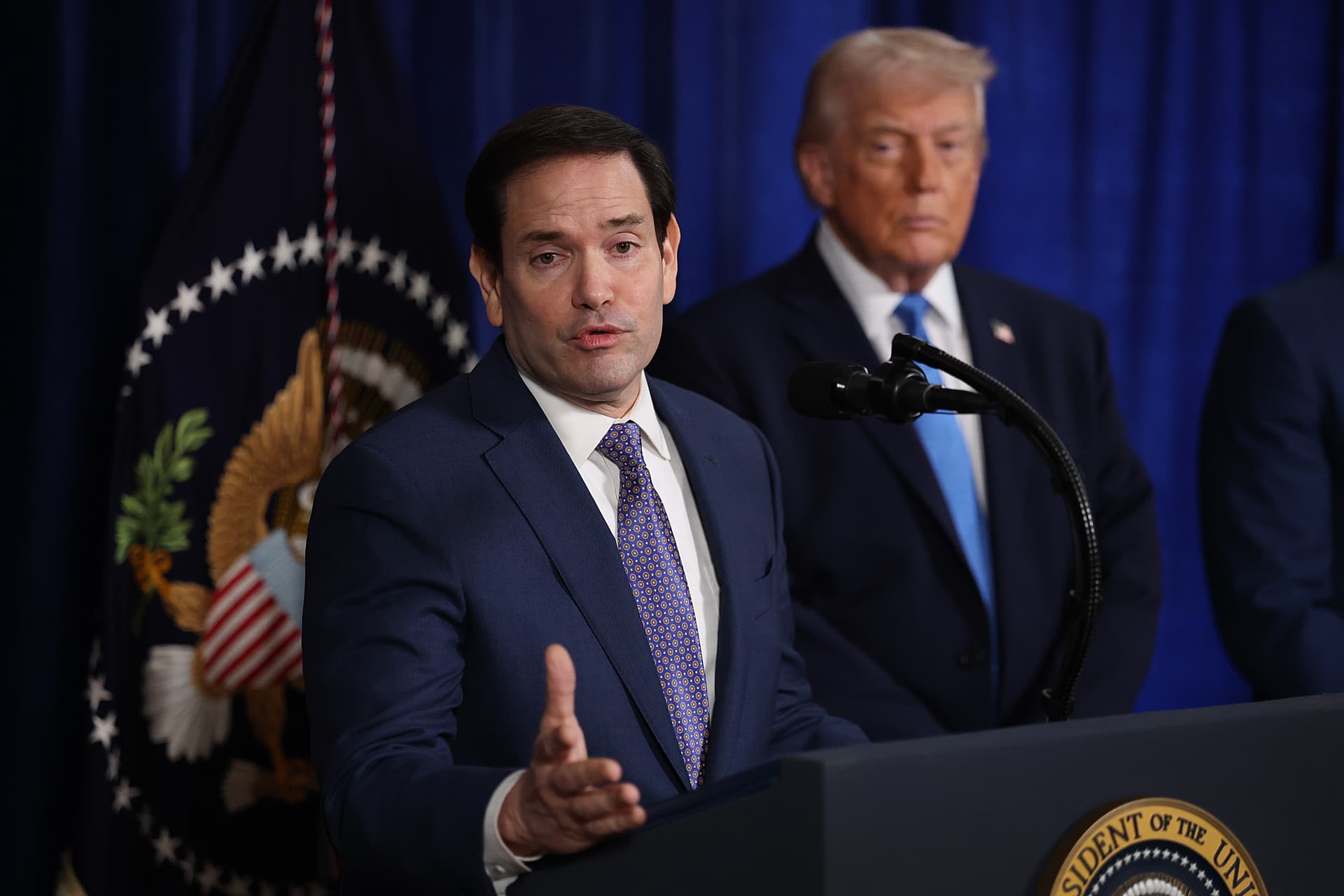
President Trump’s frustration with Mr. Putin’s refusal to split differences like a rational real estate broker flows from Mr. Trump’s failure of imagination. Mr. Trump’s incomprehension of Mr. Putin, his inability to understand Mr. Putin as Mr. Putin understands himself, is a failure to recognize the reality of deep-rooted, durable civilizational conflicts.

Mr. Varouxakis, citing American scholars James Kurth and Michael Kimmage, says, “No recent American president has shown himself more prepared to withdraw from ‘Western civilization’ and ‘the West.’” And “there is truth in the statement that during his 2017-2021 presidency, Trump was ‘the first non-Western president of the United States.’”

Speaking in Poland, however, on July 6, 2017, Mr. Trump used the phrase “the West” 10 times. He said Poland’s historical experience is a reminder that “the defense of the West ultimately rests not only on means but also on the will of its people to prevail.” So, Mr. Trump said, “The fundamental question of our time is whether the West has the will to survive.” What remains questionable is whether he meant the words he read.

The Washington Post


The New York Sun

© 2025 The New York Sun Company, LLC. All rights reserved.

Use of this site constitutes acceptance of our Terms of Use and Privacy Policy. The material on this site is protected by copyright law and may not be reproduced, distributed, transmitted, cached or otherwise used.

The New York Sun

Sign in or  create a free account

or
By continuing you agree to our Privacy Policy and Terms of Use