Trump’s Threat of Secondary Tariffs on Russian Business Partners Sets India Scrambling
Washington is said to be close to reaching a trade deal with New Delhi, but could that change now that Trump is threatening tariffs on countries that conduct business with Russia?
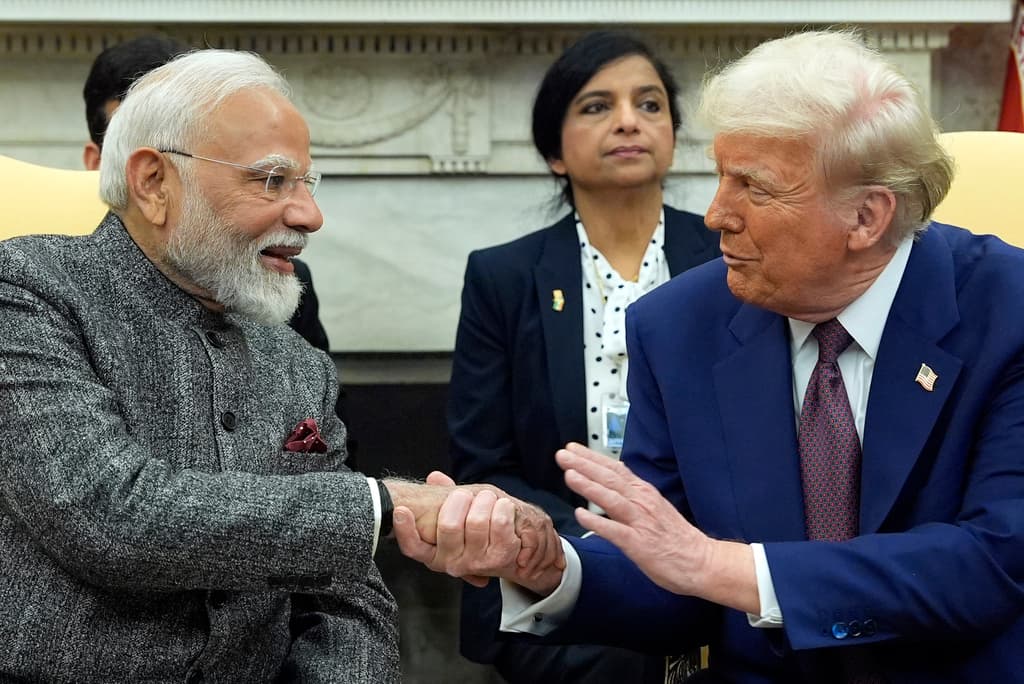

Ears perked Monday at New Delhi after one of America’s key Asian allies heard that President Trump may impose secondary tariffs on counties that do business with Russia if President Putin does not agree to a deal on ending the war in Ukraine within 50 days.
“Let’s hope that before the 50-day deadline ends, something happens in Ukraine, because this is the war that everybody wants to end,” the executive editor of India’s Hindustan Times, Shishir Gupta, tells the Sun. Delhi, he said, will take the 50-day period to make tough decisions on its relations with Russia.
The Trump administration has been aiming to complete a trade deal with India, the world’s most populous country. Mr. Gupta says a legal framework agreement is close at hand and could be completed by July 31, while the trade deal could be signed by as early as September. Will that timing change now that Mr. Trump is threatening tariffs on countries that conduct business with Russia?
“We’re very, very unhappy” with Russia, Mr. Trump said Monday during a press conference alongside NATO’s chief, Mark Rutte. “We’re going to be doing very severe tariffs if we don’t have a deal in 50 days, tariffs at about 100 percent. You call them secondary tariffs, you know what that means.”

The world’s second-largest arms importer behind Ukraine, India has long relied on Russian weapons. Prime Minister Modi has tightened relations with America to an unprecedented level, yet India’s trade with Russia is growing, making it a top candidate to suffer from secondary sanctions.
Last year’s bilateral trade between India and Russia reached a record of $66 billion. India imports heavily discounted Russian oil, as well as agricultural products and other commodities. India could replace its energy and other needs by importing from other sources. As Congress weighs up to a 500 percent tariff on countries that import Russian uranium, petrochemicals, and petroleum products, India is already increasing its purchases of American oil.
Importing Russian weapons would be harder for Delhi to quit, though. “The issue is the hardware,” Mr. Gupta says. Years ago, as America sold arms to India’s enemy, Pakistan, “we decided to go towards Russia,” he says. Even now, some 60 percent of the country’s arms are of Russian origin. India has made clear it’s on the side of peace in the Ukraine war, he adds, but arms “cannot be replaced overnight. These processes take years, so it’s not going to be easy.”
In recent years India has started purchasing arms from other sources. Contracts to purchase French-made Rafale fighter jets could eventually lead to Russia’s Sukhoi S-57 fighters being replaced. This month it will receive its first batch of six American Apache attack helicopters. During its recent Operation Sindoor, India relied on Israeli-made attack drones.
Mr. Modi, meanwhile, is attempting to increase local arms production. India will start assembling Rafales, but the jet engines will be imported from France. Yet, the Indian military’s heavy reliance on Russian weapons systems and parts will complicate the transition to domestic manufacturing and to increased imports of Western arms.

Military flareups with Pakistan, as well as lesser threats from Bangladesh and Myanmar, have made India an arms-importing behemoth. India also is a crucial member of the Quad, which along with Japan, Australia, and America was formed as a counterweight to military threats from India’s largest Asian competitor and menacing neighbor: Communist China.
Mr. Modi has forged closer relations with the American president than any other Indian leader before him. Yet, there are several issues that add up to mutual suspicions in Delhi and Washington, a former Western ambassador to India tells the Sun. The new threat to sanction New Delhi’s ties with Russia could add to the mistrust.
“The issue with the 100 percent secondary tariff is the isolation of Russia, which ultimately means that it will end up in the lap of China,” Mr. Gupta says. “And a second thing, you’re punishing some of your own allies,” he adds. Coherence among Quad members and the alliance to militarily counter America’s top global rival, Communist China, could suffer.
At the same time, though, India will need to make some hard decisions during a 50-day period that is far from sure to yield a peace agreement in the European war. Can Delhi maintain its alliance with Moscow even as Mr. Trump is increasingly “unhappy” with Mr. Putin?
___________
Correction: India has made clear that it is on the side of peace in the Ukraine war, Shishir Gupta tells the Sun. An earlier version misstated India’s position in the dispute.