
UN Report Concludes … No One Is Reading UN Reports

The United Nations marks its 80th anniversary with a lengthy report on the overwhelming number of reports it produces.

AP/Peter K. Afriyie
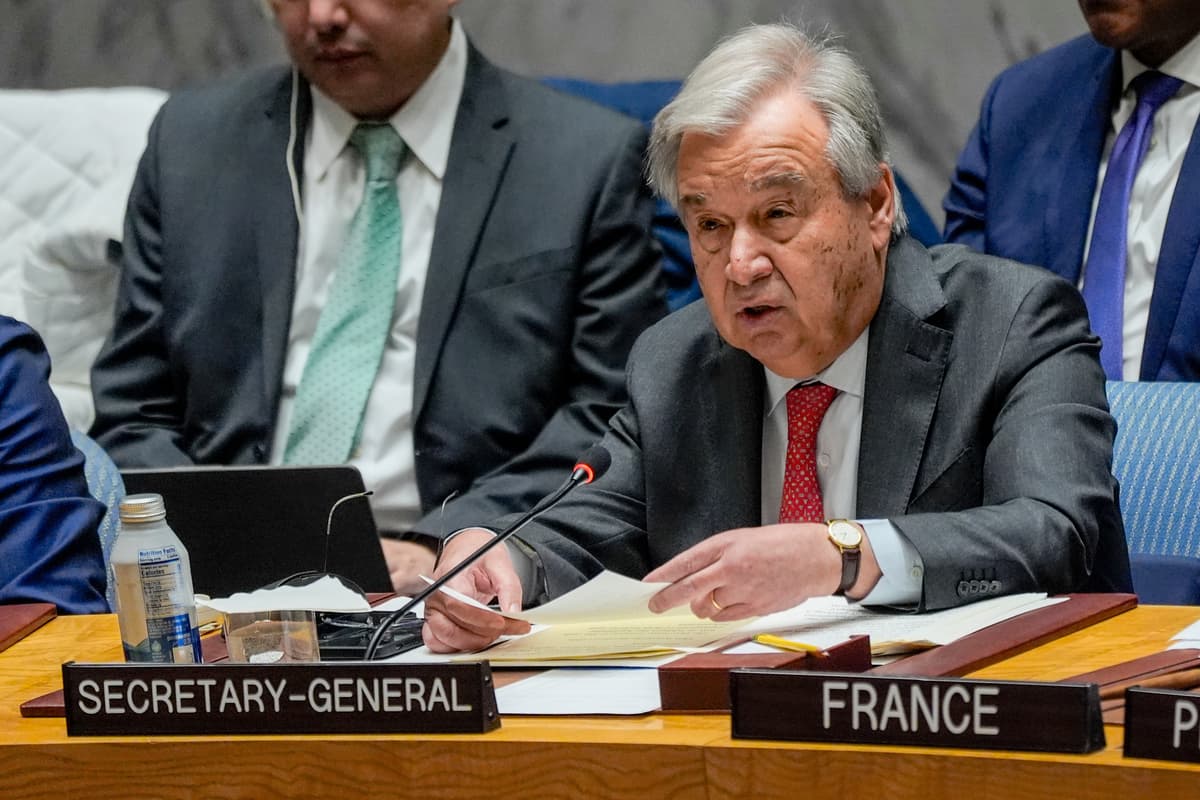
The United Nations secretary-general, António Guterres, on January 23, 2024, at United Nations headquarters. AP/Peter K. Afriyie

As the United Nations marks its 80th anniversary with a resolution to streamline its processes, the world body is discovering it has a relevancy problem: Few people read anything it puts out. At least that’s the conclusion reached in its latest 44-page report.

The number of reports produced by the United Nations increased 20 percent between 1990 and 2024. In 2024 alone, the secretariat produced 1,100 reports in response to member state requests. Three out of five of those reports were on recurring topics, the secretary-general, Antonio Guterres, says. Not only are they repetitive, they are wordier.

The reports “are getting longer, with word counts over 40 percent higher than 20 years ago,” Mr. Guterres told the General Assembly.

While the number of reports is increasing and they are longer, readership is getting smaller. The top 5 percent of reports in 2024 were downloaded more than 5,500 times each. The bottom 20 percent were downloaded fewer than 1,000 times.  

“And downloading doesn’t necessarily mean reading,” Mr. Guterres noted. 

But the institution of 44,313 employees is keeping busy; the United Nations held 27,000 meetings involving 240 bodies last year.

“The sheer number of meetings and reports is pushing the system — and all of us — to the breaking point,” Mr. Guterres said. 

More than half of the reports published each year at the United Nations accompany resolutions that contain a variety of mandates — calls to action for member states. However, a minority of the mandates contain mechanisms to trace whether they are succeeding. For instance, Mr. Guterres said, fewer than half of the mandates have a start date or end date, enforcement clauses, review processes, transparency or duplication checks, or standards to determine if the mandate has been achieved and should be terminated. 

“Today, there are more than 40,000 resolutions and decisions on the books — and counting.  The risks of duplication and overlap are clear,” he said. “We must ask: Are we using our limited resources in the most effective way?”

These texts of resolutions introduced at the General Assembly are also increasing in size — 55 percent since 2020 — while the length of Economic and Social Council texts have grown by 95 percent and Security Council resolutions are three times longer than they were 30 years ago.

With 10 percent of the budget going to servicing the direct costs of mandates and resolutions, and indirect costs taking an even bigger chunk of the dwindling budget, Mr. Guterres is proposing fewer meetings and fewer reports to accompany mandates that are better designed, monitored, and reported.

Despite the increasing costs, bureaucracy, and labor, the report contends that many mandates have achieved worthy goals. In 2024, mandates improved the lives of 440 million children at risk of “stunting and wasting,” increased access to social protections for 56 million, saved 3 million children’s lives through vaccinations, and deployed 68,0000 peacekeepers through 11 missions around the world, the fact sheet reads.

The report, the result of a General Assembly resolution passed earlier this year, proposes a new system of internal controls for strategic and programmatic oversight, including streamlining the process through the creation of a digital mandate registry with AI-assisted analysis to flag potential duplication before it happens.  

With the United Nations facing a budget shortfall for the seventh year in a row, in part because 80 percent of funding is voluntary and 85 percent of those funds are earmarked, one way to streamline may be to reduce the number of condemnatory resolutions. 

Since 2015, the organization has issued 173 resolutions against Israel and another 78 combined against the other 192 member nations, according to UN Watch. Since 2006, the body’s Human Rights Council has issued 112 resolutions against Israel and 112 against everyone else. 


The New York Sun

© 2025 The New York Sun Company, LLC. All rights reserved.

Use of this site constitutes acceptance of our Terms of Use and Privacy Policy. The material on this site is protected by copyright law and may not be reproduced, distributed, transmitted, cached or otherwise used.

The New York Sun

Sign in or  create a free account

or
By continuing you agree to our Privacy Policy and Terms of Use