


Underappreciated Japanese Filmmaker Gets His Due in Lincoln Center Retrospective

Over 60 years after its initial release, a work by Kōzaburō Yoshimura ‘still rattles in its candid depiction of sexual desire, psychological frustration and the limits of manhood.’
Via Film at Lincoln Center.
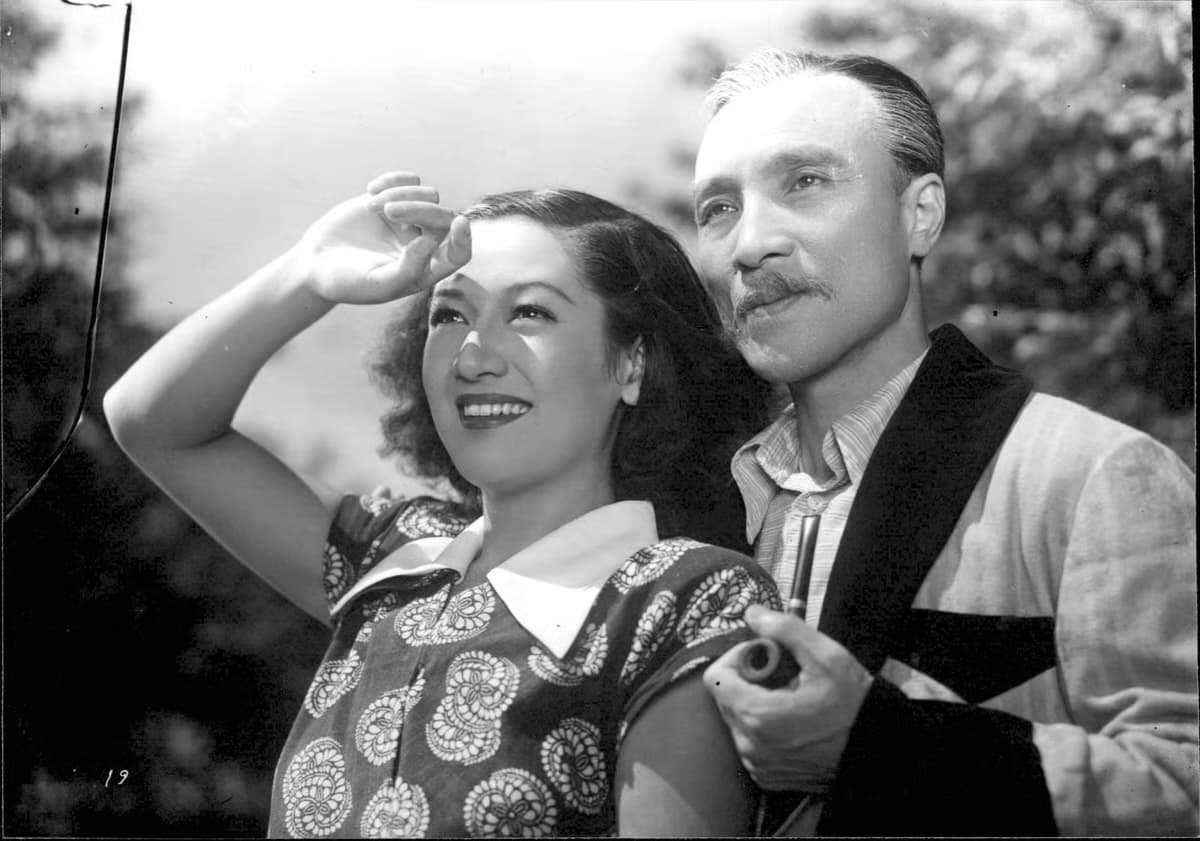
Setsuko Hara and Osamu Takizawa in "The Ball at the Anjō House" (1947). Via Film at Lincoln Center.

“Japanese fiction after a thousand years still lacks dramatic construction … strong dramatic elements [are considered] very dangerous, even revolutionary.”

Over the spate of 60 films and sundry television projects, a director and writer, Kōzaburō Yoshimura (1911-2000), saw fit to address his diagnosis of the shortcomings of Japanese story-telling. An upcoming program at Film at Lincoln Center offers New Yorkers an opportunity to gauge just how well he succeeded.

Kōzaburō Yoshimura: Tides of Emotion” has been organized by a Lincoln Center programmer, Dan Sullivan, in conjunction with the Japan Foundation. An accompanying blurb describes Yoshimura as one of “the most accomplished yet underappreciated figures of the golden age of Japanese cinema.” Aiming to do right by the historical record, Mr. Sullivan hopes to gain a broader audience for a director whose international reputation is overshadowed by contemporaries like Kenji Mizoguchi, Yasujirō Ozu and Akira Kurosawa.

Born in the Shiga Prefecture, Yoshimura attended high school in Tokyo and went to work as an assistant director at Shochiku-Kamata Studio. After a stint in the military, Yoshimura directed his first film, the short subject “Sneaking” (1934). World War II saw a return to a life in uniform where he helmed a machine gun, worked communications, and spent the final days of the conflict in a repatriation camp. Upon his release, Yoshimura teamed up for a fortuitous working relationship with fellow director and screenwriter Kaneto Shindo.

Shindo’s death at age 100 in 2012 was much commented upon by cinephiles, many of them pointing to “Onibaba” (1964) and “Kuroneko” (1968) as signal allegories on post-Hiroshima Japan. Yoshimura’s passing, in marked contrast, barely registered a blip on the radar, particularly here in America.

Like his collaborator and colleague, Yoshimura was drawn to stories that underlined shifts in the body politic, of the often awkward collision of traditional mores and Western values. Though Yoshimura could score big with blockbuster fare like “The Tale of Genji” (1952), he was more inclined to melodramas that, notwithstanding their understatement, were prickly at the core.

“The Ball at the Anjō House” (1947) is likely the Yoshimura film with the broadest international reputation. Shindo wrote the screenplay from a story idea by Yoshimura, and it’s worth mulling whether the auteur was at all familiar with Anton Chekhov’s, “The Cherry Orchard,” to which “Anjō  House” bears comparison.

An aristocratic family is in process of losing its mansion and their privileged life in the wake of a governmental land reform program. The Anjō patriarch, Tadahiko (Osamu Takizawa), decides to go out with a bang and hosts a lavish party at which a litany of resentments, both personal and professional, come to the fore. Think of the picture as a comedy of manners in which laughter and protocol are upset, but not altogether abandoned.

Ayako Wakao and Junichiro Yamashita in “Bamboo Doll of Echizen (1963). Via Film at Lincoln Center.

Yoshimura, like George Cukor stateside, was renowned as a director of women, and much in the way Setsuko Hara’s performance as a resolute daughter anchors “Anjō House,” “Bamboo Doll Of Echizen” (1963) is powered by Ayako Wakao as a geisha who strikes up a complicated relationship with the son of a former client, Kisuke (Junichiro Yamashita).

The story is a remarkably seamless amalgam of Freudian vexation, feminist parable, and old school weepie with Ms. Wakao bringing to its tangents a gravity that is, in equal parts, winsome and melancholic.

Over 60 years after its initial release, “Bamboo Doll of Echizen” still rattles in its candid depiction of sexual desire, psychological frustration and the limits of manhood. The picture is but one beguiling chapter of what promises to be an eye-opening retrospective.


The New York Sun

© 2025 The New York Sun Company, LLC. All rights reserved.

Use of this site constitutes acceptance of our Terms of Use and Privacy Policy. The material on this site is protected by copyright law and may not be reproduced, distributed, transmitted, cached or otherwise used.

The New York Sun

Sign in or  create a free account

or
By continuing you agree to our Privacy Policy and Terms of Use