
‘Waiting for Godot,’ With Keanu Reeves, Is Bleak as Bone — and Funny as the Gallows
The star of ‘The Matrix’ takes a turn in Beckett’s drama of despair.
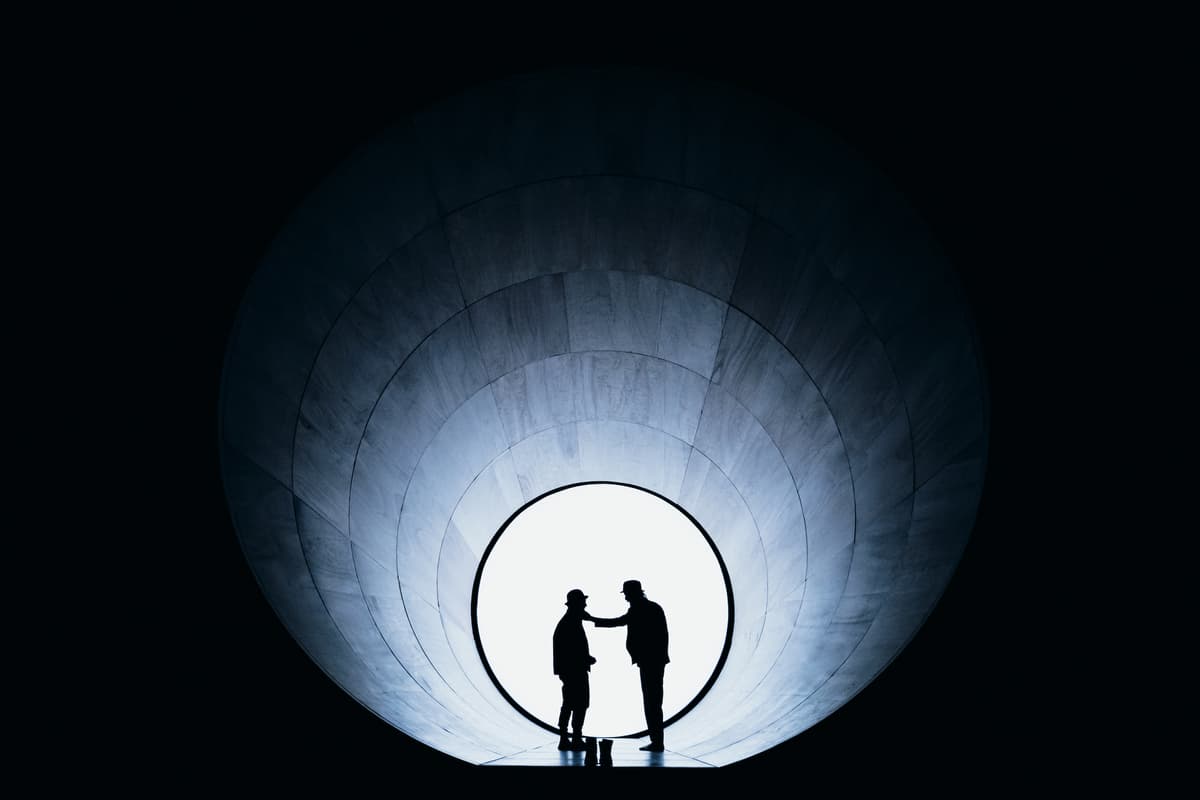
The new Broadway production of Samuel Beckett’s “Waiting for Godot” lends some celebrity glamor, in the form of the actor Keanu Reeves, to what has to be one of the bleakest works ever set to the stage. Mr. Reeves, who starred in the action-movie franchises “The Matrix” and “John Wick,” here joins a play where nothing happens and every gesture is a swipe in the void. Mr. Reeves embraces Beckett’s difficult vision, and asks audiences to do the same.
Tickets for “Waiting for Godot” are selling like hot cakes, but Beckett, Dublin-born, would, writing in both English and French, create a body of work suffused with gallows humor, absurdist dialogue, and a chilly impersonality. He was one of the last modernists — think Faulkner, Yeats, Eliot, Pound, Woolf — and the central figure in what would become known as the “Theatre of the Absurd.” Beckett was awarded the Nobel for Literature in 1969.
“Godot,” which was first published in French in 1952, was Beckett’s breakthrough. It followed an apprenticeship with the Irish master James Joyce. The two met at Paris, and Beckett’s first book was a defense of Joyce’s literary style. Beckett contributed research toward Joyce’s final work, “Finnegan’s Wake.” There was a falling out with the family, though, when a romance failed between Beckett and Joyce’s daughter, the beautiful and troubled Lucia.
“Godot” bears Joyce’s imprint in its stream of consciousness script and fondness for using nonsense to make sense out of the surreal. It also is shaped by the post-World War II edition of existentialism then being drawn up at smoke-filled Parisian cafes by the likes of Albert Camus and Jean-Paul Sartre. Beckett once said of his gnomic script, which has puzzled and inspired in equal measure, “Why people have to complicate a thing so simple I can’t make out.”
The play comprises only one scene, though it usually runs for more than two hours. The play begins when two acquaintances, Vladimir (Alex Winter) and Estragon (Mr. Reeves), meet beneath a tree to wait for a man named Godot. The pair can’t make out if they have ever met Godot, or if he is planning to come at all. They are soon met by another traveler, Pozzo, and his slave, Lucky. Nothing really makes sense, not least to the characters themselves.
Vladimir and Estragon are told via a messenger that Godot will not come today, but that he will certainly come the next day. In Act II Pazzo reappears, though he is now blind and Lucky is mute. They do not recall their previous days’ meeting. Our protagonists are again told that Godot will not come, and they entertain hanging themselves from the tree. There is no rope, though, and so the play ends on a note of utter despair darkened by impotence.
This staging eschews the iconic tree in favor of a giant, open-mouthed brutalist tunnel that would not be out of place on a spaceship. The play begins with a haggard- and hirsute-looking Mr. Reeves reflecting, “Nothing to be done.” That refrain, along with another, “I can’t go on,” recurs throughout the play. Mr. Winter, who played alongside Mr. Reeves in “Bill & Ted’s Excellent Adventure,” imports an element of buddy-comedy to the play.
The director, Jamie Lloyd, allows his leading actors to obliquely reference their collaborative history — an air guitar riff elicited peals of laughter from the crowd. A poll conducted by the Royal National Theater in 1998 found that “Godot” was “the most significant English-language play of the 20th century,” and moments of improvisation and a pacey cadence help it feel contemporary rather than merely canonical.
Pozzo is played by Brandon J. Dirden with wild relish and a molasses-thick Southern accent that electrifies his too-brief turns on the stage. Another remarkable performance is from Michael Patrick Thornton as Lucky, who clad in a gas mask and confined to a wheelchair is an affecting image of bondage. Lucky is ordered to “think,” which prompts an articulate stream of academic nonsense that could have been lifted from the pages of “Ulysses.”
Mr. Reeves’s success as both Neo in “The Matrix” and John Wick stems from his ability to project anguish as well as the ability to run and jump. Lithe rather than muscle bound, he was more Kafka than Rambo. If this staging of “Godot” fails to fully land, blame may be Beckett’s just as much as his interpreters. Oscar Wilde wrote, “Life imitates art far more than art imitates life.” Perhaps we have enough absurdity outside the theater not to crave more inside it.