

Wall Street Breaks Records as Fed Chairman Signals September Rate Cut While at Jackson Hole
While Jerome Powell delivers his annual address, President Trump issues a fresh threat against a Fed governor, Lisa Cook.
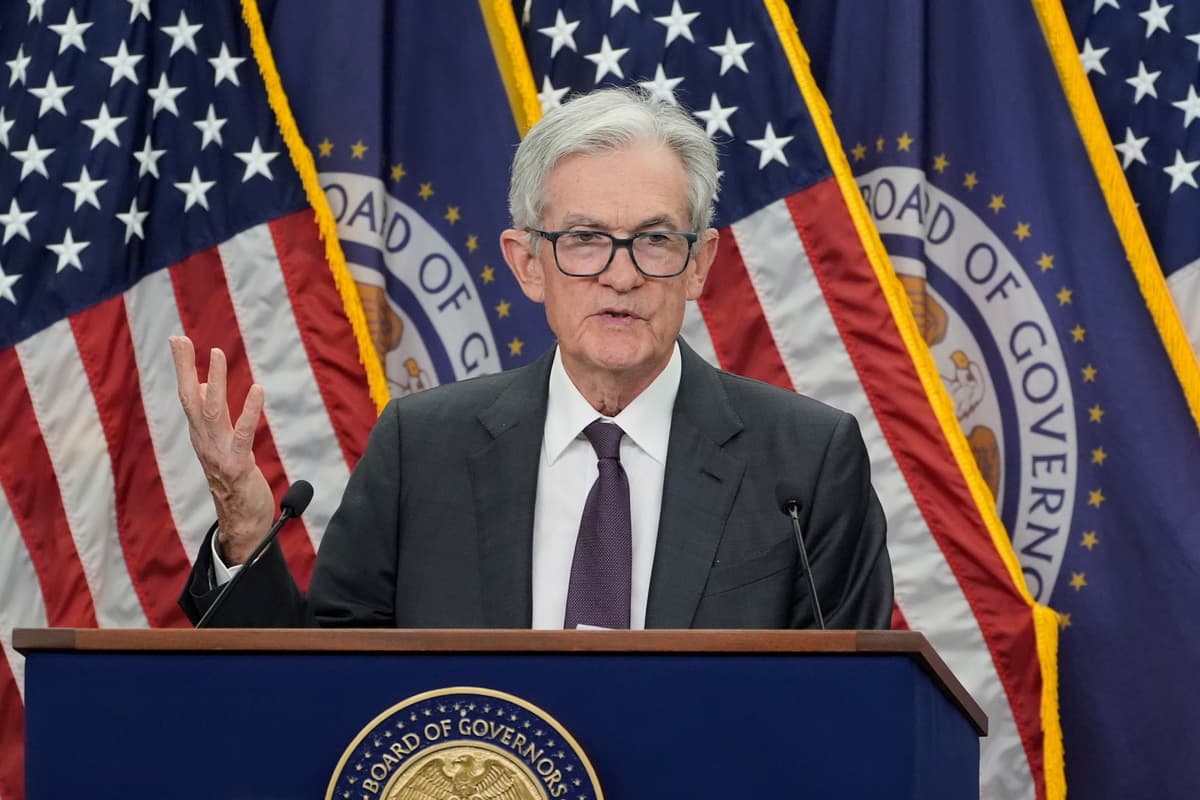
Wall Street erupted in celebration Friday after the Federal Reserve chairman, Jerome Powell, signaled the central bank’s willingness to cut interest rates at its upcoming September meeting.
By midday Friday, the S&P 500 had surged 1.6 percent while the technology-heavy Nasdaq Composite climbed nearly 2 percent. The Dow Jones Industrial Average posted the most dramatic gains, jumping more than 900 points, or 2.1 percent, to reach an all-time intraday high of 45,548.
The rally followed Mr. Powell’s highly anticipated address at the Federal Reserve’s annual Jackson Hole Economic Symposium in Wyoming. The Fed chairman raised expectations for a rate cut next month when he declared that “the shifting balance of risks” regarding the Fed’s dual mandate to pursue full employment and stable prices “may warrant adjusting our policy stance.”
The likelihood of an imminent 0.25 percentage-point rate cut, as tracked by the CME’s FedWatch tool, rocketed to 91 percent immediately after Mr. Powell’s remarks — up from 75 percent earlier in the week.
Mr. Powell has faced relentless pressure from President Trump to lower interest rates. Earlier this week the president repeated his criticism of the Fed chairman’s cautious approach, referring to him as “Jerome ‘Too Late’ Powell,” an epithet the president now frequently uses to demean the central banker.
During his speech, Mr. Powell reiterated the Fed’s independence, insisting that any monetary policy decision will be made by members of the Federal Open Market Committee “based solely on their assessment of the data and its implications for the economic outlook and the balance of risks. We will never deviate from that approach.”
The Federal Reserve last cut interest rates in December 2024, reducing the federal funds rate to its current target range of 4.25 to 4.5 percent.
Fed officials have been cautious about rate cuts due to persistent inflation concerns and fears that the president’s extensive tariff policies could drive prices higher.
During Friday’s address, Mr. Powell stated that the administration’s tariff strategy is “remaking the global trading system” and creating “new challenges” for the economy. He also noted that the White House’s “tighter” immigration policies have “led to an abrupt slowdown in labor force growth.”
“There is significant uncertainty about where all of these polices will eventually settle and what their lasting effects on the economy will be,” he said.
In addition to sharing his outlook for the economy, Mr. Powell unveiled the Fed’s new strategic framework, which undergoes review every five years.
Notably, the Fed chairman announced the central bank was abandoning a policy adopted in 2020 that aimed for inflation to average 2 percent over time rather than maintaining a strict 2 percent target. This framework had permitted the Fed to temporarily allow inflation above 2 percent to compensate for previous periods of persistently low inflation.
The approach drew sharp criticism from some economists, who argued it contributed to the Fed’s sluggish initial response to rising prices and helped fuel the post-pandemic inflation surge.
“As it turned out, the idea of an intentional, moderate inflation overshoot had proved irrelevant. There was nothing intentional or moderate about the inflation that arrived a few months after we announced our 2020 changes to the consensus statement, as I acknowledged publicly in 2021,” Mr. Powell stated on Friday.
While Mr. Powell delivered his Jackson Hole address, Mr. Trump issued a fresh threat against a Fed governor, Lisa Cook, who is under investigation by the Department of Justice for alleged mortgage fraud.
Mr. Trump, who called for Ms. Cook to step down earlier this week, announced on Friday his intention to “fire her if she doesn’t resign.” Mr. Trump made his latest attack on the central banker during a visit to the People’s House, a White House museum. “What she did was bad,” Mr. Trump told reporters.
The DOJ launched its probe into Ms. Cook after the Federal Housing Finance Agency director, Bill Pulte, called on Attorney General Pam Bondi to investigate her for allegedly falsifying bank documents and property records to secure favorable loan terms.
Mr. Pulte accuses Ms. Cook of simultaneously designating two homes as her primary residence to obtain lower mortgage rates. He claims that the Fed board member stated in a June 2021 mortgage agreement for an Ann Arbor, Michigan, property that the home would serve as her primary residence for at least one year. Two weeks later, he alleges, she purchased a condominium at Atlanta that she also claimed would be her primary residence for a year.
Ms. Cook addressed the controversy on Wednesday night, stating through a Fed representative that she has “no intention of being bullied into stepping down from my position because of some questions raised in a tweet.”
She emphasized that she takes “any questions about my financial history seriously” and is “gathering the accurate information to answer any legitimate questions and provide the facts.”