From Wall Street to Y’all Street: Dallas’s Rise as America’s New Financial Capital Gets Boost From Mamdani Win

In boardrooms from Midtown to Lower Manhattan, executives are already weighing their options — and many are heading south.

Via X
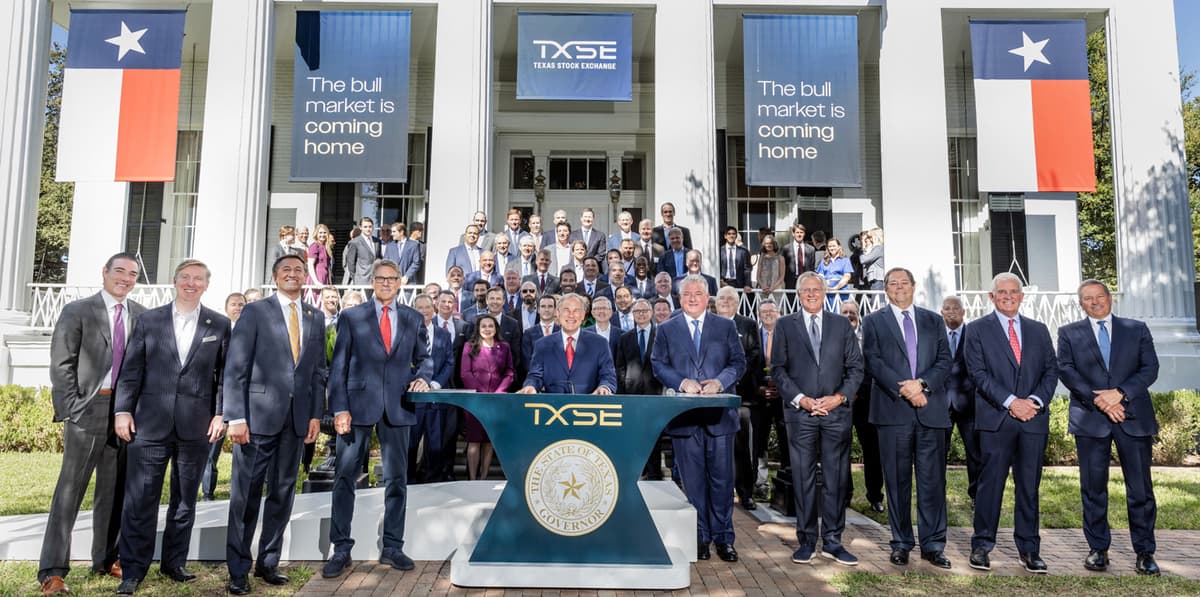
Members of the Texas Stock Exchange in Austin. Via X

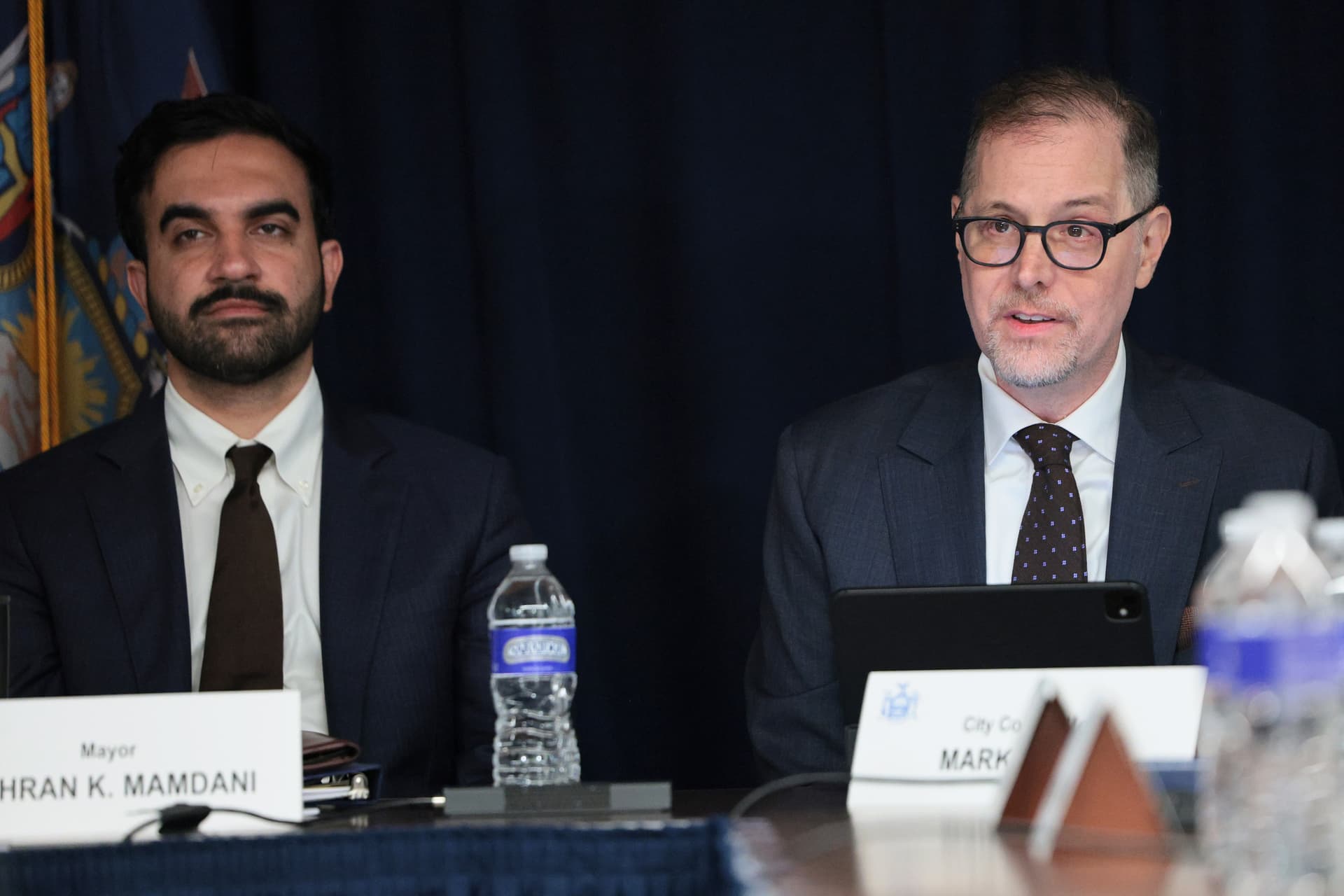
The shock of Democratic Socialist Zohran Mamdani’s election as New York City’s next mayor has rippled through the nation’s financial establishment.

Elected on a platform to “democratize capital,” raise taxes on the wealthy, and rein in corporate real estate and private equity, Mr. Mamdani has made it clear that his administration will seek to remake the city’s economic order.

To Wall Street, that message landed like a warning shot.

In boardrooms from Midtown to Lower Manhattan, executives are already weighing their options – and many are heading south. Dallas, with its low taxes, light regulation, and aggressively pro-business leadership, has emerged as the top destination for displaced capital and talent. 

Long an energy hub, the Dallas-Fort Worth metroplex has spent the past decade reinventing itself as a national finance center, and Mr. Mamdani’s victory may have just sealed its rise as “Y’all Street,” the new capital of American finance.

Nestpoint Group’s managing director and co-founder, John Thomas, tells The New York Sun that what’s unfolding in Dallas is not an accident of geography but the result of deliberate policy.

“As the founder of Nestpoint, a Dallas-based finance and government affairs firm that successfully relocated from California amid similar policy shifts, I’ve seen firsthand how progressive tax hikes, anti-public safety policies, and a broadly anti-business tone can devastate a region and drive companies to flee,” he said. 

Mr. Thomas pointed to the divergent political paths between the two cities. 

“On the very day New York City elected a socialist mayor, Texas voters enshrined permanent tax cuts and reductions in the state constitution, ensuring the long-term stability businesses need to relocate and grow, not just for a quarter, but for decades,” he said. “Mamdani’s agenda doesn’t just tax success – it punishes it.”

Dallas, Mr. Thomas noted, has benefited from that contrast. 

“Dallas isn’t booming by accident,” he said. “Yes, its central location is a strategic advantage for distribution and travel – but the real driver is deliberate, pro-growth policy.”

A Twin Engine of Growth: NYSE Texas and TXSE

A prominent indicator of this transformation came with the news earlier this year the New York Stock Exchange (NYSE), owned by Intercontinental Exchange, Inc. (NYSE: ICE), officially announced plans to launch NYSE Texas — a fully electronic equities exchange headquartered in Dallas, Texas. This involved reincorporating and renaming its existing NYSE Chicago exchange pending regulatory approval, which was later granted.

Meanwhile, a second exchange – the Texas Stock Exchange (TXSE) – is gearing up to launch in 2026. Backed by a consortium of major American investment firms and technology partners, the TXSE has already secured approval from the Securities and Exchange Commission. The exchange will operate as a fully electronic trading platform designed to compete directly with the NYSE and Nasdaq.

The TXSE intends to attract listings from midsize and growth-oriented companies seeking a regulatory environment friendlier than that of New York. State officials and financial leaders have framed the project as a symbol of Texas’s long-term economic independence – and a practical response to what they describe as “regulatory fatigue” in coastal markets.

The Corporate Migration South

Proponents point out that the infrastructure to support this shift from New York to Dallas has been in motion for years. The Dallas-Fort Worth metroplex has seen an influx of corporate relocations and expansions involving some of America’s largest financial institutions.

Charles Schwab was among the first to make a defining move, relocating its headquarters from California to Westlake, a Dallas suburb, nearly five years ago. Goldman Sachs followed suit with plans for an 800,000-square-foot campus in downtown Dallas, slated for completion in 2028, where more than 5,000 employees will eventually work.

JPMorgan Chase, which employs roughly 31,000 people in Texas – including 18,000 in the Dallas-Fort Worth area – now has more employees in Texas than in New York City. Its Plano campus alone houses more than 12,000 workers, making it the largest single-office presence within the bank’s global portfolio.

Wells Fargo recently opened a 22-acre Dallas campus capable of housing 4,500 employees, while Bank of America is constructing a 30-story downtown tower, set for completion in 2027. The projects together represent billions of dollars in new office space, talent relocation, and support industries ranging from legal and risk consulting to information technology.

Non-traditional finance companies are getting in on the move, too. On Wednesday, cryptocurrency exchange giant Coinbase announced that it is leaving Delaware to reincorporate in Texas. 

The Dallas–Fort Worth metro area now employs more finance professionals than Chicago or Los Angeles, trailing only New York City. 

Why Dallas Works

Mr. Thomas acknowledged that rapid growth brings challenges – from housing demand to infrastructure strain – but said state and local leaders are addressing them head-on. 

“We’re seeing massive infrastructure investment, like the ongoing expansion of [Dallas-Fort Worth] Airport, already larger in land mass than Manhattan, with room to grow, unlike LaGuardia or JFK,” he said. “Even with explosive population growth, Dallas is dramatically more affordable than New York.”

When it comes to talent, Mr. Thomas says the difference is stark. 

“When recruiting top talent at Nestpoint, we find employees are already in Dallas or eager to move. Why? No state income tax, larger homes, Sun Belt weather, safe streets, accountable policing, and a government focused on potholes, not ideology,” he said. 

Others in the industry emphasize that the ambitious concept of Y’all Street is still in its infancy. 

“It is far too early to tell what the effect of opening the Texas Stock Exchange will be by 2026,” a global financial risk management expert, Dennis Santiago, tells the Sun. “The concept is in its very early stages. Money is politically agnostic. Execution efficiency is paramount.”

Regardless of shifting political climates, Mr. Santiago observes, Wall Street is a universe unto itself with a vast multi-state infrastructure surrounding the lower Manhattan epicenter. 

“NYSE and NASDAQ are under no threat of a mass exodus in the near term, regardless of how the Main Street political climate of New York City shifts,” he said. 

A Broader Realignment

The Texas trend, however, isn’t limited to one city. Austin continues to attract venture capital and tech startups, while Houston reigns as the energy capital of the world. Yet, Dallas’s ascent as a financial hub is unique in its scale and momentum.

More than 400,000 people have moved to the metroplex since 2020, part of a post-pandemic migration from high-tax states like New York, Illinois, and California. Developers have responded with over $1 billion in new commercial real estate projects, particularly in Uptown and along the North Central corridor, where financial firms like Goldman Sachs, Bank of America, and Deloitte are expanding operations.

This demographic shift is accompanied by a cultural one. Texas’s “open-for-business” identity, historically rooted in oil and ranching, has evolved into a diversified, innovation-driven economy. Yet Mr. Santiago contends that while Texas’s business friendliness matters, trading centers serve purposes different from those of traditional markets. 

“Texas’ business friendliness is a minor factor in assessing the value of stock exchanges,” he said. “Trading markets are not the same thing as Main Street markets. Simply shifting where a company is listed doesn’t change its physical deployment of factories, supply chains, or human resources.”

He notes that regional financial ecosystems tend to specialize. 

“It’s important to understand that financial centers have specialties,” Mr. Santiago said. “Chicago’s financial center is firmly established as a nexus of types of financial instruments that are not traded on the New York exchanges. The same goes for Los Angeles, the financial centers there are Pacific Rim economy-focused.”

The Road Ahead

Still, as Dallas rises, its rivals are watching. Miami and Washington, D.C., have positioned themselves as alternative finance hubs, while cities such as London, Frankfurt, Paris, and Dubai are magnets for international capital. Yet supporters underscore that Dallas’s unique combination of geographic centrality, cost advantage, and infrastructure gives it a competitive edge within the continental United States.

The Dallas-Fort Worth International Airport, among the world’s busiest, offers direct connections to more than 60 international destinations. A growing number of private equity and venture firms now base transatlantic or Latin American deal teams in Dallas, citing both time-zone efficiency and lower operating costs.

For many investors and executives weighing the future of American finance, the question is no longer whether Dallas can compete with New York, but how quickly it will close the gap. Mr. Thomas predicts that by the end of the decade, Dallas could rival Manhattan as the preferred destination “where deals get done.” He claims the TXSE isn’t just a regional success story; it’s part of a larger national rebalancing. 

“We see the Texas Stock Exchange not just as a win for Texas but for the entire country,” he said. “The NYSE’s listing and compliance fees are prohibitively high for growing companies, especially those outside the Fortune 50. This restricts capital access for the very businesses that need it most.”

Beyond policy, Mr. Thomas asserted that culture is the true differentiator, pointing out that stock markets run on confidence; the belief that tomorrow will be better than today. 

“The entrepreneurial spirit has been baked into Texas culture since the wildcatters risked everything on black gold,” he said. “Today’s voters and leaders have doubled down. Texas is not just open for business – it’s the best place to deploy risk capital, raise a family, scale a workforce, and operate without interference.”


The New York Sun

© 2025 The New York Sun Company, LLC. All rights reserved.

Use of this site constitutes acceptance of our Terms of Use and Privacy Policy. The material on this site is protected by copyright law and may not be reproduced, distributed, transmitted, cached or otherwise used.

The New York Sun

Sign in or  create a free account

or
By continuing you agree to our Privacy Policy and Terms of Use