Washington and South Korea Reach Trade and Tariffs Deal After Korea Resists ‘Strong Pressure’ To Allow America Into Its Agriculture Sector

South Korean manufacturers are also relieved that Washington will be slapping tariffs of 15 percent, not 25 percent, on industrial imports, notably motor vehicles.
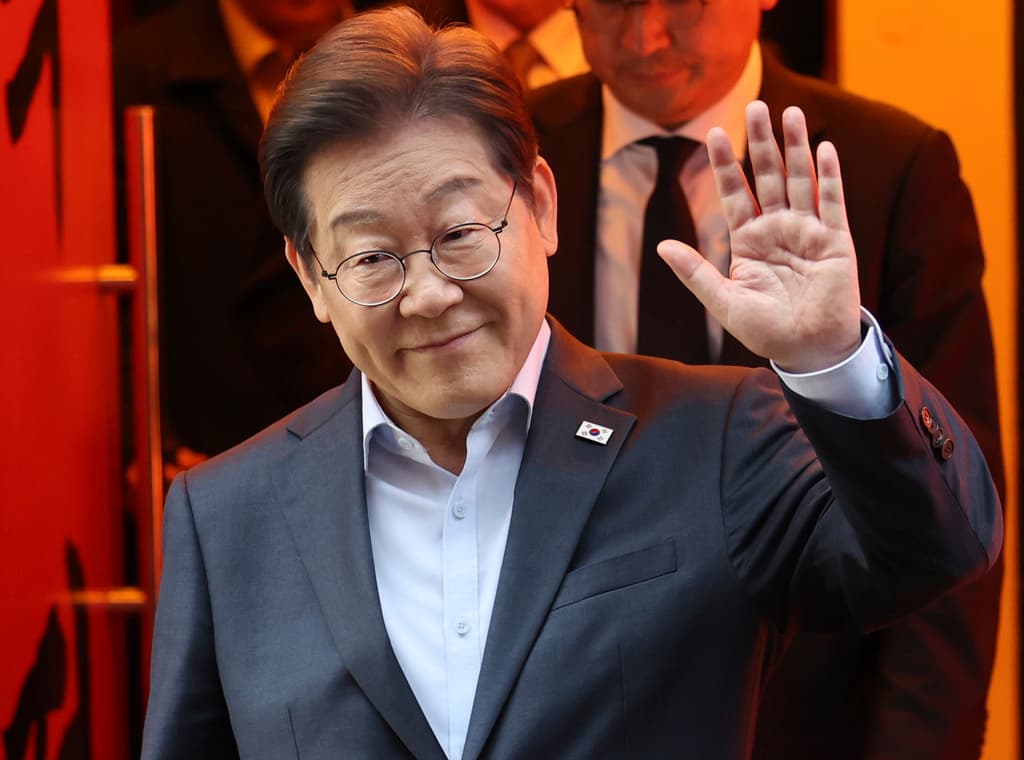
Suh Myung-geon/Yonhap via AP
South Korea's new president, Lee Jae-myung, campaigning at Seoul, May 1, 2025. Suh Myung-geon/Yonhap via AP

South Korean negotiators are counting the newly announced deal with Washington on trade and tariffs as a success for at least one reason: They were able to agree to a deal that keeps America from flooding South Korean markets with beef and rice.

South Korea’s always restive southwestern Cholla region, where most of the country’s rice is grown, would have been up in arms if the deal had pried open South Korean markets to more farm products. 

South Korea’s economy minister, Koo Yun-cheol, briefing Korean reporters at Washington, said his team had withstood “strong pressure from the U.S. side to reduce non-tariff barriers and expand market access for agricultural and livestock products,” according to Korea’s best-selling newspaper, Chosun Ilbo. It was after “persistent efforts by our negotiating team,” he said, that the Americans “came to understand the sensitivities of South Korea’s agricultural sector, and both sides ultimately agreed not to pursue any additional market openings.”

As the deal now stands, South Korean manufacturers are also relieved that Washington will be slapping tariffs of 15 percent, not 25 percent, on industrial imports, notably motor vehicles — a deal similar to that already agreed on with Japan. Still, that figure represents a sharp increase from when most South Korean products were allowed into America almost duty-free under the Korea-U.S. Free Trade Agreement, known as Korus. 

Those days are gone, as Washington seeks to undo the enormous trade surpluses enjoyed by its major trading partners. Tariffs on steel and aluminum will remain at 50 percent, while South Korea promises to import about $200 billion a year in liquefied natural gas. 

“There’s a different trading environment than in the past,” an aide to South Korea’s president, Lee Jae-myung, said. “South Korean companies need to work at “diversifying their export markets.”

From the American vantage, almost as important as tariffs is the understanding that South Korea will pour $350 billion in much needed investment into American industry, including $150 billion into commercial shipbuilding. South Korea’s biggest shipbuilder, Hyundai Heavy Industries, should lead the drive to revive the American industry. 

Korea’s second and third biggest shipbuilders, Hanwha and Samsung, also are investing heavily in new facilities. The top executives of all three were at Washington this week, making sure the deal was the best they could expect. Hyundai, as the world’s third-largest automaker, is investing $21 billion in new car manufacturing facilities in America – one way to avoid tariffs on imports.

 South Korea’s trade minister, Yeo Han-koo, sees investment in American industry as pivotal. “The proposed investment fund for shipbuilding cooperation was a real game changer,” Seoul’s Yonhap news quoted him as saying, considering Mr. Trump’s “huge interest in the shipbuilding sector.”

The trade deal climaxes part one of America’s negotiations with South Korea. Part two, possibly more difficult, promises to be negotiations on how much South Korea should pay for the American forces and bases there. Mr. Trump has indicated Korea should fork over far more than the $1.1 billion a year agreed on with President Biden.

Having “cleared a major hurdle” in the form of the trade deal, President Lee is looking for a summit with Mr. Trump. That’s when the two will hash out South Korea’s financial commitment — and whether Washington should withdraw some of the 28,500 American troops now in South Korea.


The New York Sun

© 2025 The New York Sun Company, LLC. All rights reserved.

Use of this site constitutes acceptance of our Terms of Use and Privacy Policy. The material on this site is protected by copyright law and may not be reproduced, distributed, transmitted, cached or otherwise used.

The New York Sun

Sign in or  create a free account

or
By continuing you agree to our Privacy Policy and Terms of Use