Welcome to Washington: Democrats Are Stumbling Into a Budget Battle They Seem Uncommitted to Winning
After months of shouting ‘do something,’ it appears that activist Democrats could push their leaders all the way into a government shutdown.

The acrimony pouring out of the United States Capitol this past week is hard to put into words. Republicans, still reeling from the assassination of Charlie Kirk, who personally knew many lawmakers, had no patience for Democrats’ government funding demands. The minority party, meanwhile, appears unprepared for the fight.
Welcome to Washington, where on Friday Senate Democrats blocked a short-term budget proposal that would have kept the government open through November 21. It is a stark turnaround from March, when 10 senators acquiesced to advancing President Trump’s own preferred spending bill.
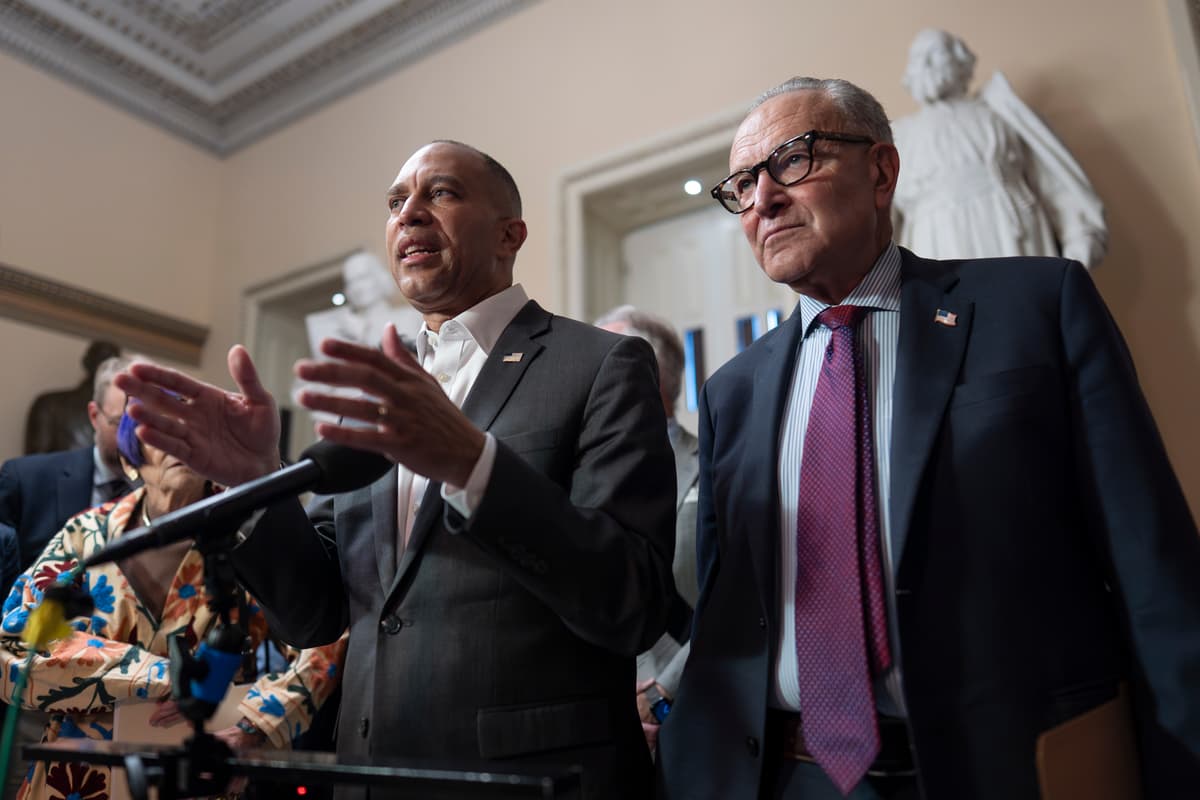
Senator Charles Schumer’s approval rating among Democratic voters plummeted. Congresswoman Alexandria Ocasio-Cortez said she and her colleagues, as well as her voters, felt a “deep sense of outrage and betrayal” that Senate Democrats would not block the bill. Some Democratic Senate candidates are even refusing to back Mr. Schumer for another term as Democratic leader, should they themselves be elected to the chamber.
The senator of New York — who has had six months to prepare for this moment — has laid out his demands: extending Biden-era health insurance subsidies, restricting the president’s impoundment and rescissions powers, and reversing some of their Medicaid reforms that were instituted as part of the One Big Beautiful Bill Act.
What is especially surprising about this move, however, is less about legislative proposals and more about how reactive their response seems. Speaker Mike Johnson had been saying for weeks that the short-term spending bill, known as a continuing resolution, would be “clean” — meaning it would do nothing more than keep the lights on for a few more weeks while the rest of the annual appropriations process plays out.
The text of the Republican continuing resolution was released as Democrats in the Senate were having lunch together just off the Senate floor. Reporters were quick to pepper them with questions about how they felt about the bill.
“Haven’t read it,” Senator Mark Kelly said. Senator Chris Murphy, one of the leading voices calling for the March bill to be blocked, when asked last week by The New York Sun if he had a position on the bill, simply said, “No, I haven’t seen it.”
Senator Jeanne Shaheen, a Democrat from New Hampshire, told reporters that she would not discuss the bill despite it being straightforward. “Leave me alone,” Ms. Shaheen said gently to a reporter after the press pressed the question.
House Republicans unveiled their legislation on Tuesday afternoon. Despite having six months to prepare for this moment, it took Democrats nearly 30 hours to release their own alternative bill.
The rage that tuned-in Democratic voters have directed at their leaders would have one believe that lawmakers would have more of a quick reaction force, rather than the sluggish response that actually materialized.
The messaging battles kicked off, and it’s clear that Republicans, at least for now, have the upper hand. Senator John Thune puts it rather simply: This will be a “Schumer Shutdown,” he declared earlier this week. It does not appear that Democrats have a strategy quite as snappy or direct.
Congress is out of town this week for the Jewish holiday of Rosh Hashanah, meaning that lawmakers will return to Capitol Hill just 48 hours before the shutdown deadline at the end of the month. Mr. Schumer has offered no insight into how far they are willing to take this. He has only asked for a meeting with the president.
“He’s not negotiating, so it’s up to them, and I hope and pray that Trump will sit down with us and negotiate a bipartisan bill,” Mr. Schumer told CNN’s “State of the Union” on Wednesday. When asked if he was prepared to block a funding package that did not include any of his demands, Mr. Schumer repeatedly dodged, saying only that he wanted a negotiation.
It is clear that Democratic leaders in Congress are leaning somewhat into their supporters’ rage, but for now it is unclear if it is just some kind of bad performance art or if they are actually willing to charge head-first into a shutdown fight. If their current lack of legislative urgency and coordinated communications strategy is any sign of where this is going, then it appears that they’re stumbling into a fight that they do not seem committed to win.