Welcome to Washington: The Epstein Files Bait-and-Switch
Republicans’ promise to release the documents is paralyzing the federal government.
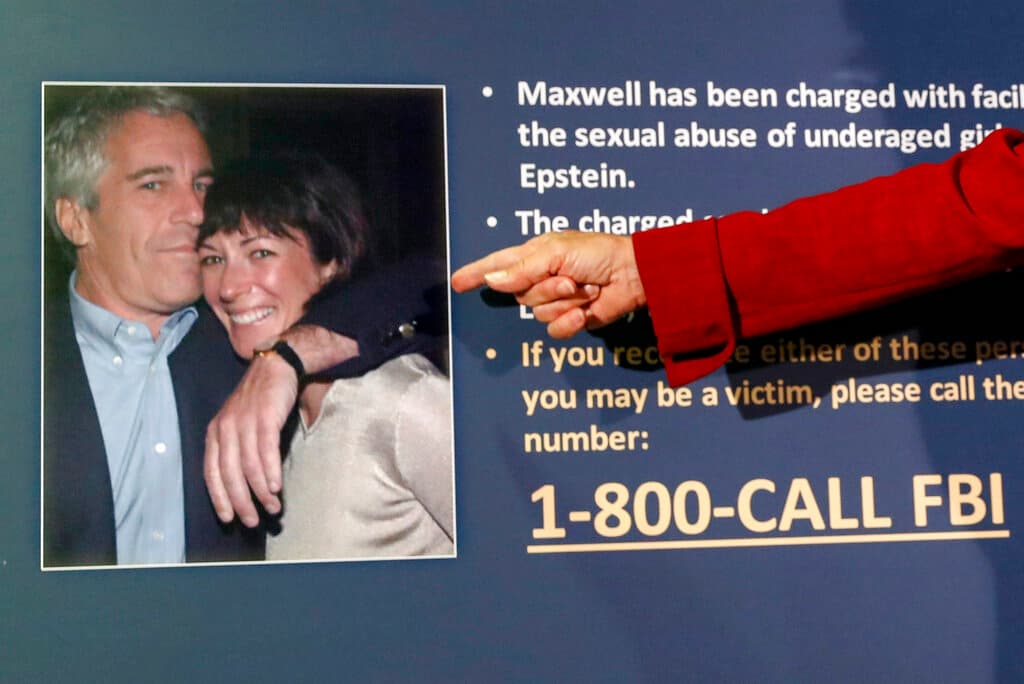
President Trump’s promise to release files related to Jeffrey Epstein helped feed into a broader narrative last year: He was the agent of change, while President Biden and Vice President Harris were guards of the status quo. Now, as he walks back a flashy campaign pledge, he risks losing the low-propensity, low-information voters who helped propel him to the White House.
Welcome to Washington, where for the last two weeks Congress has been paralyzed due to Republican consternation over the failure to release the so-called Epstein files. Speaker Johnson, like the president, has brushed off the whole affair as a ploy by attention-seeking Democrats, even though the president’s most ardent supporters are pushing for the files’ disclosure.
“Let me be absolutely clear,” Mr. Johnson told NBC News’s “Meet the Press” on Sunday, after he was forced to essentially shut down the House this past week. “House Republicans insist upon the release of all credible evidence and information related to Epstein in any way, but we are also insisting upon the protection of innocent victims.”
He was asked about a bill from a Republican, Congressman Thomas Massie, and a Democrat, Congressman Ro Khanna, which would force Attorney General Bondi to release all of the Epstein files within 30 days. The bill from Messrs. Massie and Khanna has already garnered more than a dozen Republican sponsors and is expected to win the support of the vast majority, if not all, of the House Democrats.
The bill is now under what is known as a discharge petition, which is a procedural mechanism that allows rank-and-file members to force votes on the floor. After the August recess, if Messrs. Massie and Khanna can get 218 signatures on the petition, the bill will be forced on to the floor, where every member will have to take an up-or-down vote.
The talking point from Republican leadership — as Mr. Johnson deployed it in his “Meet the Press” interview — is that the Massie–Khanna bill fails to protect victims or shield the public from images or videos of child pornography. The legislation, however, explicitly states that any files that “contain personally identifiable information of victims” would not be released. Anything that “depicts or contains child sexual abuse materials” would also remain under seal, according to the text of the bill.
The Massie-Khanna bill also states that “embarrassment, reputational harm, or political sensitivity, including to any government official, public figure, or foreign dignitary,” would not be a justification for keeping things classified. Ms. Bondi would be required, if the bill were signed, to justify all redactions in written explanations to Congress and the public.
Earlier in the week, at a press conference, Mr. Johnson dropped his typically genteel disposition and let loose on Mr. Massie in an unvarnished manner. “I don’t know how his mind works. I don’t know what he’s thinking,” Mr. Johnson said of his colleague from Kentucky. “Thomas Massie could’ve brought his discharge petition any time over the last four-and-a-half years — over the last four years of the Biden administration. He could’ve done that at any time, and now he’s clamoring as if there’s some sort of timeline on it.”
“It’s interesting to me that he chose the election of President Trump to bring this — to team up with the Democrats and bring this discharge petition,” Mr. Johnson added, clearly frustrated.
In an attempt to kill the Massie-Khanna discharge petition and underlying bill, Mr. Johnson tried to find a middle ground, pushing for a non-binding resolution that would simply call on Ms. Bondi to release the files. That resolution would likely yield little, given that the White House and Ms. Bondi said that no other information would be released, besides possible public testimony from Epstein associate Ghislaine Maxwell.
Mr. Trump made plenty of promises during the 2024 campaign, chief among them making his 2017 tax cuts permanent, releasing files related to President Kennedy and Martin Luther King Jr., and trying to keep American forces out of foreign conflicts.
While he has stuck to some of those promises, the Epstein saga threatens to fracture an already rickety political coalition. Epstein, after his arrest and later his suicide, became something much larger than just one disgraced, dead man — he became a symbol and a meme for something march darker.
The pledge to expose those around him fed into the larger narrative that Mr. Trump has always pushed — that he is a voice for frustrated Americans. To backtrack on this now with a toothless resolution from House Republicans would be unlikely to quell his own MAGA base’s demand for more.