White House Reignites Tensions With Media by Restricting Access to Senior Communications Wing

‘Some reporters have been caught secretly recording video and audio of our offices,’ the White House communications director, Steven Cheung, says.
Anna Moneymaker/Getty Images
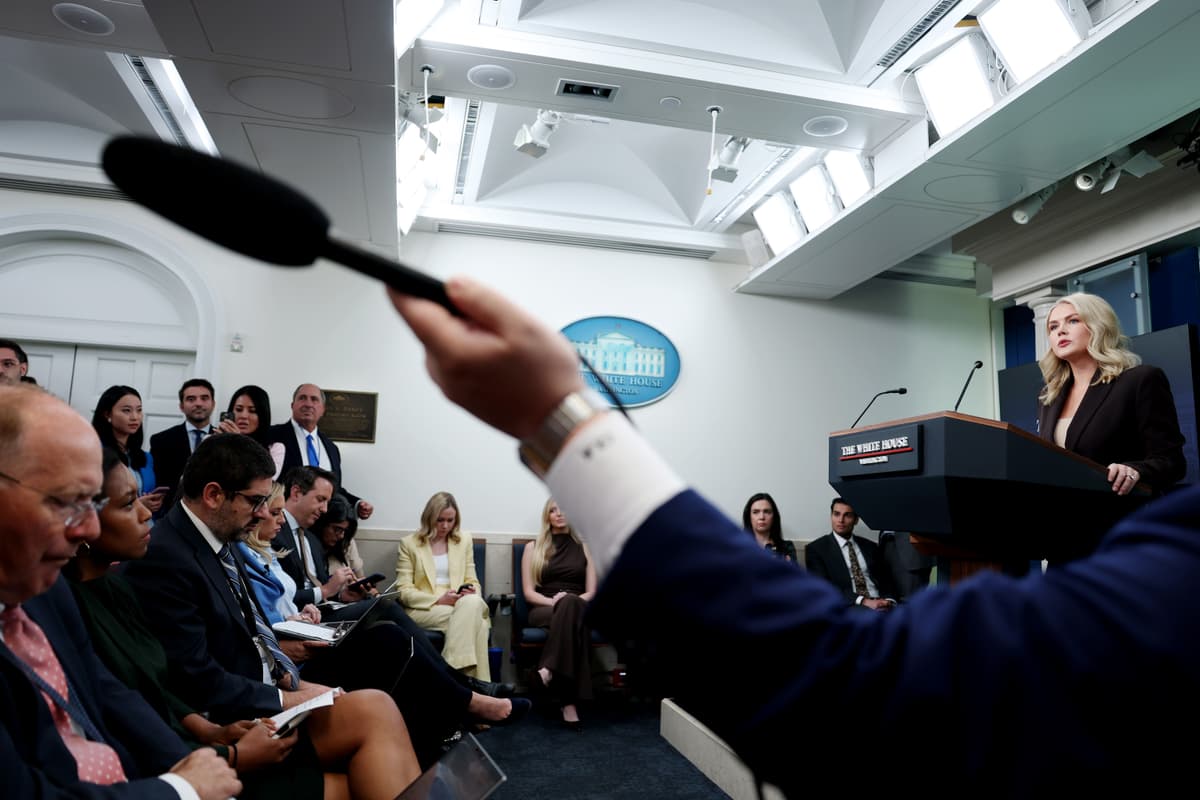
The White House press secretary, Karoline Leavitt, appears in the Brady Press Briefing Room on October 06, 2025. Anna Moneymaker/Getty Images

The White House has implemented new restrictions limiting journalists’ access to a key area of the West Wing, marking the latest development in escalating tensions between the Trump administration and the press corps.

Effective immediately, credentialed reporters can no longer freely enter Room 140, known as “Upper Press,” without prior approval through scheduled appointments with authorized staff members. The area houses offices for senior communications officials, including Press Secretary Karoline Leavitt, and sits close to the Oval Office.

According to a National Security Council memorandum released Friday, the restrictions aim to safeguard sensitive materials and protect national security interests.

“As a result of recent structural changes to the National Security Council, the White House is now responsible for directing all communications, including on all national security matters. In this capacity, members of the White House Communications Staff are routinely engaging with sensitive material,” the memo said.

“In order to protect such material, and maintain coordination between National Security Council Staff and White House Communications Staff, members of the press are no longer permitted to access Room 140 without prior approval in the form of an appointment with an authorized White House Staff Member,” said the memo.

Members of the press will still be able to “engage with White House Press Aides in the Lower Press Area outside of the Briefing Room,” the memo said.

The White House Correspondents’ Association strongly criticized the move, arguing it undermines government transparency and accountability.

“The White House Correspondents’ Association unequivocally opposes any effort to limit journalists from areas within the communications operations of the White House that have long been open for newsgathering, including the press secretary’s office,” the association’s president, Weijia Jiang, said in a statement.

“The new restrictions hinder the press corps’ ability to question officials, ensure transparency, and hold the government accountable, to the detriment of the American public.”

Ms. Jiang is the senior White House correspondent for CBS News, whose new editor-in-chief, Bari Weiss, has been tasked with shifting the news division away from a perceived liberal tilt.

The White House communications director, Steven Cheung, defended the decision, citing security concerns and inappropriate behavior by some reporters.

“Some reporters have been caught secretly recording video and audio of our offices, along with pictures of sensitive info, without permission,” Mr. Cheung posted on X. “Some reporters have wandered into restricted areas … Some reporters have been caught eavesdropping on private, closed-door meetings. Cabinet Secretaries routinely come into our office for private meetings, only to be ambushed by reporters waiting outside our doors.”

This isn’t the first time such restrictions have been attempted. The Clinton administration implemented similar measures in 1993 but later reversed course following intense criticism from media organizations.

The White House move follows recent Pentagon policy changes requiring news outlets to accept new press restrictions or forfeit their media credentials and workspace access. The Pentagon’s policy allows officials to revoke press badges from journalists deemed security risks, including those who request unclassified information not officially released by the department.

At least 30 news organizations have refused to comply with the Pentagon restrictions, viewing them as threats to press freedom and independent journalism.

Earlier this year, the Trump administration also removed Reuters, The Associated Press, and Bloomberg News from the permanent press pool covering the president, though these outlets may still participate in a rotation.


The New York Sun

© 2025 The New York Sun Company, LLC. All rights reserved.

Use of this site constitutes acceptance of our Terms of Use and Privacy Policy. The material on this site is protected by copyright law and may not be reproduced, distributed, transmitted, cached or otherwise used.

The New York Sun

Sign in or  create a free account

or
By continuing you agree to our Privacy Policy and Terms of Use